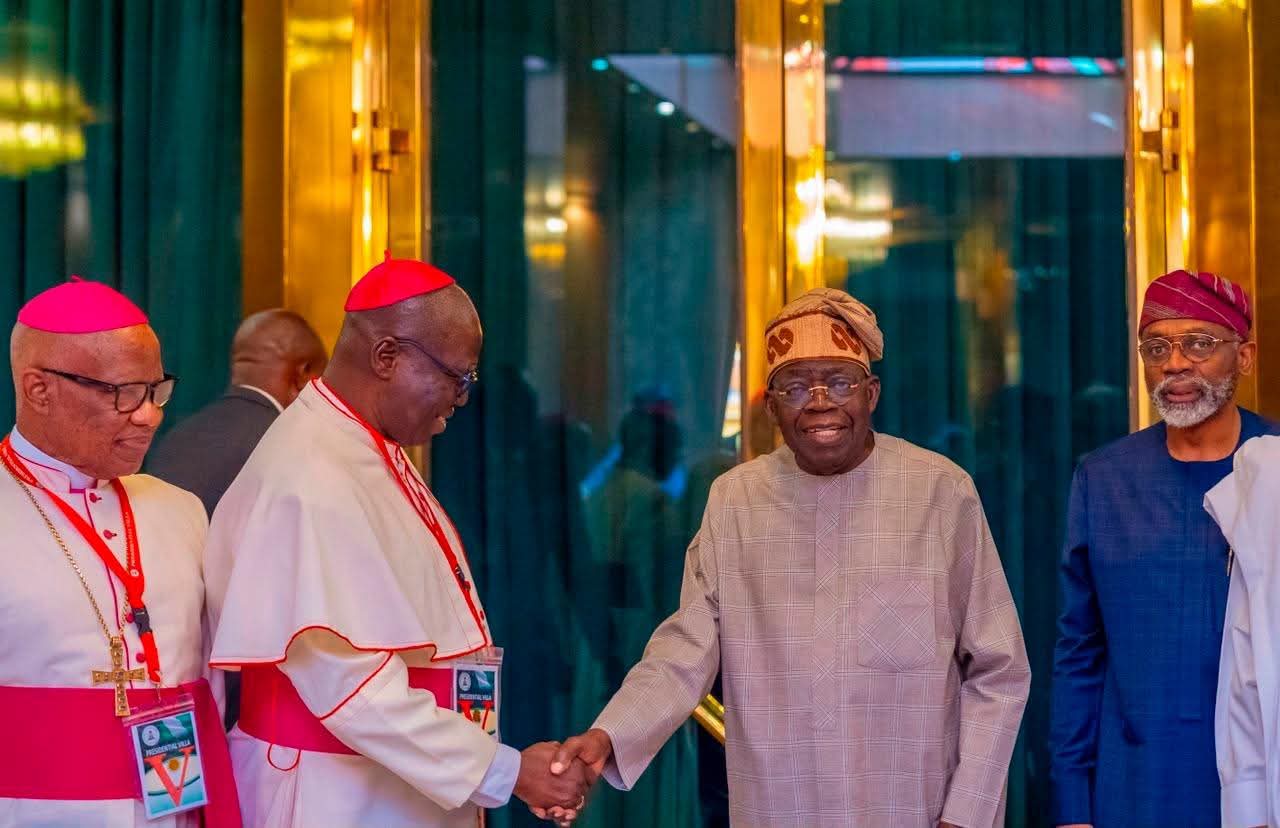
The Presidency has criticised Cardinal John Onaiyekan for publicly commenting on a private meeting between President Bola Tinubu and the Catholic Bishops’ Conference of Nigeria, describing the action as inappropriate and a breach of clerical privilege.
The Presidency has faulted Cardinal John Onaiyekan for publicly commenting on a private meeting between President Bola Tinubu and the Catholic Bishops’ Conference of Nigeria (CBCN), describing the action as inappropriate and an abuse of clerical privilege.
In a statement issued by the Senior Special Assistant to the President on Media and Publicity, Temitope Ajayi, said the cardinal’s television interview, in which he offered his account of the closed-door meeting, undermined the confidentiality and dignity expected of such engagements.
According to the Presidency, the meeting was held at the request of the Catholic bishops, who presented their assessment of Nigeria’s economic, security and social challenges to President Tinubu.
Ajayi said the bishops acknowledged the benefits of the Nigerian Education Loan Fund (NELFUND) but were largely critical of other policies and programmes implemented by the Tinubu administration.
He stated that President Tinubu listened patiently to their concerns and responded to each issue raised, arguing that while the country still faces significant challenges, notable progress has been made in stabilising the economy and improving security.
On the issue of the return of mission schools to their original owners, Ajayi said the President explained that the matter falls within the constitutional powers of state governments and reminded the bishops that he returned mission schools during his tenure as Governor of Lagos State.
The Presidency maintained that President Tinubu acknowledged the country’s economic and security difficulties but rejected the suggestion that Nigeria’s situation had not improved.
Ajayi said the President informed the bishops that his administration inherited a severe fiscal crisis and had implemented reforms that restored greater financial stability, enabling many state governments to meet salary and pension obligations more consistently.
He also defended the administration’s handling of security, stating that the President receives intelligence and operational briefings unavailable to the general public, making his assessment of the country’s security situation broader than what is reflected in media reports.
According to the Presidency, disagreement over the state of the nation should not be interpreted as arrogance or a refusal to accept criticism.
Ajayi further dismissed suggestions that President Tinubu relies solely on external critics to understand public opinion.
He said the President stays informed through multiple channels, including daily intelligence reports, media monitoring, newspapers, television programmes and consultations with individuals from different sectors of society.
The Presidency argued that while the Catholic bishops have the right to express their views, they are not the only voices representing the national mood or public opinion.
Ajayi also emphasised that criticism is only one aspect of democratic engagement, noting that governance requires balancing competing interests, limited resources and difficult policy choices.
The Presidency maintained that the meeting between President Tinubu and the bishops reflected the civility expected in a constitutional democracy and should have remained confidential.
Ajayi concluded that Cardinal Onaiyekan’s public commentary on the private meeting was inconsistent with the discretion expected of senior religious leaders, arguing that privileged access to the President should not be turned into a platform for post-meeting public commentary.
Visit GMTNewsng for more news stories.