UNESCO has praised Governor Peter Mbah’s Smart Schools initiative in Enugu, pledging partnership on teacher training, digital education, and cultural development.
Enugu, Nigeria — The United Nations Educational, Scientific and Cultural Organization has commended Peter Mbah for his administration’s Smart Schools initiative, describing it as transformative and forward-looking, while pledging strategic collaboration with the state.
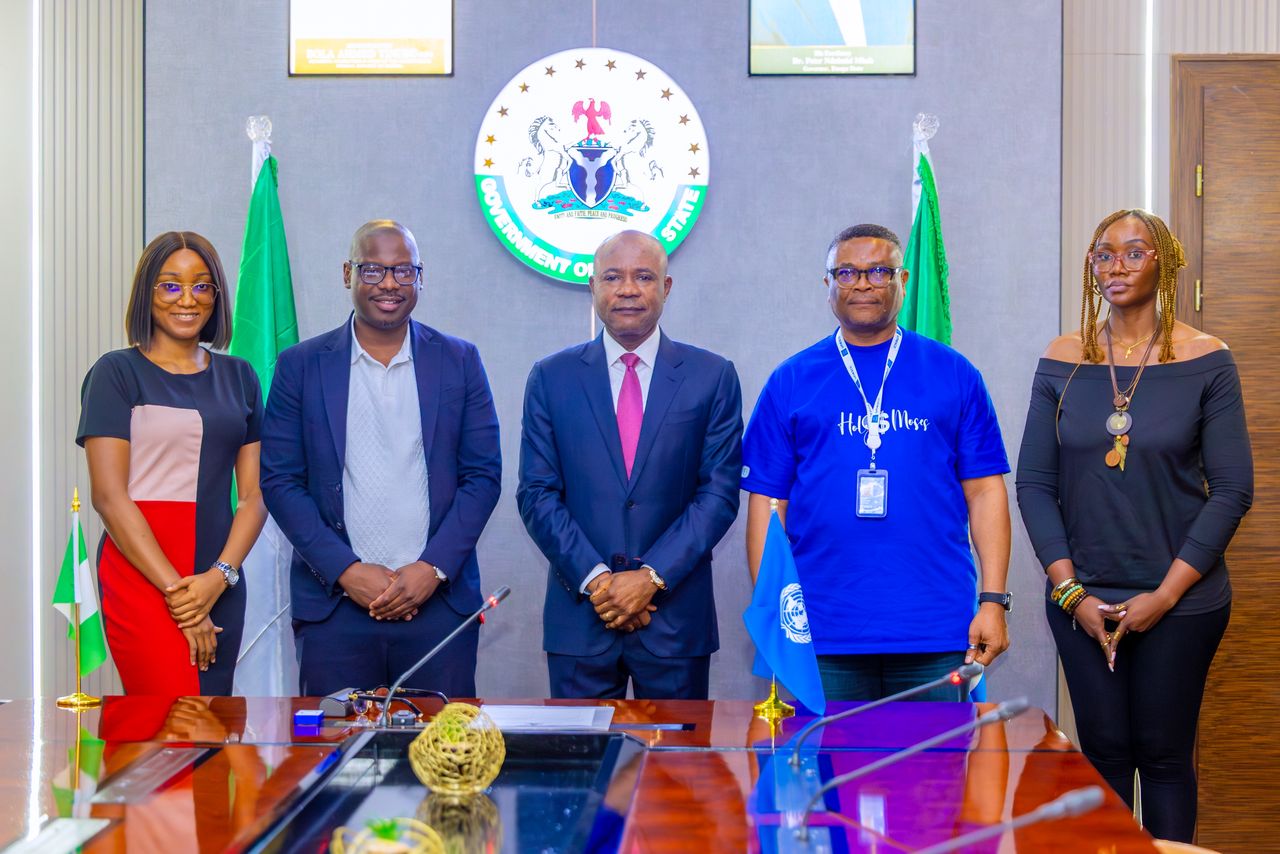
The commendation was delivered by Jean‑Paul Ngome Abiaga, Head of the UNESCO Office in Nigeria, during a courtesy visit to the Enugu State Government House.
Abiaga, who led a high-level delegation, said the organisation was impressed by the scale, speed, and vision driving the education reforms, particularly the establishment of over 260 Smart Green Schools across the state.
He noted that UNESCO’s global mandate on education aligns closely with Enugu’s investment in human capital development, describing the initiative as a model for innovation in the sector.
“We see strong complementarity between what is being implemented here and UNESCO’s programmes in Nigeria,” he said.
Abiaga disclosed that UNESCO, in partnership with the European Union, is implementing a $5 million education support programme in six Nigerian states, including Enugu, with plans to deepen collaboration in teacher training, digital education, and youth engagement.
As part of the partnership, he revealed that over 2,100 teachers would be trained in ICT and digital pedagogy to strengthen capacity within the Smart Schools framework.
He stressed that while infrastructure development is critical, the success of the initiative would depend on equipping teachers with the skills required for technology-driven classrooms.
Beyond education, UNESCO also expressed interest in promoting Igbo cultural heritage, noting previous support for the National Museum in Enugu and signaling readiness to expand efforts in cultural preservation and global recognition.
Responding, Mbah described Enugu as a cultural and historical hub of the Igbo people and reaffirmed his administration’s strong commitment to education.
He disclosed that more than 30 per cent of the state’s budget has consistently been allocated to education, surpassing UNESCO’s recommended benchmark.
“We are unapologetically focused on education because our future depends on it,” the governor said, adding that the initiative is aimed at equipping students with future-ready skills.
According to him, the government has constructed over 7,000 classrooms and established 267 Smart Green Schools across all political wards to ensure equitable access to quality education.
Mbah explained that the programme goes beyond infrastructure to include curriculum reform, experiential learning, and the integration of emerging technologies such as robotics, mechatronics, and 3D printing.
He added that the state has shifted from rote learning to experiential education, supported by the establishment of a Centre for Experiential Learning and Innovation to enhance teachers’ digital competencies.
The governor welcomed UNESCO’s proposed training programme, describing it as timely and aligned with the state’s efforts to build a digitally skilled teaching workforce.
On cultural development, Mbah called for UNESCO’s support in recognising key heritage sites in the state, including the Nsude pyramids and ancient iron-smelting locations, as World Heritage Sites.
The development signals growing international recognition of Enugu’s education reforms and opens the door for deeper collaboration in both education and cultural advancement.
Visit GMTNewsng for more news stories.