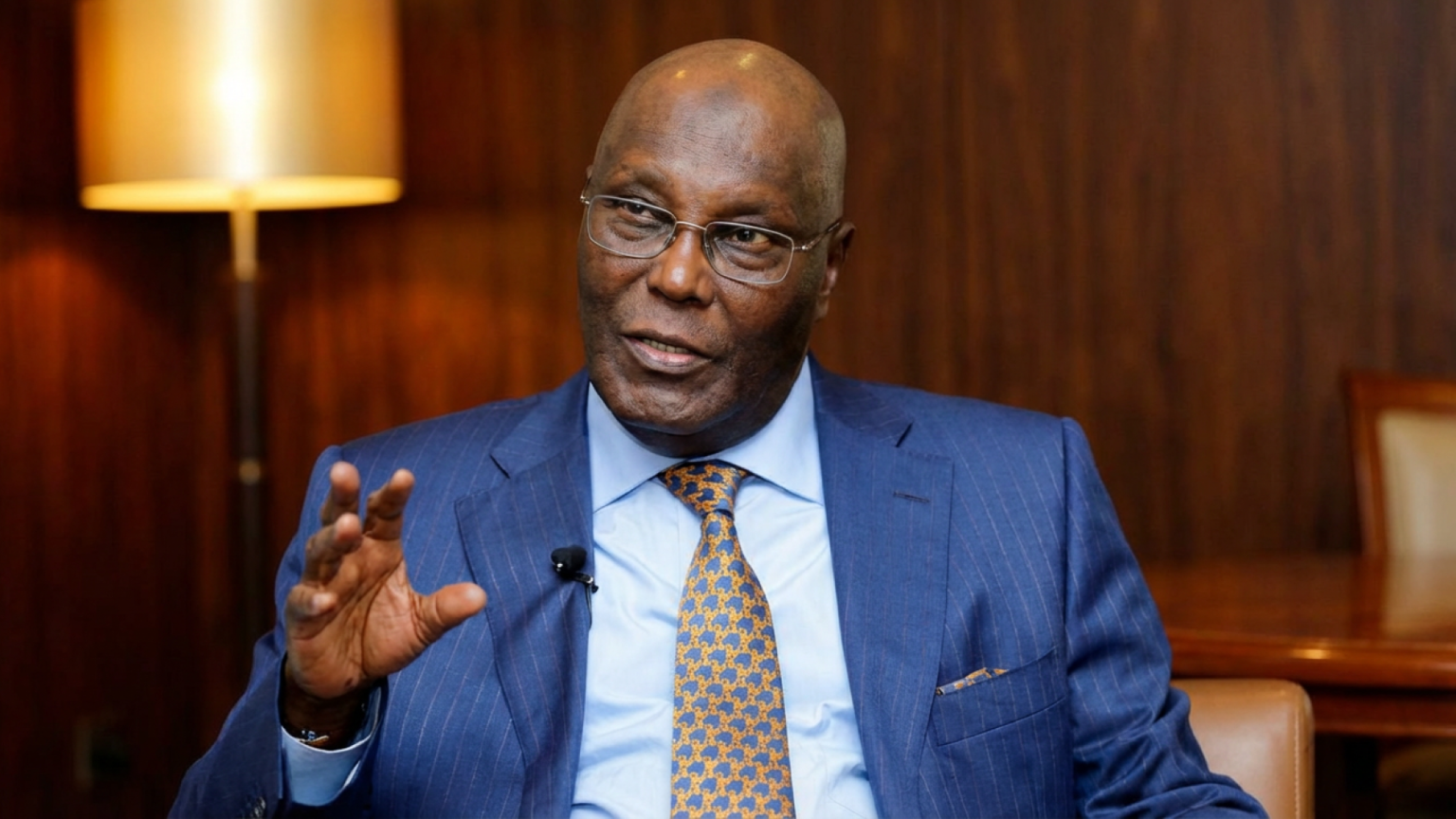
The Presidency has dismissed former Vice President Atiku Abubakar’s criticism of President Bola Tinubu’s economic policies, insisting that ongoing reforms have strengthened Nigeria’s fiscal position and laid the foundation for sustainable growth.
The Presidency has rejected former Vice President Atiku Abubakar’s criticism of President Bola Tinubu’s economic reforms, insisting that the administration’s fiscal and structural policies are producing measurable improvements in Nigeria’s economy.
In a statement titled “Facts, Not Fear: A Point-by-Point Response to Atiku Abubakar on Nigeria’s Reform Journey,” the Presidency accused Atiku of relying on outdated economic data and presenting an incomplete picture of the country’s current realities.
According to the Presidency, evaluating the Tinubu administration solely on developments in 2024 ignores the progress recorded over the past two years.
Ajayi said Nigeria’s economy has recovered significantly since the exchange-rate reforms, noting that the country’s dollar-denominated Gross Domestic Product (GDP) had risen from about 253 billion dollars after the currency adjustment to approximately 377 billion dollars, while the naira-denominated GDP increased from about ₦314 trillion to roughly ₦530 trillion.
On concerns over public borrowing, the Presidency argued that Nigeria’s debt level remains sustainable when measured against the size of the economy and revenue-generating capacity.
Ajayi stated that Nigeria’s debt-to-GDP ratio remains below 40 per cent, while the debt service-to-revenue ratio has declined from nearly 100 per cent in late 2022 to below 60 per cent under the current administration.
The Presidency also defended the removal of fuel subsidy, describing it as a long-overdue reform that has significantly increased statutory allocations to state and local governments.
According to Ajayi, the additional revenues have enabled many subnational governments to improve spending on infrastructure, healthcare, education, salaries and pensions.
Responding to criticism of the administration’s tax reforms, the Presidency maintained that the new tax regime is designed to protect low-income earners and small businesses while ensuring that higher-income individuals and profitable enterprises contribute a fairer share of taxes.
Ajayi said workers earning up to ₦1 million annually and businesses with turnovers below ₦100 million benefit from the reforms.
On healthcare, the Presidency highlighted investments in primary healthcare centres, maternal healthcare and cancer treatment facilities across the country.
It stated that more than 3,000 primary healthcare centres have been upgraded, over 78,000 frontline health workers retrained and three world-class cancer centres established in Kubwa, Enugu and Katsina.
The Presidency also cited progress in education, including the implementation of the Nigerian Education Loan Fund (NELFUND), which it said has benefited more than 1.64 million students through tuition and upkeep loans worth over ₦303 billion.
Ajayi further pointed to ongoing investments in roads, rail infrastructure, gas pipelines, airports, housing, power and digital connectivity as evidence of the administration’s commitment to long-term economic development.
The Presidency dismissed Atiku’s claim of a ₦7.98 trillion oil windfall, arguing that such calculations ignored production costs, crude oil production shortfalls, revenue-sharing arrangements and existing forward sale agreements.
According to Ajayi, fluctuations in international oil prices do not automatically translate into government revenue because of several operational and contractual factors within the oil industry.
The Presidency maintained that while Nigeria continues to face economic challenges, the Tinubu administration has implemented reforms aimed at improving fiscal stability, strengthening institutions, increasing revenue mobilisation and creating sustainable economic growth.
Ajayi added that recent interventions, including the NG-CARES, HOPE and SOLID programmes, as well as cash transfers to vulnerable households, were designed to cushion the impact of economic reforms and improve the living conditions of Nigerians.
The Presidency concluded that President Tinubu remains focused on implementing long-term reforms that will expand economic opportunities, strengthen public institutions and improve the welfare of citizens despite criticisms from the opposition.
Visit GMTNewsng for more news stories.