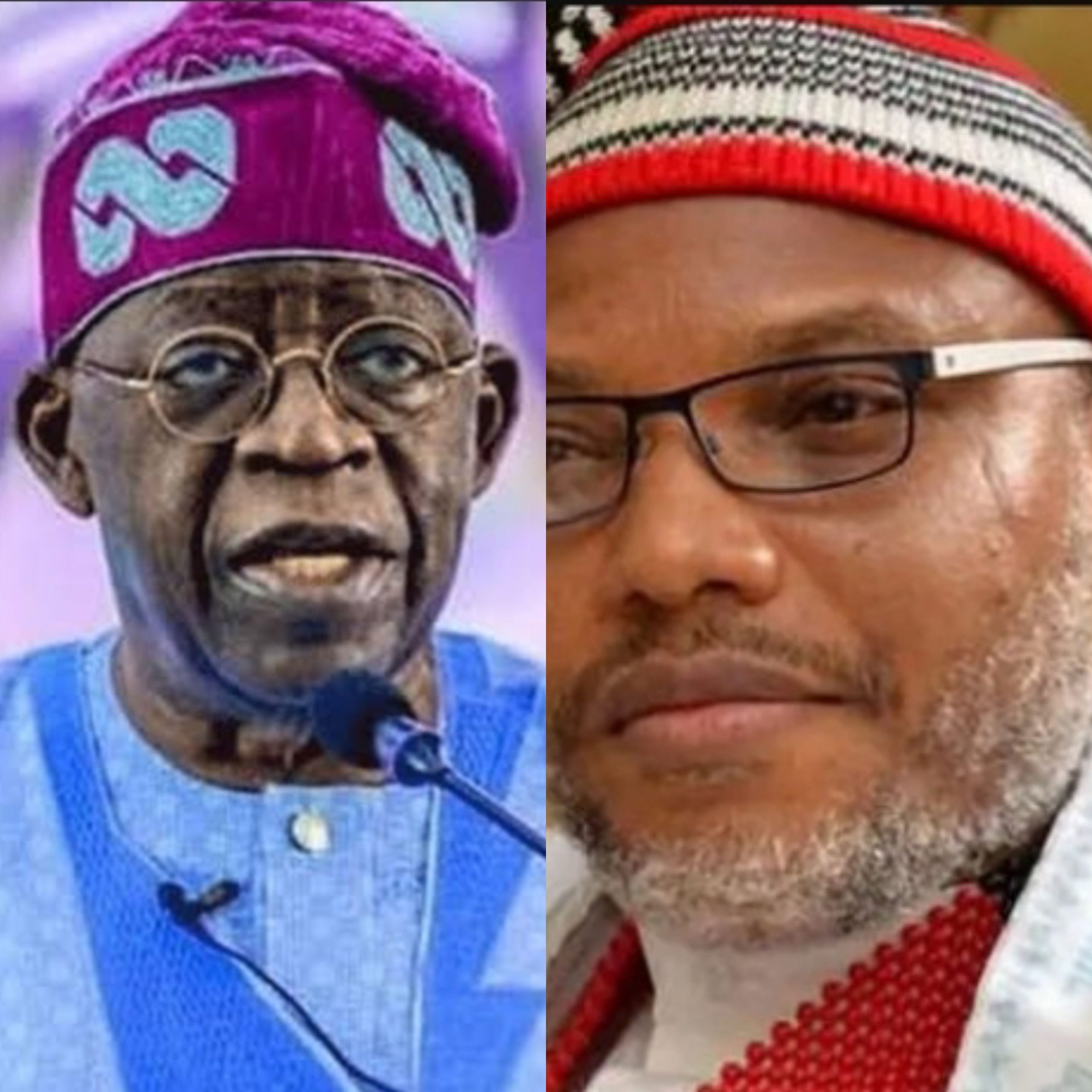
In a decision that has left many Nigerians disheartened, Nigeria’s Supreme Court today upheld President Bola Tinubu’s election victory, despite the legal challenge brought forth by his main rivals. The opponents argued that the election was tainted by irregularities, but their concerns have been dismissed by the court.
With this ruling, the 71-year-old Tinubu now has a firm mandate to govern Nigeria, a country currently grappling with numerous challenges including high inflation, scarcity of foreign currency, a weakening currency, rampant insecurity, and crude oil theft.
Amidst this disappointing outcome, the largest opposition party, People’s Democratic Party (PDP), expressed their alarm and disappointment with the court’s decision. “It is disappointing and alarming to see the ruling from the Supreme Court,” expressed the PDP. They also added, “This judgment by the Supreme Court has evidently shaken the confidence of Nigerians in the judiciary, especially the Supreme Court as the last hope of the common man.”
However, Tinubu himself welcomed the judgment and called for unity, stating that the nation must continue to work together to build a better Nigeria. “We are all members of one household, and this moment demands that we continue to work and build our country together.”
Since the Nigeria’s return to democracy in 1999, allegations of electoral fraud and ballot-rigging have plagued Nigeria’s electoral processes. This ruling by the Supreme Court echoes patterns from past presidential elections, where attempts to challenge results through the courts have been unsuccessful.
The PDP voiced their concern, expressing that this judgment has eroded Nigerians’ confidence in the judicial system, particularly the Supreme Court, which is often seen as the last resort for justice.
Despite finishing second and third respectively during the February vote, Atiku Abubakar of the PDP and Peter Obi of the Labour Party rejected the results and called for the annulment of Tinubu’s victory. Their appeal focused on the failure of the electoral commission to electronically transmit polling station results to an online platform, which they believed compromised the authenticity of the election. Additionally, they argued that Tinubu did not meet the legal threshold of securing at least 25% of the vote in the federal capital, Abuja, to become president.
Unfortunately, the Supreme Court judges dismissed all their arguments, further deepening the disappointment felt by Nigerians who were hopeful for a different outcome.
In another development, Justice A. O. Onovo of Enugu State High Court earlier today ruled that the proscription of the Indigenous People of Biafra (IPOB) by the Southeast Governors’ Forum in 2017 was illegal.
Justice Onovo said in the ruling, “The proscription of IPOB by the Southeast Governors’ Forum in 2017 was illegal.”
Recall that the governors, led by former Governor Dave Umahi of Ebonyi State, proscribed IPOB founded by Mazi Nnamdi Kanu, and about three days later, the federal government listed IPOB as a terrorist organisation.
Former Governor Dave Umahi expressed, “We have decided to proscribe IPOB due to their activities that threaten the peace and security of the region.”
Kanu had approached the court to seek the reversal of the prescription based on the fact that IPOB is a registered organisation, and composed of members who are exercising their right of association.
According to Kanu’s special counsel, Barr Aloy Ejimakor, “We filed the suit seeking the reversal of the proscription of IPOB and the listing as a terrorist group.”
 Barr Aloy Ejimakor addressing the press after the court verdict
The respondents to the case are the southeast governors and the federal government. The suit was instituted by Kanu’s special counsel, Barr Aloy Ejimakor.
Justice A.O. Onovo agreed with Kanu’s arguments and stated, “The practical application of the Terrorism Prevention Act and the executive or administrative action of the respondents which directly led to the proscription of IPOB and its listing as a terrorist group is illegal, unlawful, unconstitutional and amounts to infringement of the applicant’s fundamental rights.”
Regarding the issue of self-determination, Justice A.O. Onovo emphasized, “Self-determination is not a crime and thus cannot be used as a basis to arrest, detain, and prosecute the applicant, Mazi Nnamdi Kanu.”
In response to the ruling, Ejimakor commended the court saying, “We are grateful that justice has prevailed over this matter since 2017. The court has reaffirmed the hopes of the common man in the judiciary. You have saved thousands of lives.”
The court granted N8bn damages to Kanu and ordered the respondents to issue official letters of apology to him, as well as publish those apologies in three national dailies. However, the court declined jurisdiction in stopping the criminal trial of Kanu as it is currently before the Supreme Court. GMTNews