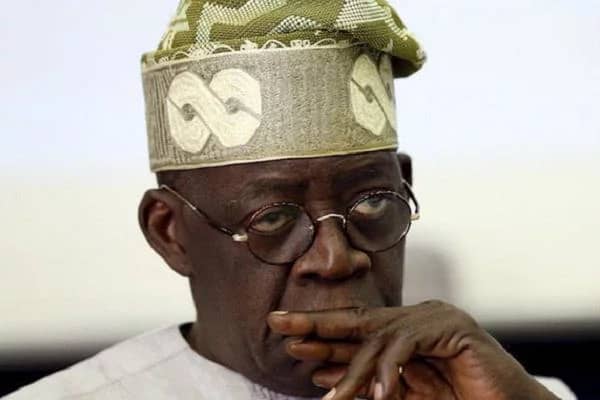
The United States Department and Federal Bureau of Investigation (FBI) have announced the timeline for the release of Nigerian President Bola Ahmed Tinubu’s criminal and immigration records to the public. In a court document, the FBI and US State Department explained that “unusual circumstances” have prevented the immediate release of these records.
As a response to a freedom of information request, US authorities clarified that even if the demanded records of the Nigerian president were to be released, it would not be before January 2026. This timeline reflects the necessary time required for proper review and processing.
In light of this situation, a civil lawsuit has been filed concerning this matter. The case has been presented before Judge Beryl Howell of the United States District Court for the District of Columbia in Washington, D.C.
Please note that this summary is based on the available information at this time, and any further updates regarding the release of President Tinubu’s records will be communicated accordingly.
Demand for Release of Tinubu’s Criminal Record
An American public disclosure activist named Aaron Greenspan has recently filed a request to various federal and local agencies, including the FBI, State Department, Department of Treasury, and Drug Enforcement Administration, urging for the immediate release of Nigerian President Tinubu’s immigration and criminal records. This demand was prompted by Tinubu’s claims in court that he has never committed any crimes during his time in the United States.
Moreover, President Tinubu has consistently maintained that he owns his identity, despite suspicions that he may have changed names and altered education records in the past. These allegations have sparked numerous controversies and raised questions about his true identity.
The request made by Greenspan is a response to these controversies and aims to shed light on President Tinubu’s background and authenticity. By seeking the release of his immigration and criminal records, Greenspan hopes to uncover the truth about Tinubu’s past.
As the demand for transparency and accountability grows, the release of President Tinubu’s immigration and criminal records will provide crucial information to assess the credibility of his claims and resolve the ongoing debates surrounding his identity.
Conflicting Records Surrounding Tinubu’s Background
The educational records of the former Governor of Lagos State, Tinubu, have raised questions due to omissions and contradictions that remain unclear to the public. One notable instance is Tinubu’s sworn statement to the Independent National Electoral Commission (INEC) in 1999, where he claimed to have attended the esteemed University of Chicago. However, the university has disassociated itself from Tinubu’s claims.
An alternative American institution, Chicago State University, has confirmed the attendance of an individual named Bola Tinubu, but it remains uncertain if this refers to the Nigerian president. Interestingly, records from this university indicate that a person named Bola Tinubu, who attended in the 1970s, was identified as a female student.
Furthermore, Tinubu previously stated under oath in 1999 that he attended primary and secondary schools in Lagos and Ibadan during the 1950s and 1960s. However, these assertions were removed from his recent INEC application form ahead of the general elections in February of this year. No explanation was provided for the removal of these claims, and there is no evidence of the existence of the primary school Tinubu mentioned.
These discrepancies in Tinubu’s educational records have raised concerns and have become a subject of public scrutiny. The inconsistencies in his statements highlight the need for clarity and transparency regarding his educational background.
In an important development, it is worth recalling that Tinubu was implicated in U.S. court documents in 1993 as a facilitator of money laundering from drug trafficking operations. During that period, he reportedly forfeited the sum of $460,000.
These records have now become a significant aspect of an ongoing legal challenge against Tinubu’s election as President of Nigeria, currently being heard by a tribunal in Abuja. This has led Aaron Greenspan, the operator of the PlainSite website which holds records from American courts and institutions, to submit multiple requests to relevant U.S. authorities who possess documents that could potentially provide clarity on the pressing questions being raised by Nigerians.
Among these authorities, the State Department is believed to possess records that can verify if the individual who applied for a U.S. visa and traveled under the name Bola Tinubu in the 1970s is indeed the same person who now holds the leadership position in Nigeria.
Furthermore, it is expected that the FBI will provide additional information concerning Tinubu’s involvement in drug-related activities in the United States, as well as any other undisclosed criminal charges that he may have faced but which are not publicly recorded.
These forthcoming revelations from the State Department and FBI have the potential to shed further light on Tinubu’s past, specifically addressing the allegations of drug connections and providing insights into undisclosed criminal matters.
In a letter dated May 15, 2023, the State Department informed Mr. Greenspan that they would not be able to respond to his request within the 20-day statutory timeline due to “unusual circumstances.” Similarly, on August 4, 2022, the FBI also notified Mr. Greenspan that the processing of his request was subject to “unusual circumstances.”
Subsequently, on March 22, 2023, the FBI stated its intention to release all documents related to Tinubu in their possession. However, they specified that this would not occur before January 2026, at the earliest. Other agencies, such as the Internal Revenue Service of the Department of Treasury and the Drug Enforcement Administration, also cited the same “unusual circumstances” in their refusal to release the requested documents.
The FBI further justified their decision by stating that Mr. Greenspan had not sufficiently demonstrated that the requested information is in the public interest and would significantly contribute to understanding the government’s operations and activities.
These developments highlight the challenges faced in obtaining the requested information regarding Tinubu’s records. The delays and refusals to release the documents by various agencies on the grounds of “unusual circumstances” have contributed to the ongoing complexity surrounding the issue.
In response to the activist’s persistence, it was revealed that Tinubu’s drug forfeiture case in Chicago had attracted significant attention to the activist’s website, becoming one of the most viewed records in the past year. This website houses a vast collection of over 15 million records.
As a result, all the agencies involved have been summoned to appear in court. They are required to provide an explanation as to why records pertaining to a Nigerian president were considered unusual and insignificant for public release.
Assistant U.S. attorney Jared Littman has been named as the representative for all the agencies involved. He has requested a delay until August 28, 2023, to file a response to the lawsuit, which was initiated on June 12, 2023, according to the Peoples Gazette.
This recent development indicates an ongoing legal process seeking accountability and transparency regarding the release of records relating to Tinubu. The court proceedings will play a crucial role in determining the justifiability of withholding the requested information from the public.