Former NBA President Afam Osigwe says Nigeria has one of the highest numbers of electoral disputes globally, citing concerns over electoral institutions, evidence and judicial processes.
Former President of the Nigerian Bar Association (NBA), Mazi Afam Osigwe, SAN, says Nigeria is one of the countries with the highest numbers of electoral disputes globally, warning that the trend could undermine public confidence in the democratic process.
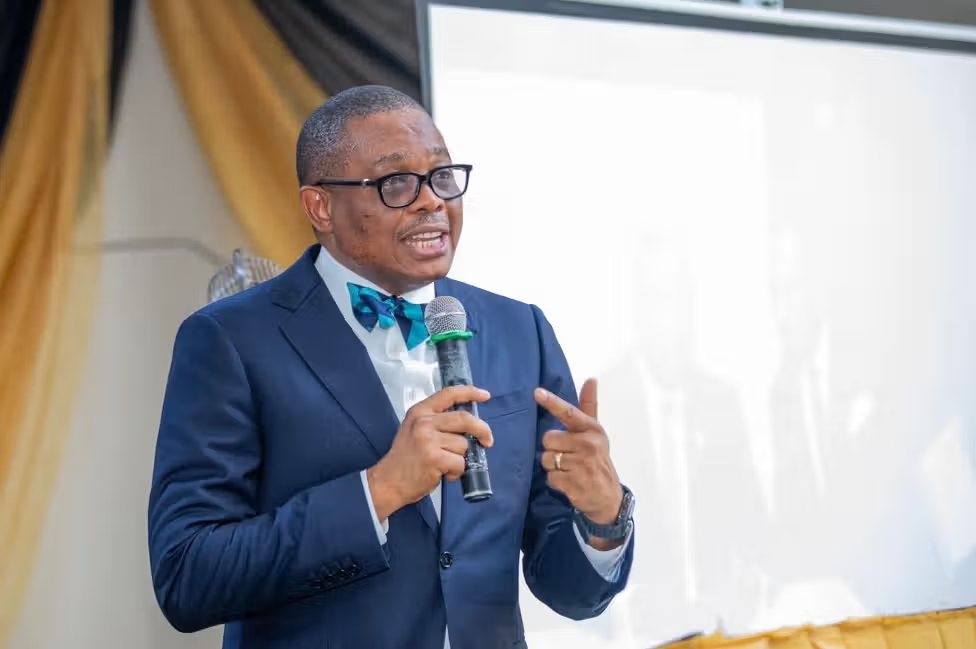
Osigwe made the submission on Thursday while delivering a paper titled, “Election Petition in the Digital Age: Independence, Evidence, BVAS and the Court,” at the 22nd Nigerian Guild of Editors (NGE) Conference in Enugu.
He attributed the high level of electoral litigation partly to difficulties in proving alleged electoral malpractice and non-compliance with electoral laws, which he said had contributed to the growing “judicialisation” of the electoral process.
“I see that Nigeria is one of the countries with the highest number of electoral disputes. The problem with Nigeria is simply and squarely the failure of leadership,” Osigwe said.
He said the challenge of leadership extended beyond the presidency, state and local governments, arguing that responsibility also rested with citizens and institutions.
Osigwe said the increasing involvement of the courts in electoral matters raised concerns about whether elections were ultimately being determined by voters or through litigation.
According to him, the credibility of elections is closely linked to the independence of electoral management institutions, the quality of evidence presented before election tribunals and the ability of courts to resolve disputes consistently and within prescribed timeframes.
He also linked declining voter participation to concerns among citizens about whether their votes would ultimately determine electoral outcomes, citing allegations of violence, manipulation and other electoral irregularities as factors capable of weakening confidence in the process.
The senior advocate expressed concern about the appointment process for some electoral officials, saying perceived political influence could affect public confidence in the independence of electoral institutions. Other reports from the conference similarly quoted him as raising concerns about the independence of the Independent National Electoral Commission (INEC).
On electoral technology, Osigwe said the introduction of systems such as the Bimodal Voter Accreditation System (BVAS) was expected to improve the electoral process but noted that legal and evidentiary requirements could make it difficult for petitioners to effectively present and rely on electronic evidence.
He called for reforms to strengthen electoral institutions and improve the electoral justice system, saying technology should not become an additional burden for litigants seeking to establish alleged electoral violations.
“An electoral process without credibility would undermine the legitimacy of those who emerge as leaders,” he said.
Osigwe also expressed concern over inconsistencies in the interpretation and application of electoral and judicial rules, saying such inconsistencies could affect accountability and transparency.
He further raised concerns about the financial and other barriers confronting Nigerians seeking elective office, arguing that such challenges could discourage qualified citizens from participating in politics.
The former NBA president urged journalists to continue holding political leaders and institutions accountable, stressing the media’s role in drawing attention to weaknesses within the electoral and judicial systems.
“Can you not see that our electoral processes, the judicial processes concerning them, are headed for the rocks if they have not already hit the rocks?” he asked.
Osigwe also warned that weaknesses in electoral and judicial processes could have wider consequences for governance and public security if individuals who were not adequately qualified for leadership positions emerged through flawed processes.
He urged stakeholders to pursue reforms capable of restoring public confidence and ensuring that elections are ultimately determined by credible voting processes rather than prolonged litigation.
Visit GMTNewsng for more news stories.