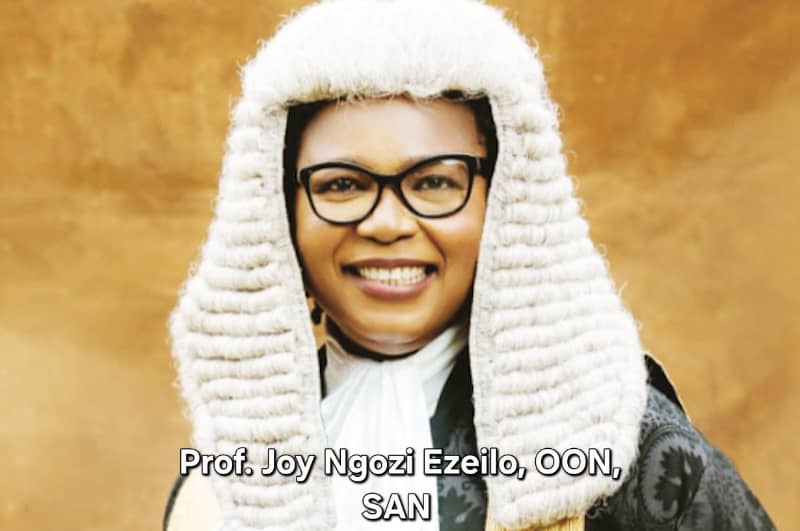
Prof. Joy Ngozi Ezeilo calls for stronger accountability, rights-based security and regional collaboration as the Southeast Human Rights Bureau and Open Source Reporting Platform are launched in Enugu.
ENUGU — Former United Nations Special Rapporteur on Trafficking in Persons, Prof. Joy Ngozi Ezeilo (SAN, OON) has called for a coordinated regional response to growing human rights challenges in Southeast Nigeria, declaring that the newly launched Southeast Human Rights Bureau should become a powerful institution for promoting peace, justice and accountability rather than another symbolic initiative.
Delivering the keynote address at the launch of the Southeast Human Rights Bureau, unveiling of the Open Source Reporting Platform and capacity-building programme for Southeast human rights defenders organised by the Rule of Law and Accountability Advocacy Centre (RULAAC) at the Swiss Carlton Hotel, Enugu, Prof. Ezeilo said the region had reached a defining moment that demands collective action against impunity, insecurity and shrinking civic space.
Speaking on the theme, “Beyond Resistance: Mobilizing Regional Human Rights Protection for Peace, Justice, and Accountability in Southeast Nigeria,” the renowned human rights advocate argued that citizens across the region have increasingly become victims of arbitrary arrests, prolonged detention, excessive use of force, economic hardship and violent attacks from both state and non-state actors.
She stressed that the Southeast Human Rights Bureau must serve as a trusted institution for documenting violations, coordinating advocacy, promoting institutional reforms and strengthening early warning systems capable of preventing conflicts before they escalate.
“We are not gathered here today to merely launch another platform or unveil digital tools. We are here because human dignity in Southeast Nigeria is under siege, and our silence is no longer an option,” Ezeilo declared.
The former Dean of the Faculty of Law, University of Nigeria, Nsukka, recalled her decades-long involvement in Nigeria’s pro-democracy movement and international human rights advocacy, noting that the current realities in the Southeast require stronger collaboration among governments, civil society organisations, security agencies and development partners.
She described the launch of the Southeast Human Rights Bureau as a continuation of efforts that began in 2017 with the establishment of the South East Human Rights Situation Room during the height of Operation Python Dance II.
According to her, the coalition, which now comprises more than 100 civil society organisations, demonstrated that citizens could unite to defend constitutional rights whenever institutions failed to adequately protect the people.
Beyond addressing state excesses, Ezeilo challenged communities to confront internal abuses, particularly the exploitation of young girls subjected to domestic servitude, physical violence, starvation and sexual abuse.
She described such practices as modern-day slavery that contradict the region’s cultural values and respect for human dignity.
“Human rights protection is not a barrier to security; it is the foundation of sustainable peace and human security. When rights are respected, trust is built. When justice is accessible, grievances are reduced, and when accountability is genuine, impunity diminishes,” she said.
The keynote speaker also highlighted the significance of the newly introduced Open Source Reporting Platform, describing it as a technological innovation capable of transforming smartphones, satellite imagery and digital evidence into reliable tools for exposing abuses and strengthening accountability.
However, she cautioned users against spreading misinformation, insisting that every investigation conducted through the platform must remain ethical, evidence-based and professionally verified.
“Open-source reporting is technology for accountability. It can expose abuses, challenge official narratives and empower communities to demand justice, but it must always be grounded in truth,” she emphasised.
Ezeilo devoted considerable attention to the welfare of human rights defenders, warning that many activists continue to face harassment, intimidation, arbitrary detention and digital surveillance simply for carrying out legitimate civic responsibilities.
She argued that courage alone cannot sustain advocacy and called for stronger institutional protection, legal defence mechanisms, mental health support and secure digital networks for frontline defenders.
Turning to security agencies, the former UN Special Rapporteur urged law enforcement institutions to strengthen public confidence by upholding due process and respecting constitutional safeguards.
She maintained that security and human rights should not be viewed as competing interests but complementary pillars of democratic governance.
“Authority does not come from the uniform or the weapon; it comes from the Constitution and the trust of the people. This legitimacy cannot be demanded; it must be earned,” she told representatives of the police, military and correctional services attending the programme.
The human rights advocate further endorsed the establishment of state police but insisted that any implementation must be accompanied by strong legal safeguards, independent oversight mechanisms and sustainable funding to prevent political abuse.
“Nigeria needs policing that is local to protect lives and property. But there should be no state police without strong laws, independent oversight and real budgets. If governors can weaponise it, we would merely replace insecurity with intimidation,” she warned.
As part of her recommendations, Ezeilo called for stronger regional human rights protection mechanisms, improved governance, continuous human rights training for security personnel, wider civic participation and deeper partnerships between public institutions and civil society organisations.
She urged participants to use the Southeast Human Rights Bureau to build a credible repository of verified human rights information, generate evidence for policy reforms, strengthen early warning systems and amplify victims’ voices while maintaining professionalism and political neutrality.
Congratulating RULAAC Executive Director Okechukwu Nwaguma and other organisers, she described the Bureau as a potential model that could be replicated across Nigeria to strengthen democratic governance and institutional accountability.
She concluded with a rallying call for a Southeast where justice is accessible, civic freedoms are protected, institutions remain accountable and every citizen enjoys the full protection of the law.
“The future of the Southeast will not be defined by fear, violence or impunity. It will be defined by the choices we make today. Let this Bureau become a beacon of truth, a sanctuary for victims and a catalyst for accountability,” Ezeilo said.
Visit GMTNewsng for more news stories.