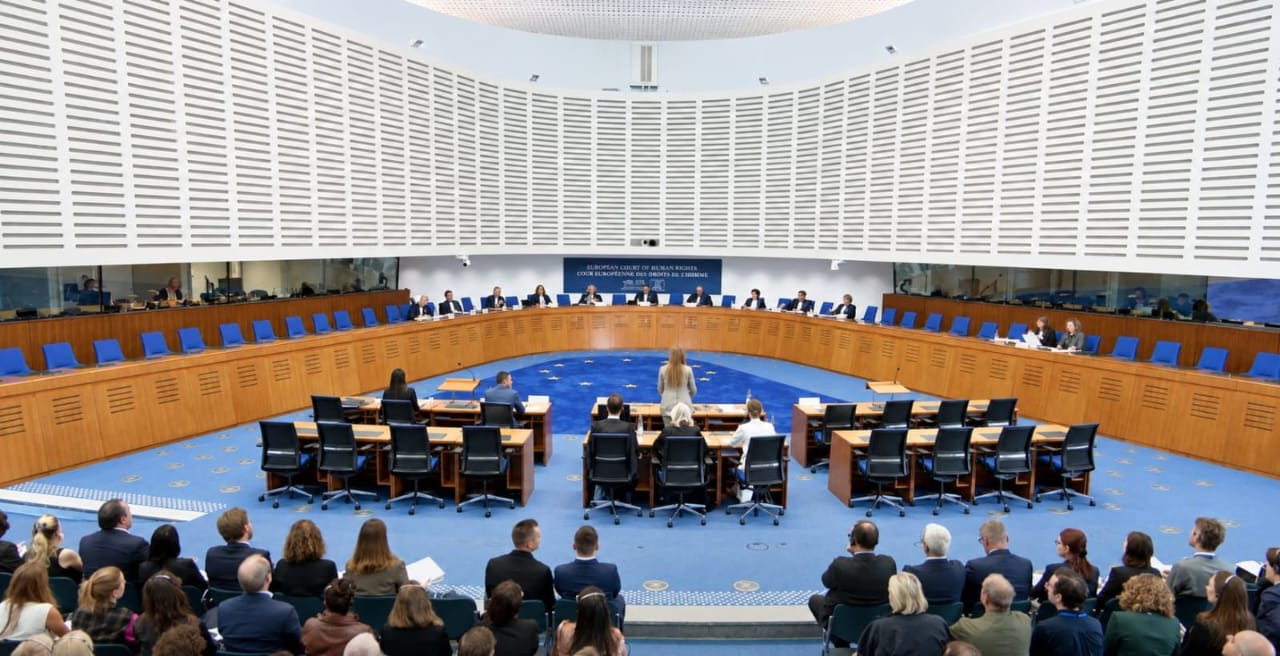
STRASBOURG, October 5, 2026 — The European Court of Human Rights (ECHR) has held a landmark hearing concerning 10 Ukrainian children whose whereabouts have remained unknown since Russia took control of Crimea in 2014, as international efforts to establish the fate and rights of Ukrainian children affected by the war continue to expand.
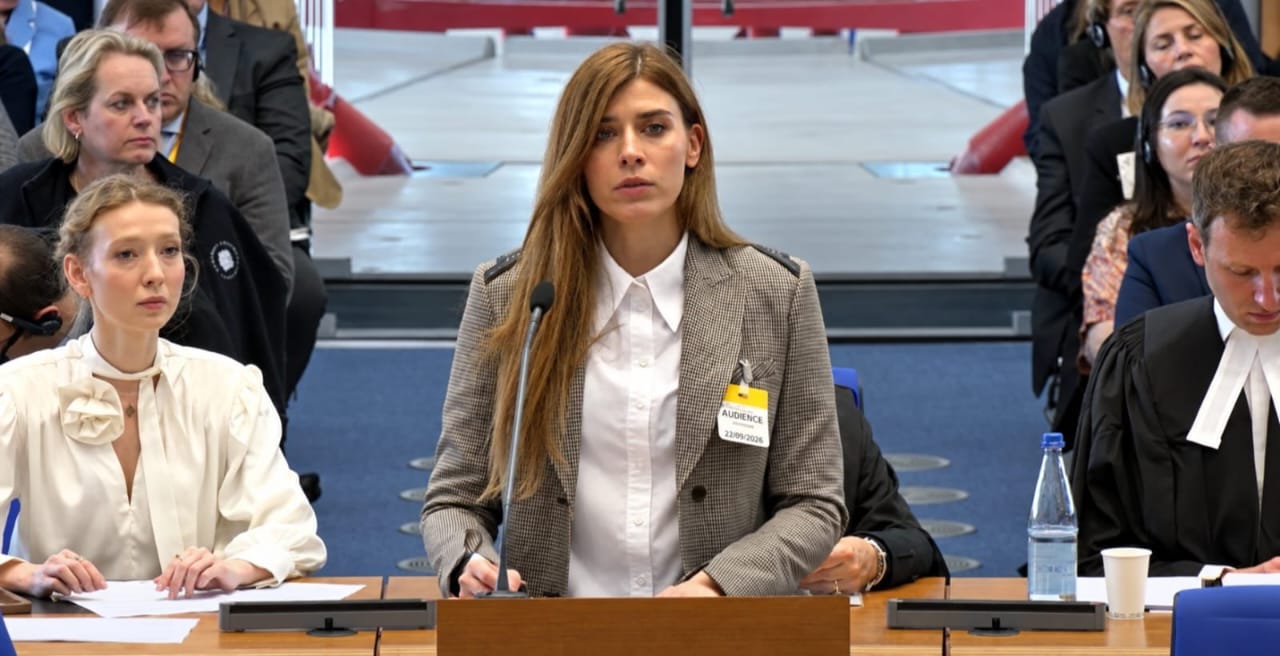
The case, Ukrainian Helsinki Human Rights Union on behalf of ten Ukrainian children v. Russia (application no. 6719/23), was heard by a Chamber of the Strasbourg-based Court on September 22, 2026. The Court says the children were living in childcare institutions in Crimea when Russia asserted jurisdiction over the peninsula. According to the Ukrainian Helsinki Human Rights Union (UHHRU), which brought the application on their behalf, there has been no information about their whereabouts since 2014 despite repeated requests from Ukrainian authorities.
The hearing adds a significant human-rights dimension to an expanding international accountability effort over the treatment of Ukrainian children under Russian control.
The applicants allege that Russian authorities imposed Russian nationality on the children and placed them within Russian adoption and foster-care systems, with some potentially already adopted. UHHRU argues that, taken together, the circumstances amount to the children’s enforced disappearance.
The ECHR has not yet determined whether those allegations are established. The Court heard arguments on both the admissibility and merits of the case and will issue its decision at a later date. The Court’s official record confirms the September 22 hearing and identifies the case as concerning 10 Ukrainian children from Crimean childcare institutions whose whereabouts have remained unknown since 2014.
The case concerns Articles 5 and 8 of the European Convention on Human Rights. Under Article 5, the applicants argue that the children’s continued placement in institutions, the alleged concealment of information about their whereabouts and their inclusion in adoption systems violated their right to liberty and security. Under Article 8, they argue that the alleged imposition of Russian nationality and the children’s inclusion in adoption systems interfered with their right to respect for private life and identity.
The case also highlights the difficulty of securing legal representation for Ukrainian children who were very young when the alleged violations occurred and who cannot themselves provide informed consent or establish their present circumstances.
The International Bar Association’s Human Rights Institute (IBAHRI) participated as a third-party intervener. Its intervention addressed, among other issues, whether the Court should take the children’s extreme vulnerability, the circumstances of occupation and armed conflict into account when assessing representation, and how the right to identity should be considered in the context of alleged systematic policies affecting Ukrainian children.
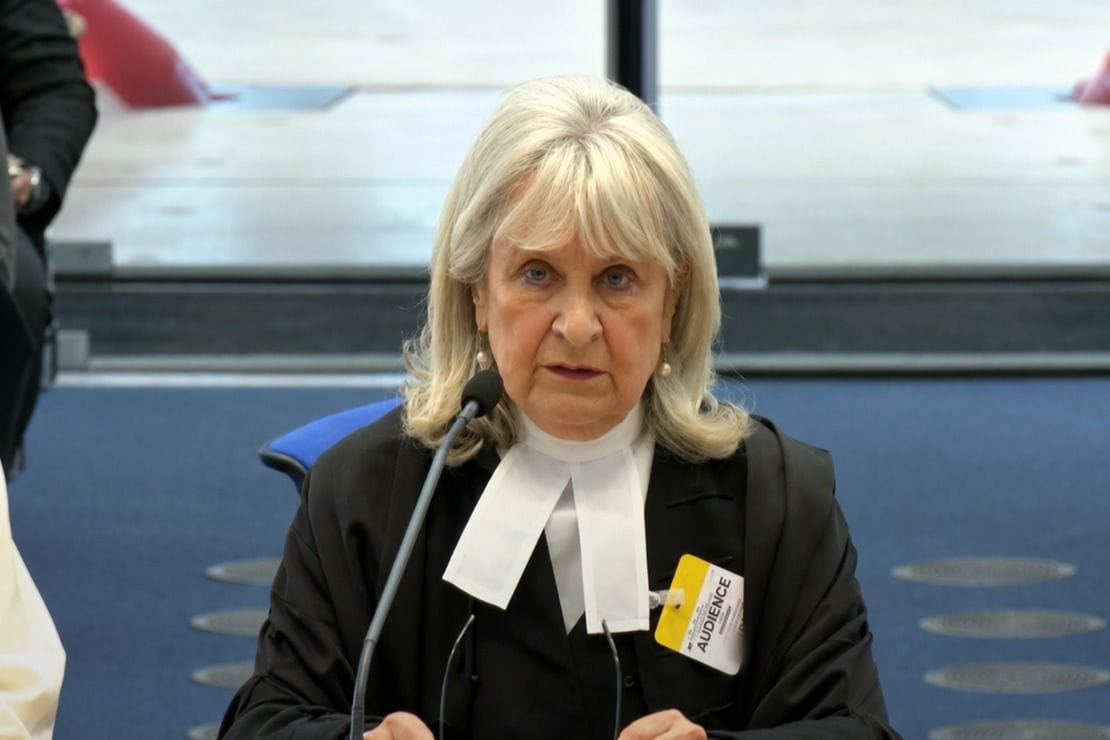
Baroness Helena Kennedy, Director of IBAHRI and Co-Chair of the Bring Kids Back UA Task Force, said:
“This case is about far more than ten children. It stands for thousands of Ukrainian children whose whereabouts remain unknown and whose identities, family ties and futures have been systematically destroyed.”
The statement is IBAHRI’s characterization of the wider situation; it is not a finding by the ECHR.
The Ukrainian Government also intervened in the proceedings. Its delegation was led by Marharyta Sokorenko, Government Agent of Ukraine before the ECHR. Ukraine linked the case to broader inter-State proceedings concerning Crimea and other alleged violations arising from Russia’s actions in Ukraine.
Sokorenko said: “Russia must provide information on the fate of the Ukrainian children who have ended up under its control and ensure their return. The case of the ten children from Crimea reflects a much wider problem systemic violations of the rights of Ukrainian children in the occupied territories that have continued since 2014.”
The ECHR case comes against the background of wider international concern over the fate, identity and treatment of Ukrainian children living in territories occupied by Russia or allegedly transferred to Russia.
The International Criminal Court (ICC) issued arrest warrants in March 2023 for Russian President Vladimir Putin and Maria Lvova-Belova, Russia’s Commissioner for Children’s Rights, after the Pre-Trial Chamber found reasonable grounds to believe that they bore criminal responsibility for the alleged unlawful deportation and transfer of Ukrainian children from occupied areas to Russia. The warrants concern alleged war crimes and are not convictions.
The issue has since broadened beyond the physical transfer of Ukrainian children.
At a high-level United Nations General Assembly event in September, a cross-regional coalition argued for a wider accountability framework addressing alleged indoctrination, identity suppression and militarisation of Ukrainian children under Russian control.
The Atrocity Crimes Advisory Group, working through Georgetown University’s International Criminal Justice Initiative, presented an assessment that identified an estimated 1.6 million Ukrainian children in occupied territories as exposed to Russian-directed indoctrination and militarisation, while at least 582,600 school-aged children were identified as being in schools operating under Russian educational standards.
The figures describe a broader population exposed to the alleged policies; they should not be interpreted as meaning that every one of the 1.6 million Ukrainian children has been individually documented as militarised.
The broader concern has also reached the Organisation for Security and Co-operation in Europe. In May 2026, 41 OSCE participating States invoked the Moscow Mechanism in relation to the alleged militarisation and indoctrination of Ukrainian children by the Russian Federation. The mechanism provides for independent experts to investigate particular human-rights concerns.
Ukraine’s Deputy Foreign Minister Mariana Betsa said the alleged treatment of Ukrainian children went beyond the issue of deportation.
“The unlawful deportation and forcible transfer of Ukrainian children by the Russian Federation is a grave violation of international law, and also an attempt to deprive Ukraine of its future,” Betsa said. “Ukrainian children who live under Russian control today are subjected by Russia to militarization and indoctrination that includes forced imposition of Russian citizenship, followed by indoctrination at school, military camps, military academies and conscription to the Russian army.”
Those assertions reflect Ukraine’s position and the allegations advanced by the accountability campaign; they have not been adjudicated by the ECHR in the 10-child case.
Maksym Maksymov, Head of Bring Kids Back UA, argued that focusing exclusively on deportation could overlook the circumstances of Ukrainian children who remain in occupied territory.
“This is the arc of Russia’s design: isolate, reprogramme, deploy,” Maksymov said. “Deportation, forcible transfer, indoctrination, and militarisation form one system that must be investigated as one state policy.”
Clint Williamson, Lead Coordinator of the Atrocity Crimes Advisory Group and Senior Director of Georgetown University’s International Criminal Justice Initiative, said the alleged conduct warranted continued investigation and documentation.
“Our overarching conclusion is that the documented campaign of indoctrination and militarisation of Ukrainian children, implemented by Russian authorities, is in violation of various aspects of international humanitarian law, international human rights law, and international criminal law,” Williamson said. “It requires sustained investigation, documentation, accountability for the perpetrators, and perhaps most importantly, support for the affected children and their families.”
The legal theories being advanced in these international forums are not identical. The ECHR case concerns alleged violations of rights protected under the European Convention, particularly liberty, security and private life. The ICC proceedings concern alleged war crimes involving deportation and forcible transfer. The newer accountability proposals seek to explore whether alleged identity suppression, persecution, indoctrination and militarisation may also engage existing international criminal-law provisions.
Meanwhile, international governments have continued to focus on the practical return and reintegration of Ukrainian children.
Canada, Ukraine and Norway held the second Pathways to Peace international conference in Toronto on September 28 and 29. Its joint communiqué expressed concern about the alleged militarisation of Ukrainian children in temporarily occupied territories and said such actions have serious consequences for their identity, well-being, family unity and human rights. The participants reaffirmed the need for the safe and unconditional return of children unlawfully deported or forcibly transferred.
The conference produced the Toronto Pledge, while Canada said international coordination on returning Ukrainian children had expanded to 51 members of the International Coalition for the Return of Ukrainian Children. The conference also addressed tracing, verification, return pathways, rehabilitation and reintegration.
For the 10 children at the centre of the Strasbourg proceedings, however, the immediate question remains one of identity and whereabouts.
The children were between one and five years old when the events in Crimea began in 2014. They are now teenagers.
Maksymov said their individual circumstances should remain central to the international legal debate.
“When Russia occupied Crimea, these children were between one and five years old. The Ukrainian State was their guardian, and ever since it has been unable to get an answer to a simple question: where are they?” he said. “Justice for them is not only about punishing those responsible. It is the right of every child and their loved ones to know the truth: where the child is, who they are with, and who decided that they are no longer Ukrainian.”
The ECHR has not disclosed the children’s identities, having granted anonymity and confidentiality. Its hearing record confirms that the case remains pending and that a judgment will follow after consideration of the parties’ written and oral submissions.
The proceedings therefore represent neither a final judicial finding against Russia nor a determination that the allegations concerning the 10 Ukrainian children have been proved. Rather, they place the rights of children caught in the aftermath of the Crimea occupation before Europe’s principal human-rights court at a time when international institutions are increasingly examining the wider consequences of the conflict for children’s identity, family relationships, nationality and future.
For the families and authorities seeking answers, the central issue remains simple but unresolved: what happened to the 10 Ukrainian children, and where are they today?
ECHR hears case of 10 Ukrainian children missing since Russia’s 2014 Crimea occupation as international efforts seek accountability and their return.
Visit GMTNewsng for more news stories.