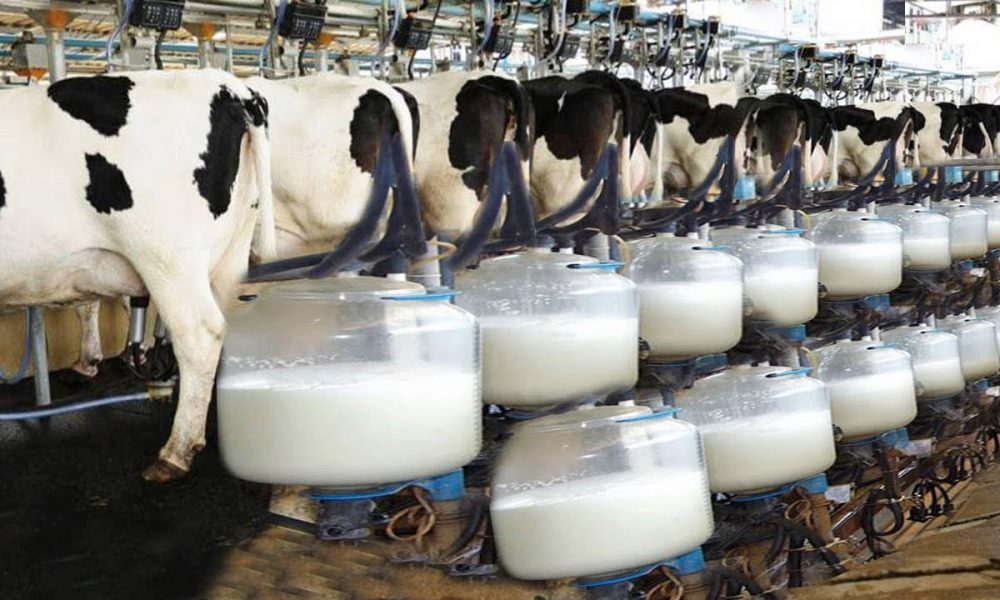
The Federal Government says it is advancing plans to empower 37,000 women and youths through the dairy value chain, focusing on production, processing, marketing, and enterprise development to strengthen Nigeria’s livestock economy.
The Federal Government has announced plans to create economic opportunities for 37,000 women and young people through strategic interventions across Nigeria’s dairy value chain.
The initiative, which targets production, processing, and marketing activities, was disclosed on Saturday in Abuja during a road walk organised to mark the 2026 World Milk Day celebration.
Minister of Livestock Development, Alhaji Idi Maiha, said the programme forms part of broader efforts to empower women dairy farmers and strengthen Nigeria’s livestock sector.
Represented by his Special Assistant, Prof. Eustace Iyayi, the minister explained that the initiative is currently undergoing consultations and is expected to focus on skills development, enterprise integration, access to finance, cooperative strengthening, technology transfer, and sustainable livestock production.
According to Maiha, the government is also considering the establishment of women-led milk aggregation and processing cooperatives aimed at improving local value addition and strengthening links between dairy producers and processors.
He said the intervention would further support better milk storage systems, mobile veterinary services, and extension programmes tailored specifically to women involved in dairy production.
Maiha noted that World Milk Day offers an opportunity to recognise the contributions of dairy farmers and families to food security, nutrition, rural livelihoods, and economic growth.
He stressed that women remain central to milk production, preservation, processing, and marketing across Nigeria and that meaningful transformation of the dairy sector cannot occur without their inclusion.
The minister described women and youths as a critical pillar of the ministry’s livestock development strategy, noting that their participation is essential to achieving sustainable growth in dairy and livestock production.
He reaffirmed the government’s commitment to promoting gender-responsive policies designed to expand opportunities in dairy productivity, value addition, and enterprise development.
Speaking on the broader dairy industry, Maiha said global milk production currently exceeds 780 million metric tonnes annually, citing data from the International Dairy Federation.
He observed that rising population growth, urbanisation, and income levels continue to drive dairy consumption globally, particularly across developing economies.
According to him, Nigeria consumes approximately 1.7 million metric tonnes of milk annually, while local production ranges between 600,000 and 700,000 metric tonnes, leaving a significant supply deficit.
He said the production gap contributes to heavy reliance on imports and foreign exchange spending estimated at about 1.5 billion dollars yearly on dairy products.
Earlier, Permanent Secretary of the Ministry of Livestock Development, Dr Chinyere Akujobi, said the World Milk Day road walk reflected a shared commitment to improving nutrition, encouraging healthy living, and strengthening Nigeria’s dairy industry.
Represented by Dr Victor Egbon, she emphasised the importance of collaboration between government agencies, private sector operators, and development partners in unlocking the dairy sector’s economic potential and reducing dependence on imports.
Akujobi added that stronger partnerships would be vital to improving local milk production and positioning dairy development as a strategic component of national food security and economic growth.
Visit GMTNewsng for more news stories.