S&P Global’s upgrade of seven Nigerian banks signals growing international confidence in Nigeria’s economy, banking reforms and foreign exchange stability, but experts warn that sustaining the momentum will require policy consistency and inflation control.
The recent decision by S&P Global Ratings to upgrade seven Nigerian banks marks one of the strongest international endorsements of Nigeria’s economic direction in recent years. Coming after years of macroeconomic instability, foreign exchange shortages, inflationary pressure and declining investor confidence, the development is being interpreted in financial circles as a signal that global institutions are beginning to regain confidence in Africa’s largest economy.
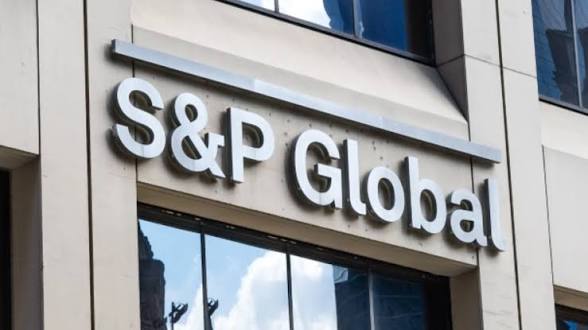
S&P Global upgraded Nigeria’s sovereign credit rating from “B-” to “B” and subsequently raised the long-term ratings of seven Nigerian financial institutions to the same level with stable outlooks. The banks affected are Access Bank Plc, Bank of Industry, Guaranty Trust Bank Ltd., Stanbic IBTC Bank Plc, Standard Chartered Bank Nigeria Ltd., United Bank for Africa Plc and Zenith Bank Plc. The agency also revised the outlooks of Fidelity Bank Plc and First City Monument Bank Plc from stable to positive.
S&P Global is one of the world’s most influential financial ratings institutions. Alongside Moody’s Investors Service and Fitch Ratings, it forms the globally recognized “Big Three” credit rating agencies whose assessments influence international lending, investment flows, sovereign borrowing costs and banking relationships across the world.
The significance of the latest upgrade extends beyond banking terminology and technical ratings. In practical terms, the decision suggests that global markets are beginning to view Nigeria as less risky than before. S&P specifically cited improvements in foreign exchange liquidity, ongoing exchange rate reforms, stronger external balances, increased oil production and improving investor confidence as reasons for the upgrade. The agency also referenced the growing contribution of domestic refining capacity, particularly from the Dangote Refinery, to Nigeria’s economic outlook.
Financial analysts believe the upgrade could positively affect Nigeria’s banking sector in several important ways. Improved ratings generally reduce the cost of international borrowing because investors perceive upgraded institutions as safer and more stable. Nigerian banks seeking foreign credit lines, Eurobond financing or international partnerships may now find global markets more receptive.
An Abuja-based financial analyst, Chinedu Okafor, described the development as “a credibility boost Nigeria badly needed after years of uncertainty in the foreign exchange market.” According to him, “international investors do not merely look at speeches or government assurances; they look at institutions like S&P Global. Once those institutions begin upgrading Nigeria, confidence naturally improves.”
Economists also believe the development could support broader economic recovery if sustained properly. Increased foreign investor confidence may improve capital inflows and foreign exchange liquidity, potentially easing pressure on the naira and strengthening business confidence. For years, Nigeria struggled with investor hesitation driven by multiple exchange rate systems, currency volatility and concerns over policy inconsistency. The latest upgrade signals that some of those concerns may be easing gradually.
However, experts warn against excessive celebration. S&P still classifies Nigeria’s banking environment as high-risk under its Banking Industry Country Risk Assessment framework. Inflation remains elevated, interest rates are high and millions of Nigerians continue to face severe cost-of-living pressures. The upgrade therefore reflects improving conditions rather than complete economic stability.
Economic policy consultant Aisha Bello said the country must avoid complacency. “This is not a declaration that Nigeria’s economic problems are over,” she said. “What S&P has effectively said is that reforms are beginning to produce measurable signals of stabilization. The danger now would be policy inconsistency or reform reversal.”
The sustainability of the upgrade may depend largely on the ability of Nigerian authorities to maintain macroeconomic discipline. Analysts say foreign exchange reforms must continue transparently while inflation control remains critical. Persistent inflation weakens consumer purchasing power, increases business operating costs and raises credit risks within the banking system.
The role of the Central Bank of Nigeria will also remain central. Banking regulators are expected to sustain prudent supervision, recapitalization enforcement and risk management oversight to ensure that Nigerian banks remain resilient despite domestic and global economic uncertainties.
Some analysts believe the upgrade may also strengthen Nigeria’s diplomatic and investment reputation internationally. Global credit ratings often shape how countries are perceived by multinational corporations, institutional investors and international financial institutions. A positive reassessment from S&P therefore sends a broader message that Nigeria’s economic environment may be stabilizing after years of turbulence.
Still, the country faces a delicate balancing act. Investor confidence can rise quickly, but it can also disappear rapidly if reforms stall or macroeconomic instability returns. Maintaining policy consistency, improving oil production, stabilizing the foreign exchange market and strengthening fiscal management will likely determine whether Nigeria sustains this renewed confidence from international financial markets.
For now, however, the S&P Nigeria banks upgrade represents a notable moment for the country’s financial sector. It signals that despite enduring challenges, Nigeria’s banking industry is beginning to regain something it had steadily lost in recent years – international trust.
Visit GMTNewsng for more news stories.