By Maxwell Menkiti Ngene
Dr. Maxwell Menkiti Ngene examines how the political exclusion of the Igbo people continues to shape Nigeria’s unity, governance, and development prospects amid growing calls for equity and inclusion.
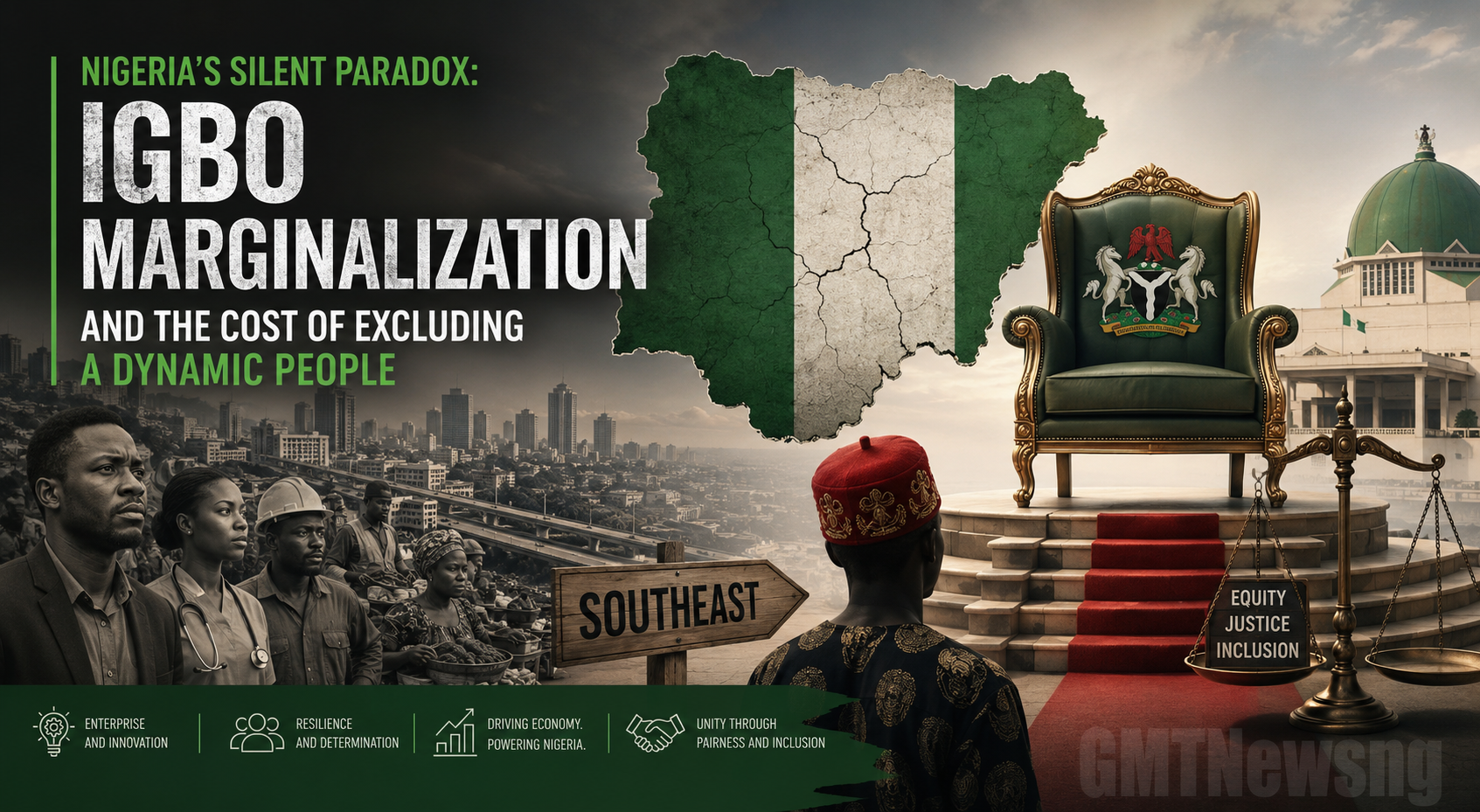
Nigeria remains one of the most paradoxical nations in the modern world. Rich in natural resources, blessed with a youthful population, and strengthened by immense cultural diversity, the country still struggles with underdevelopment, poverty, insecurity, and weak institutions. At the center of this contradiction lies a troubling national anomaly: the persistent political sidelining of the Igbo people of Southeast Nigeria — one of the country’s most entrepreneurial, resilient, and industrious groups. For a nation seeking rapid transformation and sustainable growth, the continued exclusion of a people widely admired for innovation, enterprise, and economic dynamism raises serious questions about justice, unity, and long-term national interest.
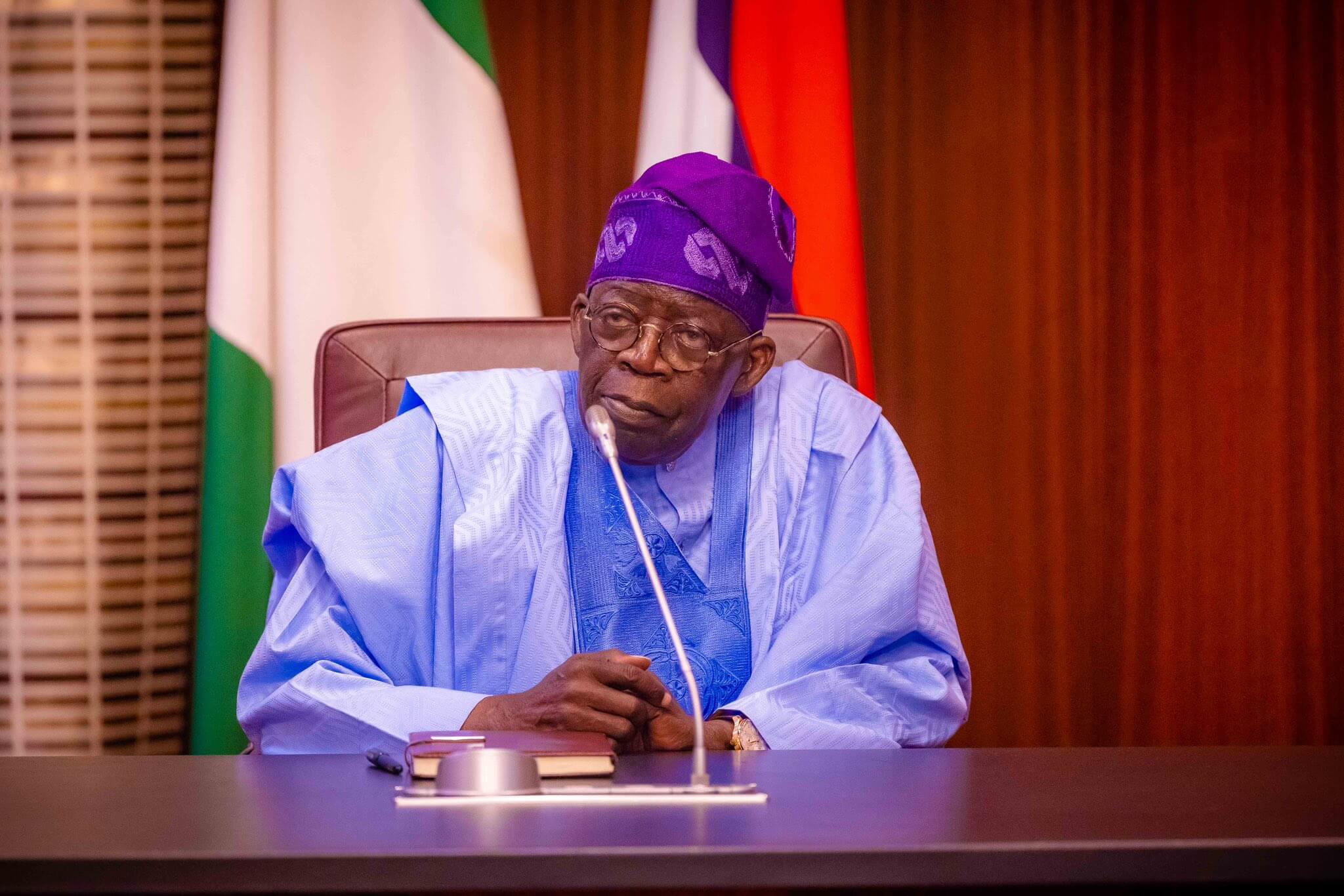
Since the return to democratic rule in 1999, no politician of Igbo extraction has occupied the office of President of the Federal Republic of Nigeria. Political power at the highest level has largely rotated among the North, Southwest, and South-South. Leaders such as Olusegun Obasanjo, Umaru Musa Yar’Adua, Goodluck Jonathan, Muhammadu Buhari, and Bola Ahmed Tinubu have all emerged within the current democratic dispensation, while the Southeast has remained absent from the presidency. Earlier historical figures such as Nnamdi Azikiwe and Johnson Aguiyi-Ironsi represented moments of Igbo leadership at the national level, but the Fourth Republic has produced a conspicuous vacuum despite repeated calls for equity, inclusion, and rotational leadership by groups like Ohanaeze Ndigbo and other sociopolitical stakeholders.
The contradiction becomes even more striking when measured against the Igbo people’s contributions to national development. Across Nigeria and beyond, the Igbo spirit of enterprise is unmistakable. From the commercial hubs of Lagos, Onitsha, and Aba to thriving investments in manufacturing, real estate, pharmaceuticals, transportation, and technology, Igbo entrepreneurship remains one of the strongest drivers of Nigeria’s informal and commercial economy. The celebrated Igbo apprenticeship system — an indigenous model of mentorship, business incubation, and wealth transfer — has empowered generations of entrepreneurs and attracted global scholarly attention as a sustainable framework for grassroots economic development.
Beyond commerce, Igbo professionals continue to distinguish themselves in medicine, engineering, academia, law, media, and finance both at home and in the diaspora. Billions of naira in remittances and investments flow back into Nigeria annually through this network of highly productive citizens. Yet, despite their economic relevance and national spread, political inclusion at the highest executive level remains elusive. This disconnect reinforces perceptions that Igbo marginalization has become structurally embedded within Nigeria’s power arrangement.
The roots of this imbalance are historical and deeply layered. The scars of the Nigerian Civil War between 1967 and 1970 — commonly known as the Biafran War — continue to shape national politics and ethnic trust. Although post-war reconciliation policies were designed to rebuild unity, lingering suspicion, elite calculations, and political anxieties often produced the opposite effect. Nigeria’s federal structure has also compounded the challenge. The Southeast remains the only geopolitical zone with five states, while others possess six or more, creating disadvantages in political representation and resource allocation. Informal zoning arrangements within major political parties have further entrenched power rotations that repeatedly bypass the Southeast in favor of familiar regional balances.
Internal political fragmentation within the Igbo political elite has equally weakened collective bargaining power at critical moments in Nigeria’s democratic evolution. Strategic disunity, inconsistent alliances, and the absence of a coordinated long-term political agenda have often undermined the region’s national aspirations. Yet these realities do not diminish the broader national concern surrounding equity and inclusion.
The consequences of sustained exclusion are significant. When a productive and ambitious segment of the population feels persistently alienated from the highest symbol of national leadership, frustration deepens and national cohesion weakens. This atmosphere has partly fueled separatist agitations, including those associated with Indigenous People of Biafra. It has also accelerated brain drain, as many talented young Nigerians increasingly seek opportunities abroad rather than invest hope in a political system they perceive as exclusionary.
No serious nation can afford to sideline any group that consistently demonstrates creativity, innovation, and economic vitality. Nigeria’s pressing challenges — corruption, unemployment, insecurity, infrastructural decay, and institutional weakness — require the collective strength of all its people. Development thrives where talent is fully harnessed, not where leadership opportunities are confined to narrow political calculations or entrenched regional rotations.
The path forward demands sincerity, courage, and structural reform. Genuine power rotation that accommodates the Southeast would help restore confidence in the Nigerian project and reinforce the principle of fairness. Broader constitutional restructuring toward true federalism, equitable infrastructure development, and merit-driven governance are equally necessary. National progress cannot be built on exclusion or suspicion. It flourishes through inclusion, trust, and equal opportunity.
Nigeria must therefore confront this paradox honestly. A country that alienates one of its most industrious and globally competitive populations while aspiring to rapid development risks working against its own future. The issue of Igbo marginalization is ultimately a Nigerian question. Will the nation continue to recycle historical fears and political exclusion, or will it embrace the strengths of all its peoples in pursuit of collective advancement?
The answer will shape whether Africa’s most populous nation fulfills its immense promise or remains trapped in avoidable limitations. The time for genuine national reflection and inclusive leadership is now, before disillusionment hardens into irreversible division. In the end, unity founded on fairness, justice, and shared opportunity remains Nigeria’s surest path to lasting stability and meaningful progress.
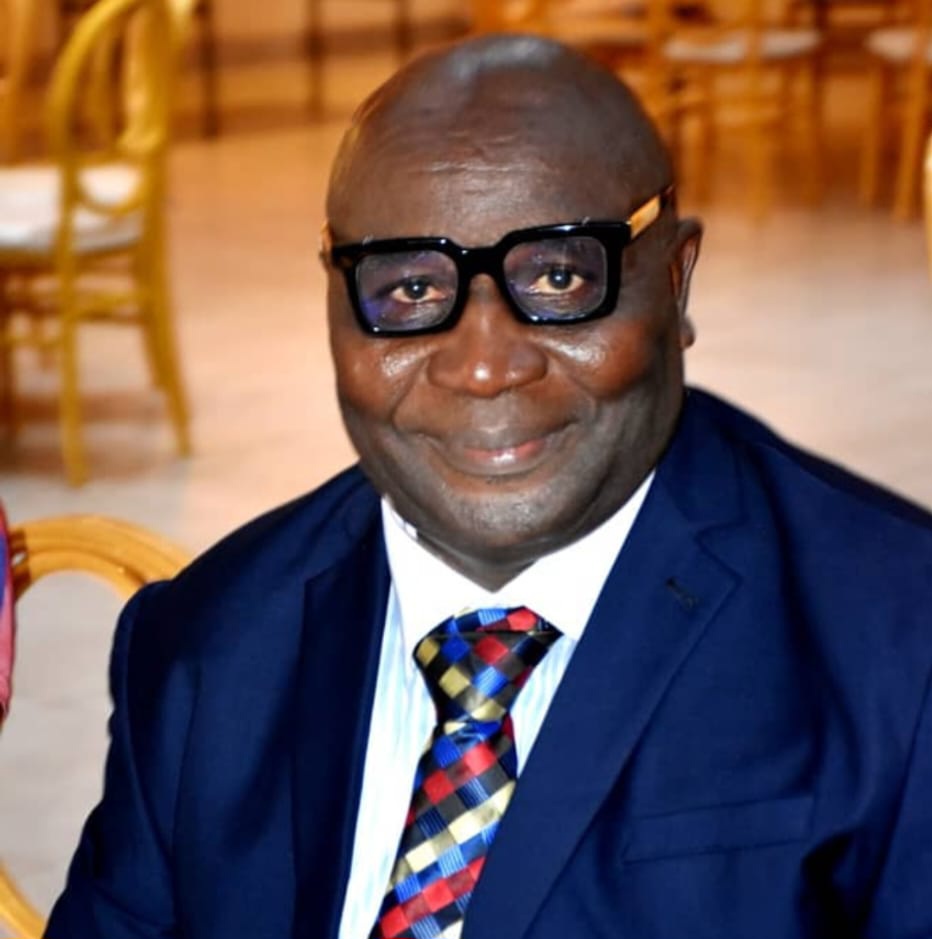
Dr. Ngene is a Senior Lecturer at the Enugu State University of Science and Technology, Agbani. He is a communication scholar and advocate for good governance in Nigeria.
Visit GMTNewsng for more Igbo Marginalization and other stories