The Enugu State Government has intensified efforts to increase enrollment into its Universal Health Coverage scheme, aiming to provide more residents with affordable and accessible healthcare services across the state.
The Enugu State Government has intensified efforts to increase enrollment into its Universal Health Coverage (UHC) scheme as part of measures to expand access to affordable healthcare services across the state.
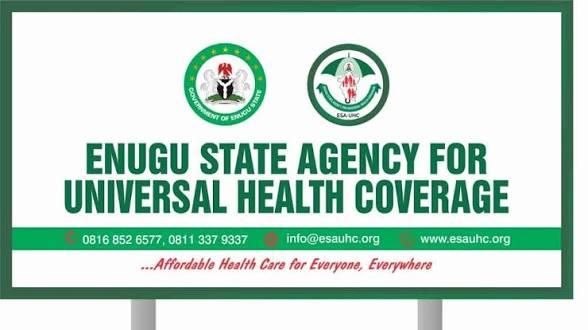
The Executive Secretary and Chief Executive Officer of the Enugu State Agency for Universal Health Coverage (ESAUHC), Dr. Edith Okolo, disclosed this on Tuesday during a UHC Multi-Stakeholder Implementation Meeting held in Enugu.
Okolo said that although the agency had recorded significant progress since the introduction of the programme, more work remained in changing public perception about health insurance.
According to her, many residents initially viewed the scheme with suspicion despite its low premium and extensive healthcare benefits.
“Some people think it is a scam to access healthcare with just N12,000 per year but we are getting positive testimonies from beneficiaries who paid N12,000 and accessed healthcare services successfully,” she said.
The ESAUHC boss noted that health insurance remained mandatory under both the National Health Insurance Authority Law of 2021 and the Enugu State Health Sector Reform Law of 2017.
She explained, however, that the government was currently prioritising persuasion and awareness over immediate enforcement.
“We are trying to appeal to people by showing them the benefits instead of enforcing it immediately, but our next stage will involve enforcement measures,” Okolo stated.
According to her, future enforcement measures could include making health insurance evidence compulsory for accessing certain government services, school enrollment and business license renewals.
She further revealed that the agency planned to introduce a health insurance certificate for businesses as part of licensing requirements.
Speaking on the benefits of the scheme, Okolo explained that the Basic Minimum Package of Health Services covered common illnesses such as malaria, typhoid, pneumonia, hypertension, diabetes, diarrhea, arthritis, pediatric illnesses and snake bites.
She added that enrollees would not pay for consultations, laboratory tests, medications, surgeries or hospital admissions covered under the package.
“It also covers surgeries such as appendectomy and caesarean section, with up to 20 days hospital admission for surgical cases and 15 days for medical cases,” she said.
Okolo disclosed that the agency was currently conducting a special enrollment drive for vulnerable groups, including pregnant women, children under five years, persons living with disabilities, elderly persons aged 85 years and above, as well as extremely poor residents.
According to her, the state aims to enroll at least 45,000 vulnerable persons under the free healthcare scheme jointly funded by the federal and state governments.
For other residents, she said enrollment remained open at an annual premium of N12,000, with flexible payment plans introduced to ease financial pressure.
“We understand that paying N12,000 at once may be difficult for some families, so we introduced installment options of N200 daily for 60 days or N400 daily for 30 days,” Okolo explained.
She stated that the scheme currently partnered with state-owned primary healthcare facilities, faith-based hospitals and private hospitals across Enugu State.
Okolo added that the agency’s long-term objective was to ensure that every local government area in the state had accessible accredited healthcare providers.
She explained that the quarterly stakeholders’ meeting was organised to strengthen collaboration and encourage active participation among groups involved in implementing universal health coverage in the state.
In his remarks, the Chairman of the Nigeria Labour Congress in Enugu State, Comrade Fabian Nwigbo, urged the state government to subsidise the scheme for civil servants.
“Workers see the N12,000 premium as high. If government can pay 70 per cent while workers contribute 30 per cent, more workers will enroll into the scheme,” Nwigbo said.
Visit GMTNewsng for more news stories.