An Enugu State High Court has ordered the British Government to pay a total of £420 million as compensation to the families of 21 coal miners killed by British colonial authorities during the infamous Iva Valley massacre of 1949.
Justice Anthony Onovo, delivering judgment on Thursday, ruled that the killings constituted an unlawful, extrajudicial violation of the right to life, holding the British colonial administration fully liable for the deaths.
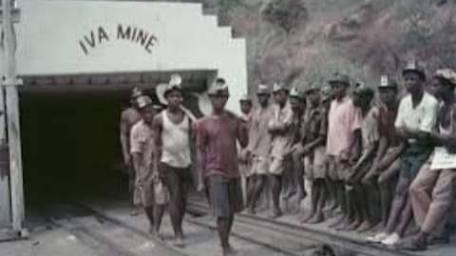
The massacre occurred on November 18, 1949, at the Iva Valley Coal Mine in Enugu, then the administrative capital of the Eastern Region of British-controlled Nigeria.
The miners had embarked on a peaceful protest against harsh working conditions, racial wage disparities and unpaid arrears, adopting a “go-slow” strategy and occupying the mine after management allegedly threatened a lockout.
The protest turned deadly when a British superintendent ordered security forces to open fire on the unarmed miners, killing 21 workers and injuring 51 others.
Justice Onovo ordered the British Government to pay £20 million to each victim’s family, amounting to £420 million, with post-judgment interest at 10 per cent per annum until full payment.
The victims include: Sunday Anyasodo, Ani Oha, Andrew J. Obiekwe Okonkwo, Augustine Chiwetalu, Onoh Ugwu, Ngwu Offor, Ndunguba Eze, Okafor Agu, Livinus Ukachunwa, Jonathan Agu Ozoani, Moses Ikegbu Okoloha, Thomas Chukwu, Simon Nwachukwu, Agu Alo, Ogbonnia Ani Chima, Nnaji Nwachukwu, William Nwaku, James Onoh Ekeowa, Felix Nnaji and Ani Nwaekwe.
The suit, marked E/909/2024, was filed by human rights activist Mazi Greg Onoh, seeking acknowledgment of liability, formal apologies and comprehensive reparations for the families.
The respondents included the Secretary of State for Foreign, Commonwealth and Development Affairs, the British Government, the Federal Government of Nigeria, the Attorney-General of the Federation, and the Head of Commonwealth, United Kingdom. No legal representation appeared for the British respondents.
Justice Onovo further ordered the British Government to issue unreserved written apologies to the families, to be published in Daily Sun, Daily Independent, The Punch, and three major national newspapers in the United Kingdom, with proof of publication filed within 60 days.
The court directed that all monetary awards must be settled within 90 days of the judgment.
The judge also faulted the Federal Government of Nigeria and the Attorney-General for prolonged inaction, holding that their failure to pursue redress amounted to a dereliction of constitutional duty under Sections 19(d) and 150(1) of the Constitution.
He ordered Nigeria to commence formal diplomatic engagement with the British Government within 60 days to enforce the judgment and pursue reparations.
Justice Onovo dismissed objections based on sovereign immunity, ruling that grave historical injustices remained justiciable under Nigeria’s Constitution.
Reacting, counsel to the applicants, Prof. Yemi Akinseye-George, SAN, and P.N. Agazie, described the judgment as historic, saying it reaffirmed that the right to life transcends time, borders and changes in sovereignty.
They noted that the ruling aligned with global precedents, including the United Kingdom’s Mau Mau settlement, reinforcing international accountability for colonial-era human rights abuses.
Visit GMTNewsng for more news stories.