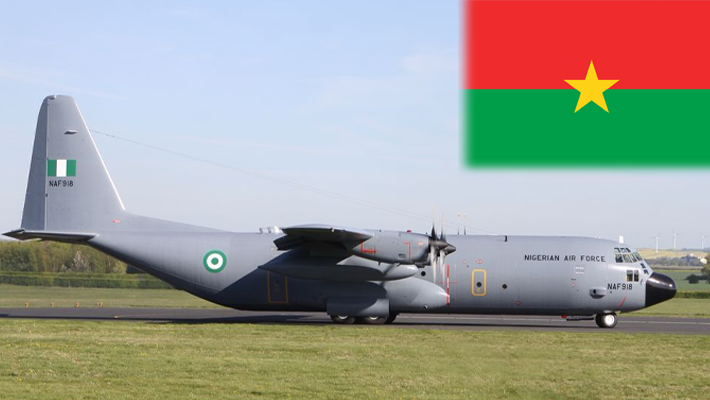
Burkina Faso Detains Nigerian Plane After Emergency Landing, Heightening Regional Tensions
Burkina Faso detains a Nigerian plane after an emergency landing, prompting diplomatic negotiations and raising questions about regional airspace security.
Abuja | Tuesday, December 9, 2025
The detention of a Nigerian plane by authorities in Burkina Faso has triggered fresh diplomatic activity and renewed concerns about airspace protocols in West Africa. The Nigerian plane, a C-130 transport aircraft, made an emergency landing in Bobo-Dioulasso on December 8 after the crew detected a technical fault mid-flight.
According to the Nigerian Air Force, the diversion was a standard safety procedure consistent with global aviation practices. NAF Director of Public Relations, Air Vice Marshal Edward Gabkwet, defended the crew’s decision, stating that “the aircraft made a precautionary landing strictly in the interest of safety, and no rules of international aviation were violated.” He emphasized that the Nigerian plane was en route to Portugal for scheduled maintenance and was not engaged in any operational mission.
Burkina Faso’s military authorities offered a contrasting narrative. In a statement issued in Ouagadougou, government spokesperson Colonel Jean-Charles Zoungrana insisted that “the aircraft entered our airspace without authorization, and our response followed established national security protocol.” The junta maintains that the Nigerian plane breached sovereign airspace and justified its detention as a necessary enforcement action.
The Alliance of Sahel States (AES)—comprising Burkina Faso, Mali, and Niger—has grown increasingly assertive in its regional posture since withdrawing from ECOWAS in 2023. Security analysts believe the firm stance taken against the Nigerian plane reflects the AES’s hardened position toward external military activity, especially from neighbouring states with whom relations have cooled.
Diplomatic engagement is ongoing. A senior official at Nigeria’s Ministry of Foreign Affairs, Ambassador Yusuf Tuggar, disclosed that “the government has activated all diplomatic channels to secure the release of both personnel and aircraft, and we are approaching the matter with restraint to avoid unnecessary escalation.” He noted that emergency landings are universally recognized and should not trigger punitive actions.
The episode has drawn scrutiny from aviation experts. Lagos-based aviation analyst Captain Danjuma Gana described the situation as unusual, saying that “detaining a military aircraft after a declared emergency is not standard international practice, and such a step risks turning a safety-related event into a diplomatic standoff.” He added that emergency diversions are protected under globally accepted aviation safety norms.
Nigeria’s defence officials reiterate that the Nigerian plane followed all necessary flight communications before diverting. They argue that a safety-driven landing should not become a flashpoint. Observers note that relations between Nigeria and the AES governments have grown tense, particularly after Nigeria supported Benin during its attempted coup earlier this year—an action that reportedly displeased the Sahelian bloc’s leadership.
At the same time, Burkina Faso appears committed to asserting the strict airspace controls it has championed since deepening military cooperation with Mali and Niger. Officials within the AES have repeatedly warned that foreign military aircraft entering their airspace without formal clearance would be intercepted or forced to land.
Analysts caution that unless carefully managed, the dispute over the Nigerian plane could widen the diplomatic gap between ECOWAS members and the AES bloc. With the region grappling with political transitions, economic pressure, and cross-border security challenges, the handling of the Nigerian plane incident may shape future airspace and diplomatic protocols.
As negotiations continue, both sides appear cautious. While Nigeria seeks the swift return of the aircraft and personnel, Burkina Faso is signaling resolve in defending its perceived sovereignty. Whether the Nigerian plane will be released promptly remains uncertain, but the incident underscores the fragile dynamics reshaping West African geopolitics.
Visit GMTNewsng for more news stories.