● Chijioke Ogbodo
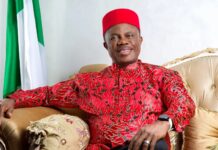
In contemporary Nigerian politics, good governance is often promised but rarely delivered in tangible, measurable ways. However, in Enugu State, Governor Peter Mbah who turns 53 today, March 17, has emerged as an outlier, redefining governance through decisive actions and ambitious reforms. Since assuming office, Mbah has pursued a vision of accelerated development, transforming key sectors such as infrastructure, education, industry, digital economy, and healthcare. His administration is not only addressing long-standing issues but also pioneering innovative projects that position Enugu as a model for economic growth and good governance.
From groundbreaking agricultural investments to a revitalized tax regime, massive job creation, and sector-specific reforms, Enugu is becoming a national reference point for sub-national economic transformation. Notable economists, educationists and public policy analysts have described Mbah’s leadership as the most pragmatic in contemporary Nigerian governance.
Prof. Chinedu Nebo, former Minister of Power and an academic of repute, believes that Governor Mbah’s administration “represents a paradigm shift in leadership.” According to him, “Mbah’s policies are not only ambitious but deeply strategic. He has moved beyond rhetoric to actual execution, and barely a year in office, Enugu is already being discussed as Nigeria’s next big economic hub.”
Strengthening Security: Enugu’s Path to Economic Confidence
Under Governor Peter Mbah’s leadership, Enugu State has strengthened security to create a safe environment for investment and economic growth. A key initiative is the Enugu State Security Trust Fund (ESSTF), a public-private partnership that mobilizes resources to equip security agencies and train personnel. Governor Mbah underscored its importance, stating, “Without a secure environment, our drive to grow the economy of Enugu State from $4 billion to $30 billion annually will not be achievable.”
These security measures have significantly boosted investor confidence, positioning Enugu among the safest states for business. Governor Mbah reaffirmed this, noting, “By implementing significant measures to enhance safety and security across the state, Enugu has now emerged as one of the safest and most secure states for potential investments.”
With a stable environment, both local and international investors are showing increased interest. The state’s commitment to security ensures businesses can operate without undue risks, attracting new investments and supporting the growth of existing enterprises, ultimately driving Enugu’s economic prosperity.
Agriculture: Transforming Land into Wealth
Governor Mbah’s economic roadmap prioritizes agriculture as a major driver of economic growth and food security. This vision is being executed through large-scale agricultural investments and public-private partnerships that are unlocking the state’s vast arable land.
A major milestone in this sector is the signing of a Memorandum of Understanding (MoU) with Fungtai Engineering Ltd. for the cultivation of cash crops on 7,221 hectares at Ugwujoro, Nimbo, in Uzo-Uwani LGA. This project is a dual-purpose strategy aimed at increasing agricultural output while also tackling security concerns in border communities.
Speaking on the significance of the deal, Governor Mbah, represented by the Secretary to the State Government (SSG), Prof. Chidiebere Onyia, stated: “We are committed to utilizing every available land for productive economic activities. This project not only boosts our agricultural production but also secures our rural communities by turning them into economic hubs.”
In addition, the government has partnered the National Cashew Association of Nigeria (NCAN) to establish a pre-fabricated Domestic Export Warehouse at the Enugu State Polytechnic, Iwollo. This project will significantly enhance the state’s cashew export potential, providing farmers with direct access to international markets.
Dr. Ojo Joseph Ajanaku, President of NCAN, emphasized the national significance of this initiative. “Enugu is setting a national precedent for agricultural industrialization. This partnership will add value to cashew production, create jobs, and boost foreign exchange earnings,” he said.
To further scale up production, the government has introduced the farm estate model, which allocates 200 hectares per ward for structured farming activities. This approach guarantees farmers access to land, warehouses, tractors, and extension services while positioning Enugu as an agricultural powerhouse.
The state has revived the United Palm Products Limited (UPPL) and is restoring the moribund Sunrise Flour Mills, which will provide a steady market for local farmers. In line with modern agricultural practices, a tractor assembly plant has been commissioned in partnership with a Danish firm, with an initial rollout of 200 tractors.
Additionally, Governor Mbah, in collaboration with Enugu’s 17 Local Government Council Chairmen, is driving the establishment of 260 farm estates to enhance food security, create jobs, and modernize agriculture.
Infrastructure Development: Connecting Enugu to the Future
Governor Peter Mbah’s administration has embarked on an extensive infrastructure development agenda, recognizing it as the backbone of economic growth and societal advancement. The state’s commitment to infrastructure is evident in the over 1,000 landmark projects currently underway, encompassing road construction, educational facilities, and healthcare improvements.
A flagship project is the dualization of the Nowas-Nike Lake-Ugwogo-Opi Nsukka road, a strategic 44.8-kilometer artery connecting multiple local government areas. This project aims to enhance connectivity, reduce travel time, and stimulate economic activities across the state.
In addition to major highways, the administration is focusing on rural accessibility. The construction of the Amah-Eke–Oghe–Iwolo–Olo–Umulokpa, spanning Udi, Ezeagu, and Uzo-Uwani Local Government Areas; Amodu, Ogbozhinne, Ndiagu Akpugo-Ndiagu Obuno (Holy Angel)-Akpawfu-Amagunze Roads, traversing Nkanu West and Nkanu East LGAs, among others, are set to open up rural communities, facilitating trade and access to essential services.
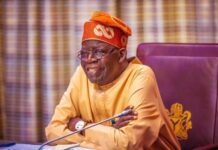
The government’s infrastructure drive has garnered national attention. During a recent visit to commission multiple projects, President Bola Tinubu remarked, “Governor Mbah is doing a fantastic job. Enugu is witnessing unprecedented development under his leadership.”
Transportation Infrastructure: Boosting Mobility and Economic Growth
One of the defining projects of Governor Mbah’s administration is the development of modern transportation infrastructure to support economic expansion and ease mobility across the state. A major highlight is the construction of three new ultra-modern bus terminals in Gariki, Holy Ghost, and Nsukka, designed to enhance the efficiency of public transport. These terminals provide organized transport hubs, reduce congestion, and create a structured system for both commuters and transport operators.
The significance of these terminals extends beyond transportation; they serve as commercial hubs that will stimulate local businesses, create jobs, and improve urban planning. Governor Mbah emphasized their economic impact, stating, “A well-structured transport system is crucial for economic growth. These terminals will not only provide a seamless travel experience but also contribute to our broader vision of making Enugu a model city.”
Completion of Abandoned Projects
The Mbah administration has prioritized the completion of several long-abandoned projects to boost economic activities and create employment opportunities:
International Conference Centre (ICC): After nearly two decades of stagnation, the ICC was recently completed and among the projects inaugurated by President Tinubu. With a 3,000-seat main auditorium and additional facilities, the centre is poised to attract national and international events, thereby stimulating the local economy through increased tourism and related services.
Hotel Presidential: Once a landmark in Enugu, Hotel Presidential had fallen into disrepair. The current administration has begun its remodelling and completion. Upon completion, the hotel is expected to provide hospitality services, create numerous jobs, and serve as a hub for business and leisure activities.
300-Bed Specialist Hospital: The state government has announced plans to complete the long-abandoned international hospital, which has been pending for over 15 years. Once operational, this 300-bed specialist hospital will offer advanced medical services, reducing the need for residents to seek treatment elsewhere and creating employment opportunities for healthcare and ancillary professionals.
Enhancement of Primary Healthcare Infrastructure
Recognizing the critical role of primary healthcare in community well-being, the Mbah administration has embarked on an ambitious project to construct 260 Type 2 Primary Healthcare Centres across the state’s 17 local government areas. These centres are designed to provide comprehensive healthcare services, including maternal and child health, immunizations, and treatment of common ailments. The initiative also includes the recruitment of 450 clinical and non-clinical personnel to ensure round-the-clock service delivery.
The World Health Organization has commended this effort, noting that such investments are pivotal for achieving health security and universal health coverage. Additionally, partnerships with organizations like Elephant Healthcare aim to equip these centres with digital tools, enhancing service delivery and data management.
Revitalization of Niger Gas Ltd
In a strategic move to boost industrialization, the Enugu State government has partnered with Ten Gas Development Company Limited to revive the moribund Niger Gas Ltd. This collaboration aims to restore gas production, which is essential for various industries. The revitalization is expected to attract manufacturing companies reliant on gas, thereby creating jobs and stimulating economic activities in the region.
Enugu State Government in January this year initiated a strategic partnership with Landmark Africa Group to revitalize the iconic Nike Lake Resort Hotel. This collaboration involves a joint venture where the state government contributes the resort as an asset, while Landmark Africa commits to injecting over ₦10 billion in the first phase to restore the facility to its former glory. Governor Mbah emphasized that this initiative aligns with his administration’s goal of expanding the state’s economy to $30 billion within the next six years. “The optimization of the activities of the Resort is quite consistent with what we call connecting the dots in line with ambition to grow our economy to $30bn in the next six years,” he stated.
The project aims to attract two million visitors annually, boosting tourism, job creation, and Internally Generated Revenue. Landmark CEO Paul Onwuanibe said, “We will make sure that this is going to be a very big win… We intend to invest over N10bn in the first phase.”
Redefining Internal Revenue Generation for Economic Expansion
A critical driver of the Mbah administration’s economic reforms is its revenue mobilization strategy. The Enugu State Internal Revenue Service (ESIRS) has set a groundbreaking revenue projection of ₦509 billion, an unprecedented move for a state that previously relied on federal allocations. This transformation is anchored on tax reforms, the digitalization of revenue collection, and the formalization of revenue collection from the informal sector.
In a decisive step to strengthen fiscal independence, Governor Peter Mbah recently announced the granting of full autonomy to the state’s revenue body. This strategic move is expected to enhance efficiency, curb revenue leakages, and foster a transparent, accountable tax administration system. The benefits of this autonomy include improved revenue collection, increased investor confidence, and the capacity to finance critical infrastructure projects without over-reliance on federal allocations.
Public finance expert, Mrs. Otiji Ifeoma Catherine, former Chairman of Institute of Chartered Accountants of Nigeria, ICAN, Enugu District and Society, has described the revenue drive as “a model that other states should study.” Otiji who was Vice Chairman, ICAN Eastern Zonal Districts and Pioneer Chairperson, Society of Women Accountants of Nigeria SWAN, Enugu Chapter, asserts: “What Enugu is doing with revenue generation is revolutionary. The state is ensuring that every taxable activity is accounted for, while also closing leakages and automating the tax system. This is how economies grow.”
The implications of this move are evident: more funds for infrastructure, healthcare, education, and industrialization. Unlike many states that depend on oil revenue, Enugu is positioning itself as a self-sustaining economy capable of funding its own development agenda. No wonder, Governor Mbah is a member of the recently inaugurated Presidential Committee on Economic and Financial Inclusion which reinforces president Tinubu’s poise to achieving a $1 trillion economy by 2030.
Digital Economy and ICT: A Forward-Looking Vision
Governor Peter Mbah’s administration is laying the foundation for a thriving digital economy by integrating ICT across various sectors. The “Enugu Safe City” project, powered by digital surveillance and smart technology, is enhancing security, thereby creating a safer environment for businesses and residents. Additionally, the deployment of e-government platforms is streamlining bureaucratic processes, reducing inefficiencies, and fostering a transparent and accountable governance structure.
The Enugu Smart School Project, which aims to establish 260 technology-driven schools, is a game-changer in education. By equipping students with digital learning tools and integrating ICT into the curriculum, the state is preparing its youth for careers in technology, software development, cybersecurity, and artificial intelligence. This initiative ensures that graduates will not only be employable within Nigeria but also globally competitive in an increasingly digital world.
What this portends for the future is a digitally literate workforce capable of driving innovation, attracting tech investments, and positioning Enugu as a hub for ICT-driven economic growth. The ripple effects of this initiative will be felt in various industries, including fintech, digital marketing, and e-commerce, further expanding employment opportunities for the state’s youth.
Supporting SMEs: The Backbone of Economic Resilience
Recognizing that Small and Medium Enterprises (SMEs) are vital to economic sustainability, Governor Mbah’s administration has introduced policies and structures that foster entrepreneurship and business growth. The Enugu SME Agency has been instrumental in providing targeted training, mentorship, and funding opportunities for aspiring entrepreneurs. By improving access to credit and connecting small businesses with larger markets, the administration is creating a thriving business ecosystem.
The recently passed Enugu Startup Bill offers incentives such as tax breaks and funding access, making it easier for young entrepreneurs to scale their businesses. This will not only encourage innovation but also drive job creation, reducing youth unemployment significantly. According to Mr. Arinze Chilo-Offiah, Special Adviser to the Governor on SMEs and Digital Economy, “By creating a conducive environment for SMEs, we are building a resilient economy that will thrive in both local and international markets.”
Looking ahead, these initiatives will position Enugu as a leading business-friendly state, attracting investors and fostering a culture of entrepreneurship. With SMEs contributing significantly to employment and GDP growth, the state is set to become a model for economic resilience and grassroots development.
Smart Green Schools: Building Sustainability into Education
While the Smart Green Schools initiative has been widely praised, some stakeholders remain skeptical about its long-term sustainability. Critics argue that maintaining solar-powered infrastructure and eco-friendly materials in a developing economy may pose challenges, especially in terms of cost, technical expertise, and policy continuity beyond the current administration. Others worry about whether sufficient investment has been made in teacher training to maximize the benefits of these advanced learning environments.
However, the Mbah administration has made it clear that this initiative is not just an experiment but a well-thought-out policy designed for long-term impact. By integrating sustainability into the state’s educational framework, Enugu is aligning itself with global best practices in climate-conscious development. These schools will not only reduce the state’s energy costs over time but also serve as models for future public infrastructure projects across Nigeria.
Beyond infrastructure, the curriculum will emphasize environmental consciousness, renewable energy, and sustainable practices. This approach prepares students for future careers in green technology, environmental management, and sustainable urban planning – industries that are expected to see exponential growth in the coming decades.
Governor Mbah’s commitment to climate action through education signals a progressive shift in governance. This initiative ensures that Enugu’s future workforce is not just educated but also equipped with the skills and mindset needed to tackle global sustainability challenges. The project will attract investors and organizations interested in green initiatives, further boosting job creation and economic diversification.
Setting a New Standard for Governance in Nigeria
Governor Peter Mbah’s leadership is reshaping the governance landscape in Nigeria. By prioritizing economic transformation, digitalization, and sustainable development, he is setting a precedent for how sub-national governments can drive real change.
The integration of technology, support for SMEs, and investment in green infrastructure are not just policies; they are strategic reforms designed to secure Enugu’s place in the global economy. As Dr. Chinedu Okeke, a development economist, aptly put it, “Governor Mbah’s leadership is not just about policies; it is about the execution of a vision that will make Enugu a model state in Nigeria.”
Unlike many states that depend on oil revenue, Enugu is positioning itself as a self-sustaining economy capable of funding its own development agenda. With a projected $30 billion economy in sight, Enugu is not only attracting investors but also creating a workforce that is future-ready. Governor Peter Mbah’s development drive is reshaping Enugu’s landscape, lending credence to the state’s ‘Tomorrow is Here’ mantra.
Celebrating a Visionary Leader – Happy Birthday, Dr. Peter Mbah!
Ogbodo, a veteran broadcaster with over two decades of experience and the Managing Partner at GMTNewsng.com, writes from Enugu and can be reached at chijiokeogbodo720@gmail.com.