By Ronke Adewale-Johnson
“It’s an unfathomable paradox,” remarked a participant during the discussion segment of the 2024 Energy Summit held at the Landmark Events Centre in Lagos. The summit, which kicked off on Tuesday, October 15, gathered experts and industry leaders to discuss the challenges and opportunities in Nigeria’s power sector. The sentiment echoed by the young lawyer from one of the country’s leading commercial law firms reflected a shared frustration: how a country so blessed with brilliant minds could still be mired in developmental setbacks.
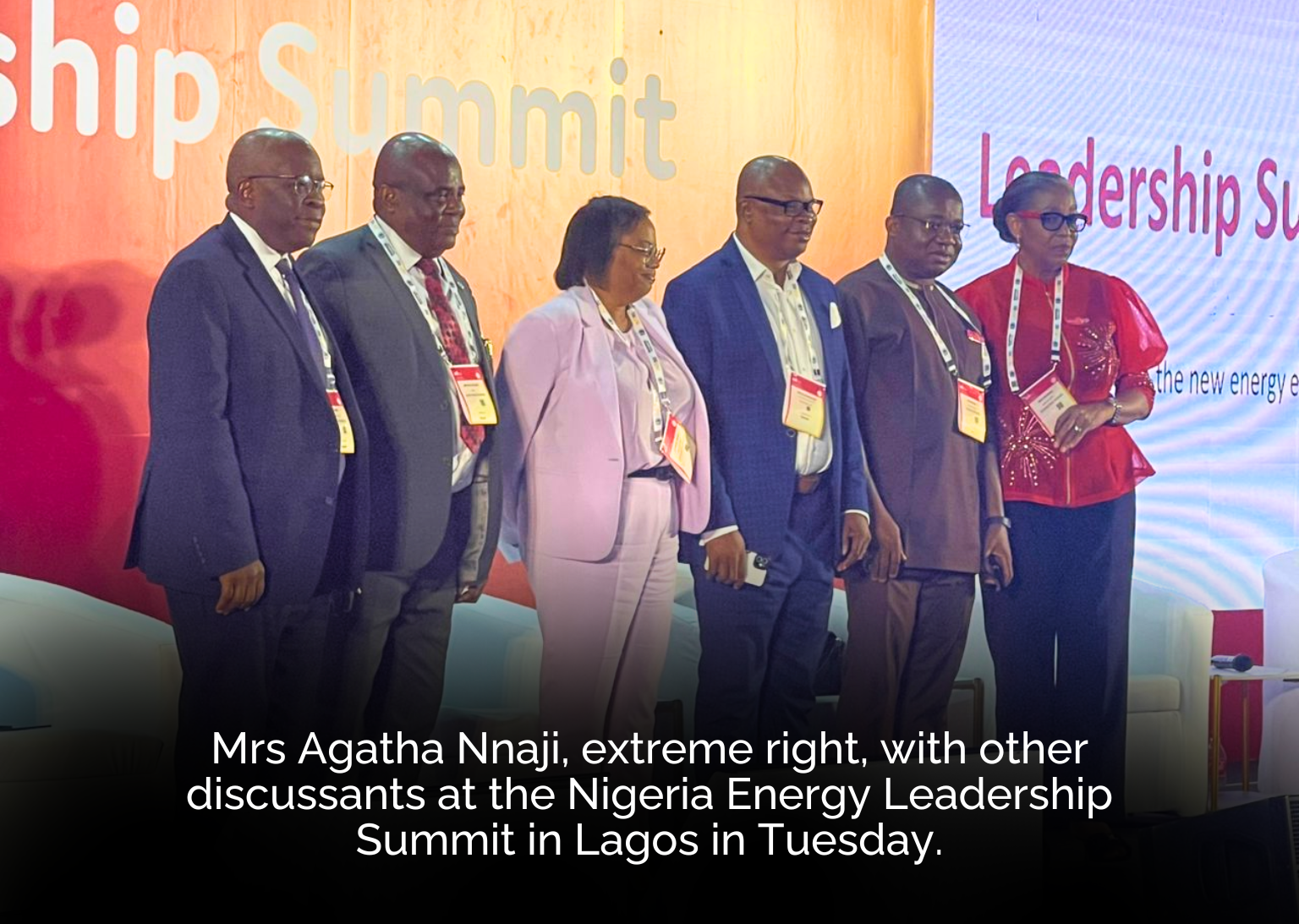
The summit featured an array of high-profile speakers from the power generation industry, including Meyen Etukudo, CEO of Ibom Power; Edu Okeke, CEO of Azura Power Ltd; Oti Ikomi, Vice Chairman and CEO of Proton Energy Africa; Mrs. Atinuke Taiwo, Executive Director and General Counsel of Mainstream Solutions Ltd; and Mrs. Agatha Nnaji, Group Managing Director of Geometric Power. The presentations impressed the audience, but it was Mrs. Nnaji who received the most enthusiastic applause for her thought-provoking insights.
During her address, Mrs. Nnaji provided a fresh perspective on the challenges facing the power sector, highlighting the need for alignment between public servants and entrepreneurs. She emphasized that without a cultural shift in the mindset of public servants, especially those overseeing agencies involved in the sector, Nigeria would continue to struggle with its energy problems. “There must be a new culture and mindset,” she stated, calling for public officials to adopt an entrepreneurial spirit that could drive efficiency and progress.
One of the key points Mrs. Nnaji made was that her company, Geometric Power, had operated without relying on government subsidies, setting it apart from other power firms in Nigeria. While other companies lamented unpaid subsidies, Geometric Power thrived by being self-sustaining. “Geometric Power has not received a kobo from any person as subsidy,” she revealed, further stressing that the company wasn’t expecting any. This operational independence has made Geometric Power a model for sustainability in the Nigerian energy landscape.
Mrs. Nnaji’s call for reform in public service resonated with the summit’s attendees. She drew attention to China’s public service model, where officials are promoted based on their ability to attract investment and foster development. “Nigerian civil servants must learn from China’s example,” she urged, explaining that incentivizing performance could unlock the potential for transformational growth in Nigeria’s power sector.
Supporting her argument, Mrs. Nnaji referenced Xiao Ma, a scholar at Peking University, who wrote an influential article on how local officials in China adopt entrepreneurial approaches to attract investment and spur development. In China, the ability to drive local development is a critical factor in determining promotions within government, a model Mrs. Nnaji believes Nigeria could benefit from.
Her insights were further validated by Nicholas Okafor, the moderator of the session and a partner at Belo-Osagie and Udo Udoma law firm, who asked how Geometric Power had managed to survive for 20 years despite numerous obstacles. The company, comprising the 188-megawatt Geometric Plant and Aba Power, Nigeria’s 12th electricity distribution company, had been delayed by man-made challenges until it was finally commissioned in February 2024 by Vice President Kashim Shettima.
Geometric Power’s operational model has drawn interest from the Nigerian government. The Minister of Power, Chief Adebayo Adelabu, noted that the Federal Government was studying the Geometric Power model with the intention of replicating it across other regions. He pointed out that while most distribution companies (DisCos) manage vast territories, making operations cumbersome, Aba Power serves a more focused area of nine local government areas in Abia State, allowing for greater efficiency.
One of the most significant aspects of Geometric Power, as Mrs. Nnaji highlighted, is its unique position as Nigeria’s first fully integrated power company. Unlike other firms that either generate or distribute electricity, Geometric Power generates its own power and distributes it through Aba Power. This vertical integration means it avoids the payment disputes that plague other power companies in Nigeria, as Aba Power owes nothing to its parent company.
The challenges facing Nigeria’s power sector were further discussed, with Dr. Shamsudeen Usman, a former Minister of Economic Planning, weighing in on the privatization of DisCos. He revealed that many of the companies privatized in 2013 were mismanaged by greedy individuals, leaving them in a precarious state. Dr. Usman suggested that the Federal Government, which still holds a 40% stake in the DisCos, should consider selling them to more capable generation companies (GenCos).
As the summit concluded, it was clear that Mrs. Nnaji’s vision for reforming the power sector had struck a chord. Her call for a change in public sector attitudes, coupled with the success story of Geometric Power, provided a roadmap for future developments in Nigeria’s power industry.
Dr. Ronke Adewale-Johnson is a business consultant based in Lagos.