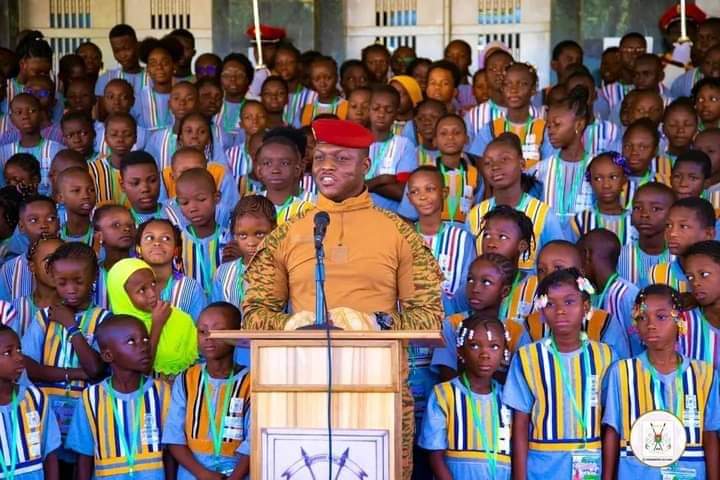
In a landmark decision aimed at promoting cultural identity and boosting local industries, Burkina Faso has adopted the use of traditional, locally made fabrics for school uniforms. This bold move is seen as a key step toward strengthening the country’s cultural heritage and reducing its dependency on imported materials.
Alongside the shift in school uniforms, Burkina Faso has announced that it will no longer import police and military uniforms. Instead, a local factory has been established to produce all uniforms required by students, police officers, and the military. This development is expected to significantly cut costs and improve self-reliance. “This is an important step in the right direction, one that shows Burkina Faso is serious about investing in its local industries,” said Kwame Adu, a textile expert from Ghana.
The new factory, built in the capital Ouagadougou, is capable of meeting the needs of the entire country, producing large quantities of high-quality fabrics that are deeply embedded in the country’s traditional heritage. Commenting on the initiative, South African economist Nomusa Mbeki praised the move, saying, “Not only will this generate employment, but it will also create a sense of pride and identity in wearing locally made uniforms.”
African commentators have also pointed out that this policy could serve as a model for other African countries to follow. “This decision resonates with the Pan-African vision of economic and cultural independence,” noted Dr. Kofi Osei, a development specialist from Ivory Coast. He added that the initiative aligns with the broader continental goals of reducing import dependency and increasing local production.
Moreover, the cultural dimension of this policy has garnered widespread support. “It’s a commendable strategy that strengthens the connection between the youth and their roots,” stated Amina Yahya, a cultural historian from Nigeria. “Wearing traditional fabrics isn’t just about clothing; it’s about instilling national pride and preserving cultural heritage for future generations.”
This shift comes at a time when many African nations are re-evaluating their economic strategies, looking inward to harness the potential of local industries. Burkina Faso’s approach to uniform production is not only a step toward self-reliance but also a significant cultural statement, positioning the country as a leader in promoting African heritage through fashion.
As Burkina Faso moves forward with this initiative, it is expected that the ripple effects will be felt across the region, inspiring other nations to adopt similar strategies that prioritize local production, cultural preservation, and economic independence. GMTNewsng