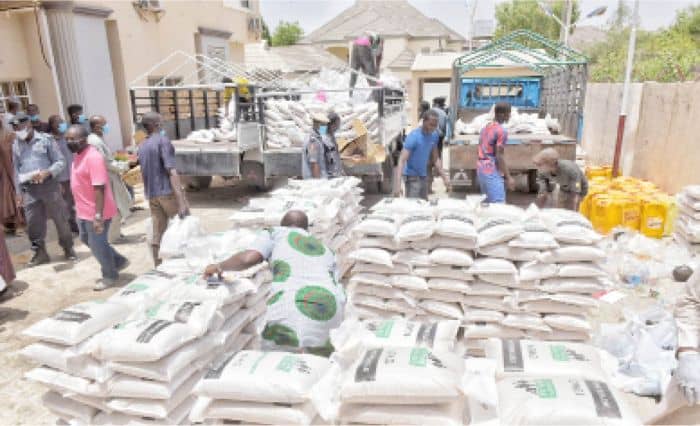
In a recent interview, Professor Tukur Muhammad-Baba, the Spokesman of Arewa Consultative Forum (ACF), criticized the distribution of N5 billion in palliatives and grants to state governments, deeming it shambolic and unscientific. As a Professor of Sociology, Muhammad-Baba argued that allocating the same amount to states like Lagos, Oyo, Kano, and Bayelsa, without considering variations in population size and statistics of eligible individuals, was unjustified and inconsistent.
Highlighting the importance of an equitable distribution process, Muhammad-Baba stressed the need to consider objective criteria such as population size and socio-economic indicators when allocating funds. He emphasized that a one-size-fits-all approach does not accurately reflect the needs and realities of each state. Consequently, the current method lacks both scientific validity and fairness, according to his assessment.
The ACF Spokesman expressed concerns regarding the effectiveness of the palliative measures undertaken by these states, given the incoherent distribution approach. To ensure maximum impact and benefit, he suggested that state governments adopt a more systematic and evidence-based strategy aligned with the specific socio-economic conditions of their respective regions.
Professor Muhammad-Baba’s remarks shed light on the urgent need for a more thoughtful and well-informed approach to the allocation of palliatives and grants. By considering the unique social and economic characteristics of each state, a more effective and equitable distribution can be achieved, leading to a significant improvement in the welfare of citizens across the nation.
Professor Tukur Muhammad-Baba expressed his dissatisfaction with the blanket distribution of N5 billion to each state, stating that there was no justification for such allocation. He questioned the logic of expecting equal impact from giving the same amount to states with diverse demographics, such as Bayelsa, Lagos, Oyo, and Kano.
Terming this distribution method as haphazard, the ACF Spokesman criticized the lack of planning and strategy involved. He emphasized the need for a more thoughtful approach rather than a one-size-fits-all solution. He stressed that equal distribution of funds to states did not consider their varying needs and socioeconomic indicators.
The ACF Spokesman further highlighted that this type of distribution reflected a lack of proper planning and strategy. He pointed out that allocated funds should not be distributed equally among states without considering their specific requirements. This approach fails to address the actual needs of states and does not maximize the effectiveness of the funds.
Professor Muhammad-Baba’s statements underline the importance of a more targeted and evidence-based approach to distributing funds. By considering the unique circumstances of each state, a more impactful and beneficial allocation can be achieved, ultimately leading to greater welfare improvements for those in need.
Professor Tukur Muhammad-Baba pointed out the issue of proportion when addressing the distribution of funds to alleviate poverty. He noted that Nigeria has a significant number of over 140 million people living in poverty. He highlighted that the number of people living in poverty varies greatly among states such as Lagos, Oyo, Kano, Bayelsa, Taraba, or Jigawa, making it crucial to consider this variation in distribution planning.
The ACF Spokesman questioned the effectiveness and impact of distributing a fixed amount of funds for all states without considering the differing levels of poverty within each region. Moreover, he raised concerns about the limited reach of the 30,000 bags of rice accompanying the funds. With states like Sokoto having a population of over seven million people based on the latest estimate from the National Population Commission, the amount of rice distributed would not significantly alleviate the food needs of the population.
These remarks highlight the necessity for a more comprehensive and proportional approach to address poverty and alleviate its effects. Professor Muhammad-Baba emphasized that simply providing a fixed amount of funds and a limited quantity of rice would not address the complexity and scale of poverty experienced across different states in Nigeria. A more nuanced understanding of regional conditions and tailored strategies is required to effectively alleviate poverty and ensure that relief measures have a meaningful impact.
Professor Tukur Muhammad-Baba criticized the lack of a clear and well-defined plan in the government’s approach. He expressed his concern that the current policy implementation lacks coherence and effectiveness. While acknowledging the necessity to assist the poor, he emphasized the importance of ensuring that interventions have a substantial impact rather than being just a small-scale contribution.
According to Muhammad-Baba, providing aid to the poor is a scientifically valid approach, but it must be executed in a manner that goes beyond mere token gestures. The current approach, in his view, fails to meet this criterion, as the intervention is perceived as insignificant in relation to the magnitude of the challenges faced by the impoverished population.
The ACF Spokesman called for a more comprehensive and well-thought-out strategy that takes into account the scale of poverty and the specific needs of different regions. He stressed the importance of implementing interventions that have a significant and lasting impact on poverty alleviation, rather than superficial, symbolic gestures.
The remarks highlight the necessity for the government to develop a robust plan that combines scientific methodologies, thorough assessment of regional conditions, and a well-targeted approach to effectively address poverty and uplift the lives of those in need.