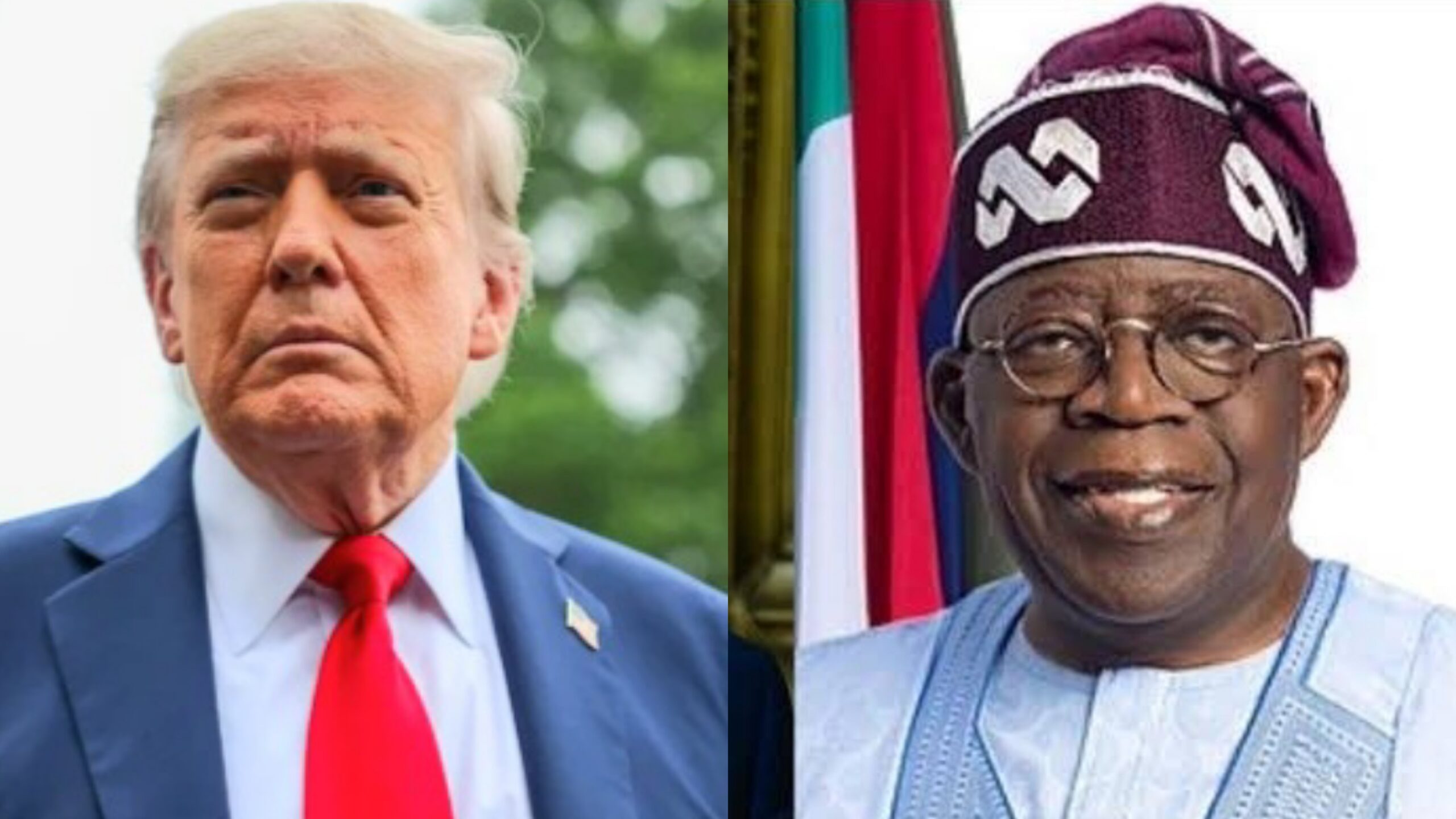
 US president Donald Trump (L) and his Nigerian counterpart president Bola Tinubu
~Diplomatic Affairs
As tension mounts over U.S. President Donald Trump’s threat of possible military action, Nigeria has begun an extensive diplomatic and public communications campaign to defuse the situation and protect its sovereignty through transparency and constructive dialogue.
Trump’s comments – alleging that Nigerian authorities have failed to protect Christians from targeted killings – have drawn sharp reactions globally and sparked debate about the future of U.S.-Nigeria relations. In response, the Nigerian government in Abuja has firmly rejected the accusations, describing them as “baseless” and inconsistent with the country’s constitutionally guaranteed religious freedom.
President Bola Ahmed Tinubu, in a statement issued through his media team, described the remarks as “unfortunate and misleading,” insisting that Nigeria remains committed to protecting every citizen regardless of religion, ethnicity, or creed. He reaffirmed that the nation’s security challenges stem largely from terrorism, banditry, and criminality – not religious persecution.
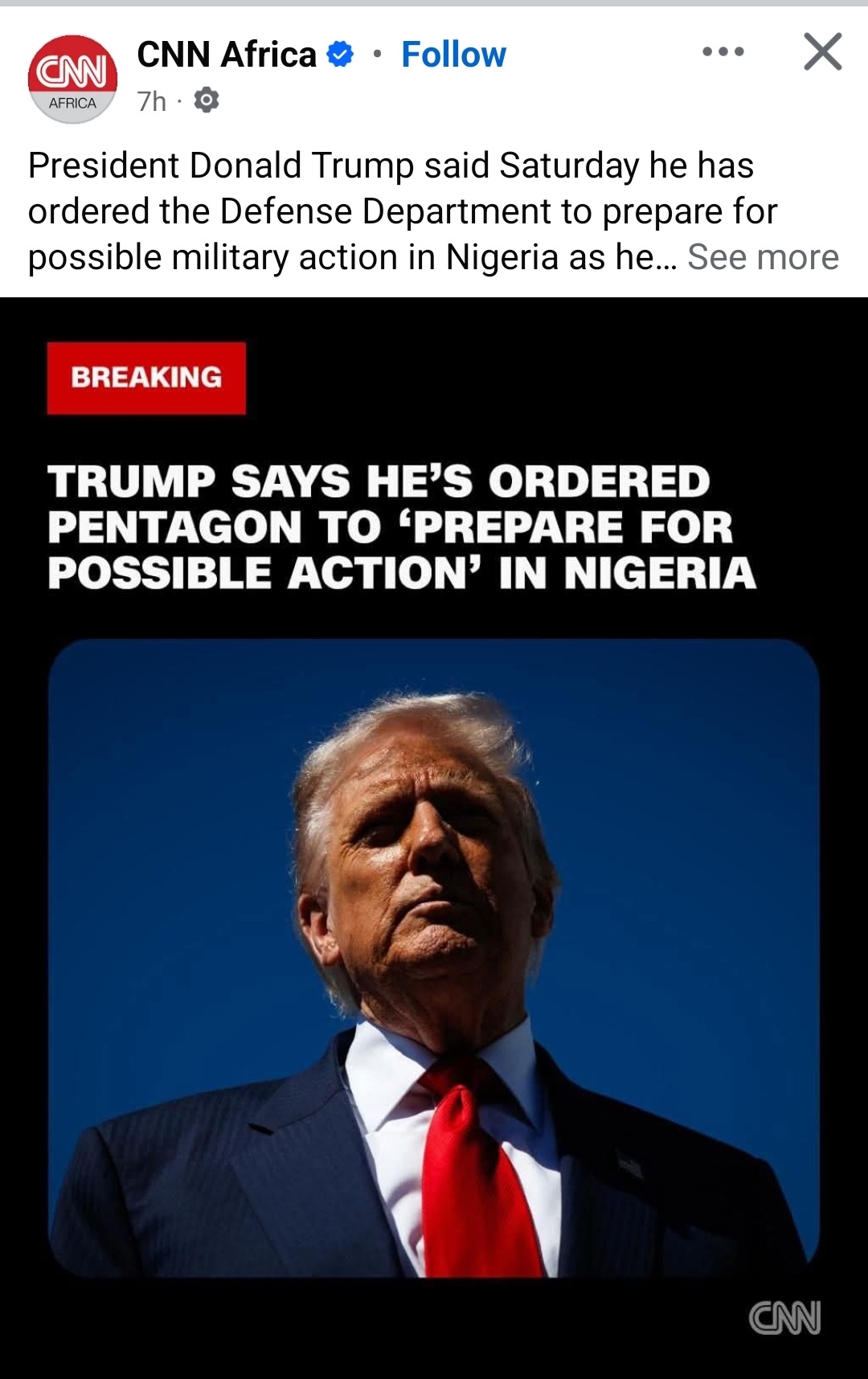
According to Reuters, President Trump told reporters that he had directed the Pentagon to “prepare for possible action” in Nigeria and hinted at halting U.S. aid if what he termed the “slaughter of Christians” continued. (Reuters report)
Reacting swiftly, the Presidency, through its Special Adviser on Information and Strategy, Mr. Bayo Onanuga, dismissed the U.S. President’s claim as a “gross exaggeration.” Onanuga said Nigeria’s situation has been misrepresented by external commentators and does not warrant such extreme conclusions.
“There is no ongoing slaughter of thousands of Christians in Nigeria. This is a gross exaggeration of the situation. What we do have are sporadic attacks on some villages by bandits and terrorists, and the attacks are religiously insensitive,” Onanuga said. “Christians, Muslims, churches, and mosques are attacked randomly. What our country requires from America is military support to fight these violent extremists, not designation as a nation of particular concern.”
He further added, “Muslim lives matter too,” in a follow-up statement emphasizing that Nigeria’s conflicts are driven by crime and insurgency, not religious hostility.
While Onanuga’s remarks reflected the Presidency’s stance, the Ministry of Foreign Affairs (MFA) also issued a formal diplomatic response, signed by its spokesperson, Kimiebi Imomotimi Ebienfa, under the supervision of Foreign Minister Yusuf Maitama Tuggar.
“The Federal Government of Nigeria notes the recent remarks by U.S. President Donald J. Trump alleging large-scale killings of Christians in Nigeria and calling for the country’s designation as a ‘Country of Particular Concern’. While Nigeria appreciates global concern for human rights and religious freedom, these claims do not reflect the situation on the ground,” the MFA said in its official press release. “Nigerians of all faiths have long lived, worked, and worshipped together peacefully. Under the leadership of President Bola Ahmed Tinubu, Nigeria remains committed to fighting terrorism, strengthening inter-faith harmony, and protecting the lives and rights of all its people.”
The ministry emphasized that the country would continue to engage constructively with the United States to strengthen cooperation on security, counterterrorism, and interfaith dialogue – not confrontation.
Foreign policy analysts believe this dual response – combining assertive presidential communication with calm diplomatic engagement – represents a deliberate strategy to de-escalate tension while maintaining national dignity. Dr. Ifeanyi Onah of the University of Nigeria, Nsukka, described it as “a balanced approach that upholds sovereignty without closing the door to cooperation.”
“By addressing the allegations directly and inviting dialogue, Nigeria deprives any external actor of a pretext for unilateral action,” he said. “It’s a smart fusion of firmness and transparency.”
Despite the heated rhetoric, experts note that a U.S. military intervention in Nigeria would face serious legal and political hurdles. Under international law, the United States cannot use force against another sovereign nation without United Nations Security Council authorization or an act of self-defense – neither of which applies here.
Nigeria also remains a crucial partner to Washington in Africa’s counterterrorism strategy, particularly against ISIS-linked and al-Qaeda-affiliated groups operating in the Sahel. A U.S. strike could destabilize regional security, disrupt energy supplies, and provoke widespread anti-American sentiment.
As a result, global observers are urging diplomacy over threats. The Washington Post editorialized that “constructive engagement, intelligence sharing, and capacity building” would yield better results than punitive action. (Washington Post report)
Civil society groups and interfaith organizations in the West African nation have also called for calm. Reverend Gideon Ododoh of the Interfaith Peace Coalition in Abuja urged both sides to “replace confrontation with communication.” According to him, “peaceful resolution through verified facts and mutual respect is the only sustainable path forward.”
To consolidate its diplomatic outreach, Nigeria is reportedly working through ECOWAS and the African Union to rally regional support against external interference and to affirm its commitment to human rights. Officials are considering a joint African-led interfaith peace mission to further demonstrate goodwill.
Domestically, the government has also directed security agencies to intensify investigations into recent attacks and publish findings regularly, showing accountability and good faith. “Nigeria’s credibility depends on how it manages its internal challenges,” said Aminatu Yusuf, an analyst at the Centre for African Security Studies. “By acting decisively at home, it strengthens its position abroad.”
President Tinubu is expected to address the nation soon, outlining a roadmap for maintaining peace, unity, and development while engaging the United States constructively. His administration continues to emphasize that “Nigeria will not be intimidated but remains open to dialogue rooted in mutual respect.”
In the end, Nigerian nation finds itself navigating one of its most delicate diplomatic moments in years. But through assertive communication, measured diplomacy, and a willingness to cooperate without compromising its sovereignty, the nation appears determined to turn confrontation into collaboration.
Visit GMTNewsng for more stories.