
Enugu State’s tax authority is driving sweeping tax reforms aimed at simplifying compliance and supporting SMEs, while warning of stricter enforcement under Nigeria’s new tax regime.
ENUGU, Nigeria — The Executive Chairman of the Enugu State Internal Revenue Service, Emmanuel Ekene Nnamani, has called for full compliance with Nigeria’s new tax regime, warning that enforcement will intensify even as reforms aim to simplify taxation and support small businesses.
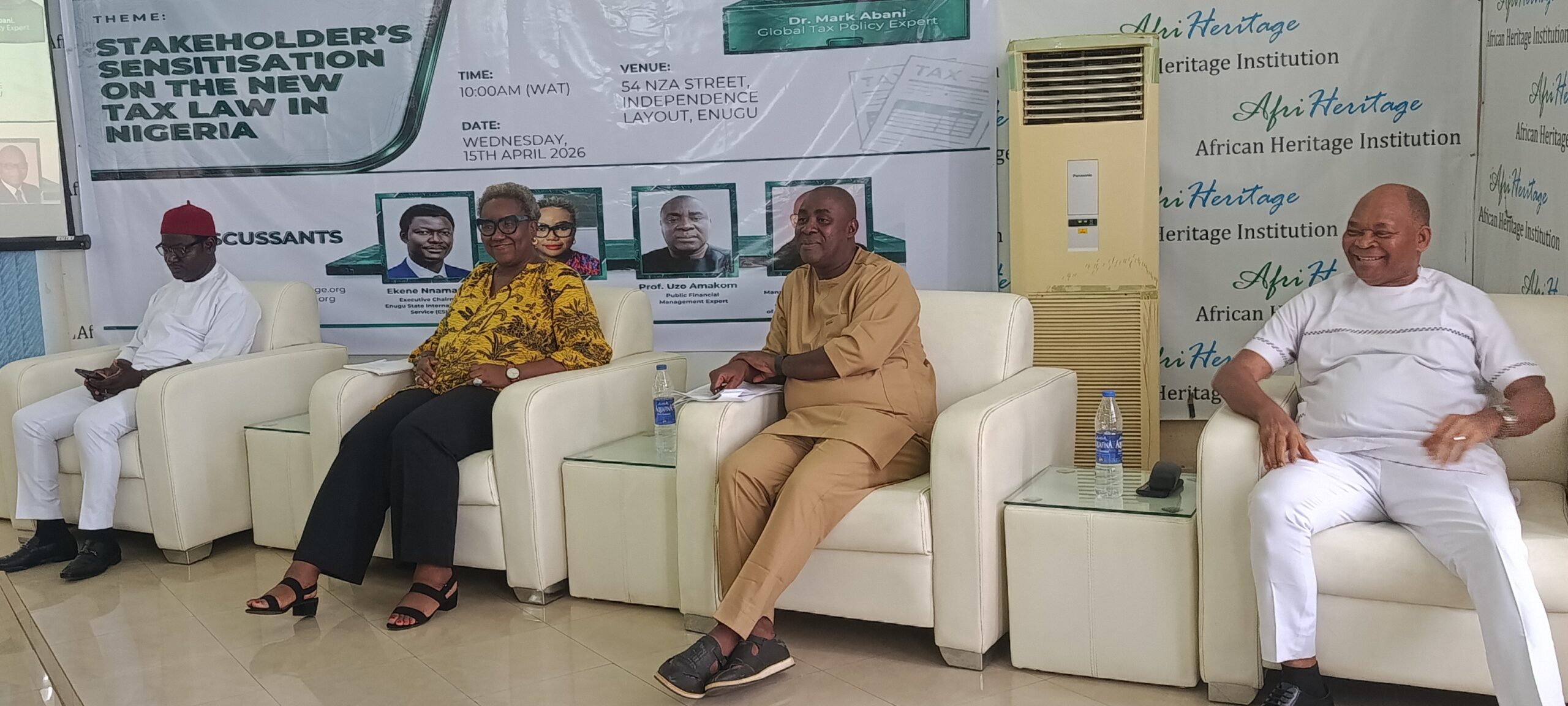
Speaking at a stakeholders’ conference organised by the African Heritage Institution in Enugu, Nnamani urged Nigerians to ignore speculation and rely on official information regarding the new tax laws.
He said the reforms are targeted at eliminating multiple taxation, particularly within the informal sector, while strengthening accountability and revenue generation.
“People should not speculate about the law. The information is available, and platforms like this are meant to guide citizens properly,” he stated.

The conference, themed “Stakeholders’ Sensitization on the New Tax Law in Nigeria,” featured a keynote by Dr. Mark Abani, who outlined provisions of the Nigeria Tax Act 2025 and the Nigeria Tax Administration Act 2025, both effective January 1, 2026.
Abani highlighted key incentives for Small and Medium Enterprises (SMEs), including zero per cent Company Income Tax for businesses with annual turnover below ₦100 million and exemptions from Capital Gains Tax on qualifying assets. However, he stressed that such reliefs do not eliminate the obligation to file returns.
Harmonisation Drive Gains Traction
Nnamani detailed ongoing efforts to harmonise tax collection across Enugu State, especially in markets and the transport sector.
He explained that multiple levies previously imposed by different agencies have been consolidated into a single annual payment of ₦36,000 for traders, covering taxes, environmental charges, and union dues.

“In the past, traders were harassed with different tickets. Today, once payment is made, nobody disturbs them again,” he said.
He added that similar reforms now allow tricycle operators to make a unified daily payment, with revenue automatically distributed among relevant authorities.
According to him, the reforms have significantly boosted internally generated revenue, rising from under ₦100 million in previous years to about ₦7.4 billion.
Compliance, Not Convenience
The ESIRS chairman stressed that the new framework places responsibility on citizens and businesses to comply through proper registration, documentation, and timely tax filing.
“Every citizen has a duty to declare income honestly and pay taxes promptly,” he said, warning that unregistered businesses operating outside regulatory frameworks risk being shut down.
He dismissed claims of ambiguity in the laws, insisting that the provisions are clear and accessible.
Experts Flag Gaps
Despite the reforms, stakeholders raised concerns about implementation challenges and communication gaps affecting SMEs.
Ijeoma Ezeasor noted that many small businesses struggle with compliance due to weak record-keeping and limited financial literacy, urging greater sensitisation and policy alignment.
She also pointed to inconsistencies in SME definitions across agencies, calling for policy harmonisation to reduce confusion.
On digital compliance, Uzo Amakom argued that the transition to electronic systems is achievable, given widespread smartphone usage, though he acknowledged the need for continuous public education.
Meanwhile, Chidi Ezema warned that stricter enforcement measures are already embedded in the new regime, including penalties of up to ₦5 million for non-compliance.
SMEs At The Centre
The reforms place SMEs at the core of Nigeria’s evolving tax system, with incentives designed to ease their burden while expanding the formal economy.
Measures include presumptive taxation for micro enterprises and mandatory Tax Identification Numbers (TINs) for access to financial services.
However, stakeholders stressed that access to these benefits depends largely on compliance and proper documentation.
Nnamani commended Bola Ahmed Tinubu for driving the reforms, describing them as critical to economic stability.
He, however, made the expectations clear: “The burden of compliance lies with the citizens. Keep proper records, file your returns, and pay your taxes.”
The message from Enugu is unmistakable – tax relief is expanding, but enforcement is tightening, signalling a decisive shift away from informal and unregulated business practices.
Visit GMTNewsng for more news stories.