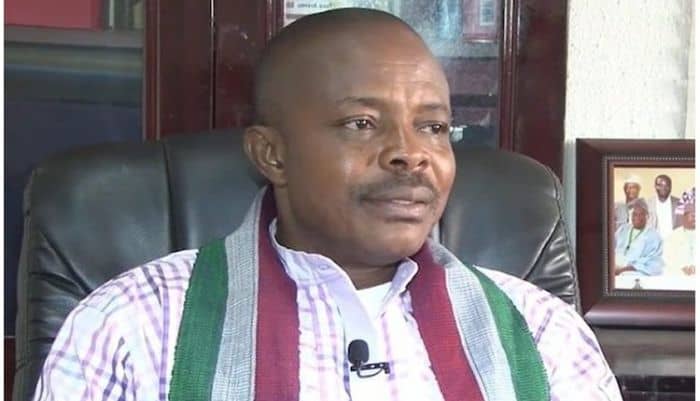
The President of the Nigerian Labour Congress (NLC), Joe Ajero, has expressed concern over the N5bn palliative package per state recently announced by the Federal Government. Ajero highlighted that this amount would only equate to approximately N1500 per person when divided among the 133 million Nigerians who are classified as multi-dimensionally poor.
During an interview on the Politics Today show on Channels Television, Ajero expressed doubt regarding the effectiveness of allocating N185bn for such purposes. He emphasized that when distributed among such a large number of individuals living in poverty, the impact would be minimal. These figures were based on statistics obtained from the National Bureau of Statistics, according to Ajero.
Addressing the issue, Ajero conveyed his concern that the N5bn palliative package would not significantly alleviate the plight of the multi-dimensionally poor individuals. He emphasized the need for a more substantial and comprehensive approach to tackle poverty effectively. Ajero called for a holistic strategy that would go beyond mere monetary packages to genuinely uplift and empower those in poverty.
In light of the statistics and the limited impact of the N5bn palliative, Ajero urged the government to reconsider their approach to poverty alleviation. He emphasized the importance of addressing underlying factors contributing to poverty and implementing comprehensive measures that address education, healthcare, and employment opportunities to make a meaningful and sustainable impact in tackling poverty in Nigeria.
The leader of the Labour Union emphasized that even if the N5bn funds were converted into the value of six trailers of rice, it would still only equate to a minimal portion of rice per individual when distributed. This statement is indicative of the severity of the poverty situation in Nigeria.
Furthermore, he noted that the successive increases in petroleum pump prices have further exacerbated the poverty levels in the country. He highlighted that since the initial increase, more Nigerians have fallen below the poverty line and have experienced a significant decline in their standard of living.
The remarks of the Labour Union leader underline the urgent need for comprehensive measures to address the escalating poverty crisis in Nigeria. They draw attention to the fact that the current approach, symbolized by the N5bn palliative package, is inadequate in providing the necessary support to uplift individuals out of poverty.
In light of these observations, it is crucial for the government to reevaluate their strategies and implement more effective solutions to combat poverty. This may entail addressing the root causes of poverty, facilitating job creation, improving access to quality education and healthcare, and fostering an inclusive and sustainable economic environment.
If we consider this as a palliative measure rather than a loan, it becomes evident that the impact of such an amount is inherently challenging, particularly in the current times when the National Bureau of Statistics reports that over 133 million Nigerians are living in multidimensional poverty.
The disparity between the allocated N185bn and the vast number of multi-dimensionally poor individuals, as acknowledged by the Bureau of Statistics, raises concerns about the effectiveness of this intervention. It prompts us to question how far-reaching the impact of this amount can truly be when distributed among such a significant population.
These statements highlight the need for a critical examination of the potential impact of the N185bn allocation. It becomes crucial to evaluate whether it will be sufficient to have a substantial effect on the lives of the multi-dimensionally poor individuals in Nigeria, given the alarming statistics provided by the Bureau of Statistics.
Considering the magnitude of the poverty situation, it is evident that a more comprehensive and far-reaching approach is necessary to comprehensively address the needs of the multi-dimensionally poor. Allocating funds alone may not be enough, and a holistic strategy that addresses the root causes of poverty and tackles various dimensions of deprivation is required to make a significant and lasting difference in the lives of these individuals.
The Labour Union leader pointed out that the successive increases in the pump price of petrol have resulted in a significant number of individuals transitioning from being on the borderline of poverty to being in a state of extreme poverty. He emphasized the need to consider the implications of this situation and questioned whether an allocation of N1500 per person can truly achieve the intended impact on poverty alleviation.
Highlighting the disparity between the minimal amount allocated and the magnitude of the poverty crisis, the leader posed an important question regarding the desired outcomes of such an intervention. The implication is that the current approach may not deliver the lasting and transformative impact needed to uplift individuals from poverty and address the challenges they face on a daily basis. GMTNews