The Federal Government and Enugu State Government have renewed their commitment to agro-industrialisation and food security, as Governor Peter Mbah highlights investments in farm estates, mechanisation, processing facilities and market access to grow Enugu’s economy.
The Federal Government and Enugu State Government have reaffirmed their commitment to transforming agriculture into a commercially driven, agro-industrialised sector to boost food security, create jobs and stimulate economic growth.
The commitment was reaffirmed on Thursday at the 48th Regular Meeting of the National Council on Agriculture and Food Security, hosted by the Enugu State Government, where Governor Peter Mbah and the Minister of Agriculture and Food Security, Senator Abubakar Kyari, highlighted ongoing interventions to strengthen agricultural value chains, improve productivity and expand market access.
The meeting, held at Hotel Presidential, Enugu, with the theme, “Enhancing Agricultural Value Chains, Agro-Industrialization and Market Access for Economic Growth,” attracted commissioners and delegates from the 36 states and the Federal Capital Territory, development partners and other stakeholders in the agricultural sector.
Addressing participants, Governor Mbah said agricultural transformation required more than increased food production, stressing the importance of connecting farmers to mechanisation, processing facilities, industries and viable domestic and international markets.
He explained that his administration’s ambition to grow Enugu’s economy from approximately $4.4 billion to $30 billion by 2031 informed its decision to position agriculture as a major driver of economic growth.
“We want Enugu to become a place where agriculture supports industry, industry creates opportunities for farmers and entrepreneurs, and our products compete successfully in domestic and international markets,” he said.
The governor disclosed that more than 60,000 farmers had benefited from agricultural support programmes, while 84,000 farmers had been captured in a digital registry to improve the distribution of government interventions.
He also identified the 260 Farm Estates Programme as a major strategy for addressing the challenge of agricultural production at scale.
“We are working to establish organised agricultural production hubs across all 260 wards of Enugu State, creating opportunities for farmers, cooperatives, agribusinesses and young entrepreneurs to participate in larger, more productive agricultural enterprises.
“To support this, we have developed an Agricultural Land Bank, securing approximately 187,000 hectares through strategic partnerships with communities,” he stated.
Mbah further disclosed that his administration had assembled 107 tractors through a partnership with Nortra Tractors to improve access to mechanised farming and increase agricultural productivity.
On agro-industrialisation, the governor highlighted the expansion of the previously moribund Enugu United Palm Products Limited plantation to 6,917 hectares, a development he said had created more than 3,500 jobs.
He also cited the revival of Enugu Songhai Farms in partnership with Tribu Limited as a 10,000-hectare agro-industrial hub, alongside the reactivation of Sunrise Flour Mills.
Another major investment highlighted was the Integrated Livestock Development Centre at Ubahu, designed to accommodate between 15,000 and 20,000 cattle as part of efforts to strengthen the state’s livestock value chain.
“These investments are connected by a common purpose: we want more of the value generated by our agricultural resources to remain within our economy,” he said.
The governor called for stronger collaboration among federal and state governments, development partners and private investors, noting that agricultural transformation depended on coordinated investments in production, processing, infrastructure and market access.
“Enugu is open for agribusiness. We have fertile land, a strategic location connecting the South East with other parts of Nigeria, a young and enterprising population, and a government committed to supporting productive investment.
“We welcome partnerships with other states, federal institutions, development agencies and private enterprises that share our ambition,” he added.
In his remarks, Kyari said the Federal Government was implementing several interventions to improve agricultural productivity, protect farmers’ incomes and strengthen food security.
He disclosed that the National Agricultural Development Fund’s Farm Input Support Programme had reached more than 115,000 beneficiaries across 25 states and the FCT, while the fund had disbursed ₦16.27 billion through agribusiness financing facilities.
The minister added that the Bank of Agriculture had financed more than 500,000 smallholder farmers, while the second phase of the Renewed Hope National Agricultural Mechanisation Programme was expected to deliver an additional 1,500 tractors and more than 8,000 complementary pieces of equipment.
He emphasised the need to strengthen commodity supply chains to ensure that agricultural production translated into reliable raw materials for industries and affordable food for consumers.
Kyari also disclosed that Nigeria’s economy grew by 4.43 percent in the second quarter of 2026, with agriculture recording 4.39 percent growth and contributing 26.15 percent of real Gross Domestic Product.
Also speaking, the Minister of Innovation, Science and Technology, Dr. Kingsley Udeh, SAN, commended Governor Mbah for hosting the meeting, expressing optimism that the gathering would showcase Enugu’s agro-industrialisation policies and achievements, alongside the Federal Government’s interventions in the agricultural sector.
Udeh described the agricultural reforms and transformation initiatives of both governments as commendable, saying they provided reasons to support the re-election of Governor Mbah and President Bola Ahmed Tinubu.
Earlier, the Enugu State Commissioner for Agriculture and Agro-Industrialisation, Dr. Patrick Ubru, said the state was repositioning its agricultural sector from subsistence production to a commercially driven and agro-industrialised economy.
He disclosed that agriculture and agro-industrialisation were expected to contribute $12 billion to the state’s $30 billion economic target by 2031.
Ubru also pledged the state government’s support for federal agricultural interventions through the provision of warehouses for storing and distributing farm inputs, as well as facilities for agricultural programmes and capacity-building activities.
In his vote of thanks, the Minister of State for Agriculture and Food Security, Senator Sabi Abdullahi, urged stakeholders to ensure effective implementation of the resolutions reached at the meeting.
He stressed that sustained collaboration among governments and other stakeholders remained essential to building a productive and competitive agricultural sector.
The meeting was attended by the Deputy National Chairman (South) of the All Progressives Congress (APC), Dr. Ben Nwoye; Enugu State APC Chairman, Dr. Martin Chukwunwike; Speaker of the Enugu State House of Assembly, Rt. Hon. Uche Ugwu; Secretary to the State Government, Prof. Chidiebere Onyia; and Head of Service, Dr. Godwin Anigbo, among other dignitaries.
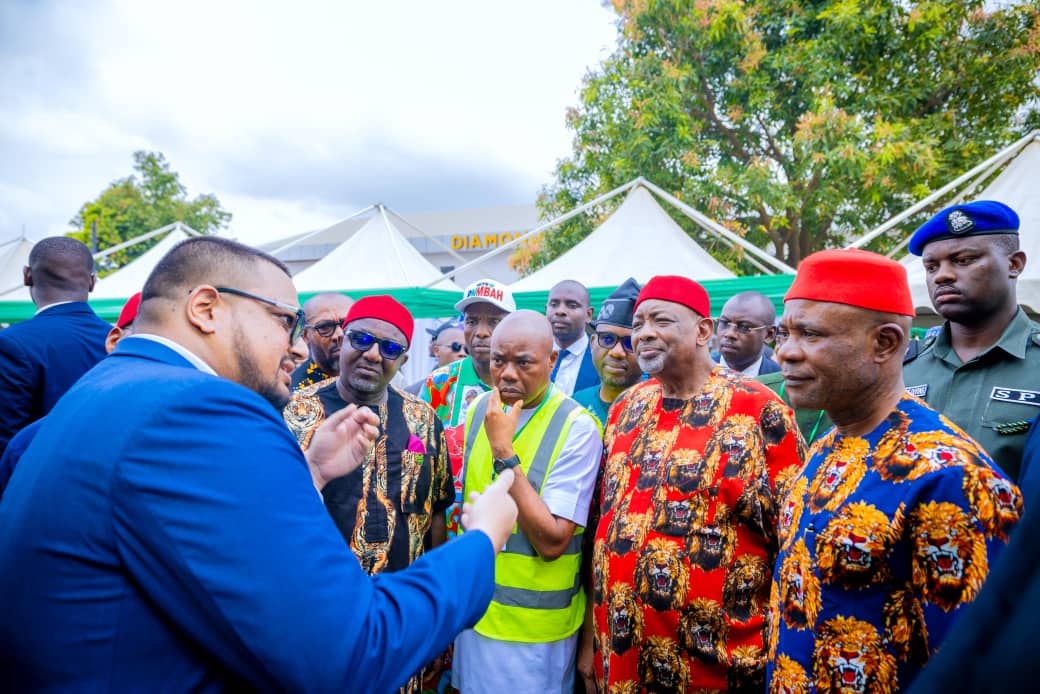
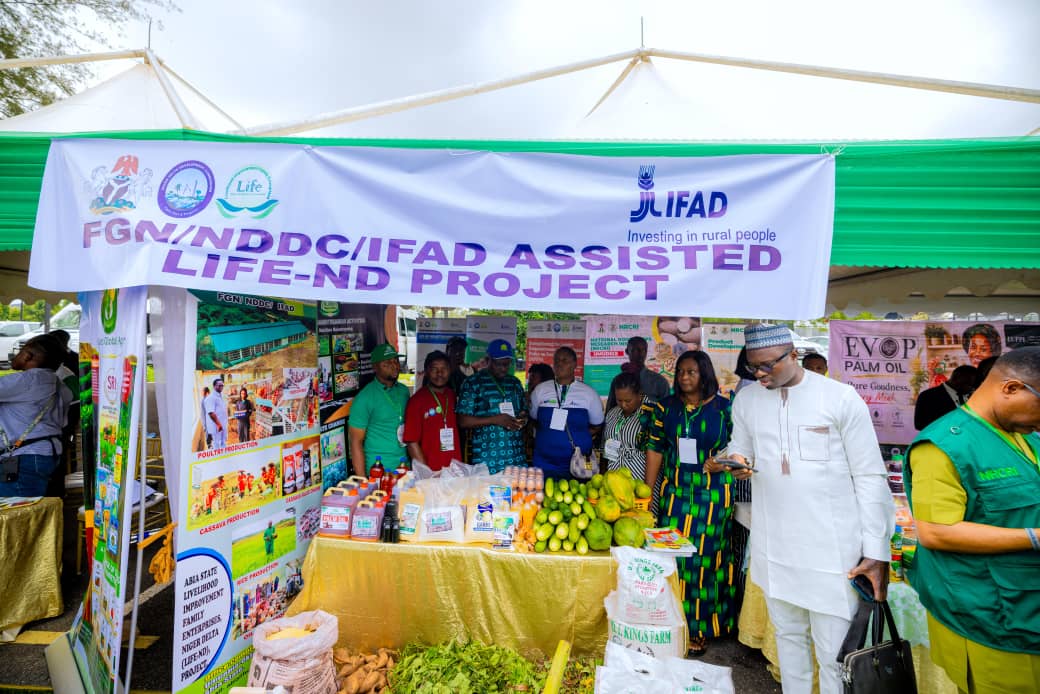
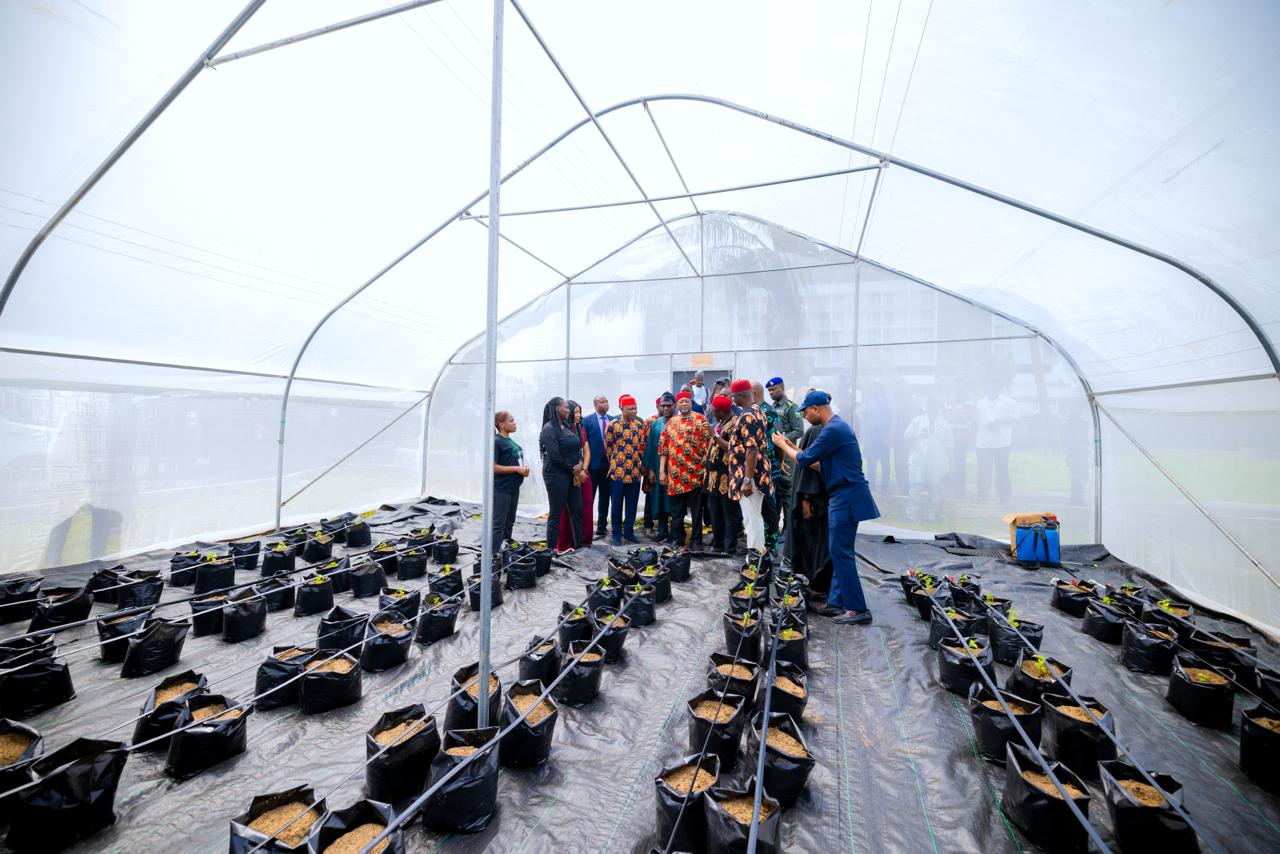
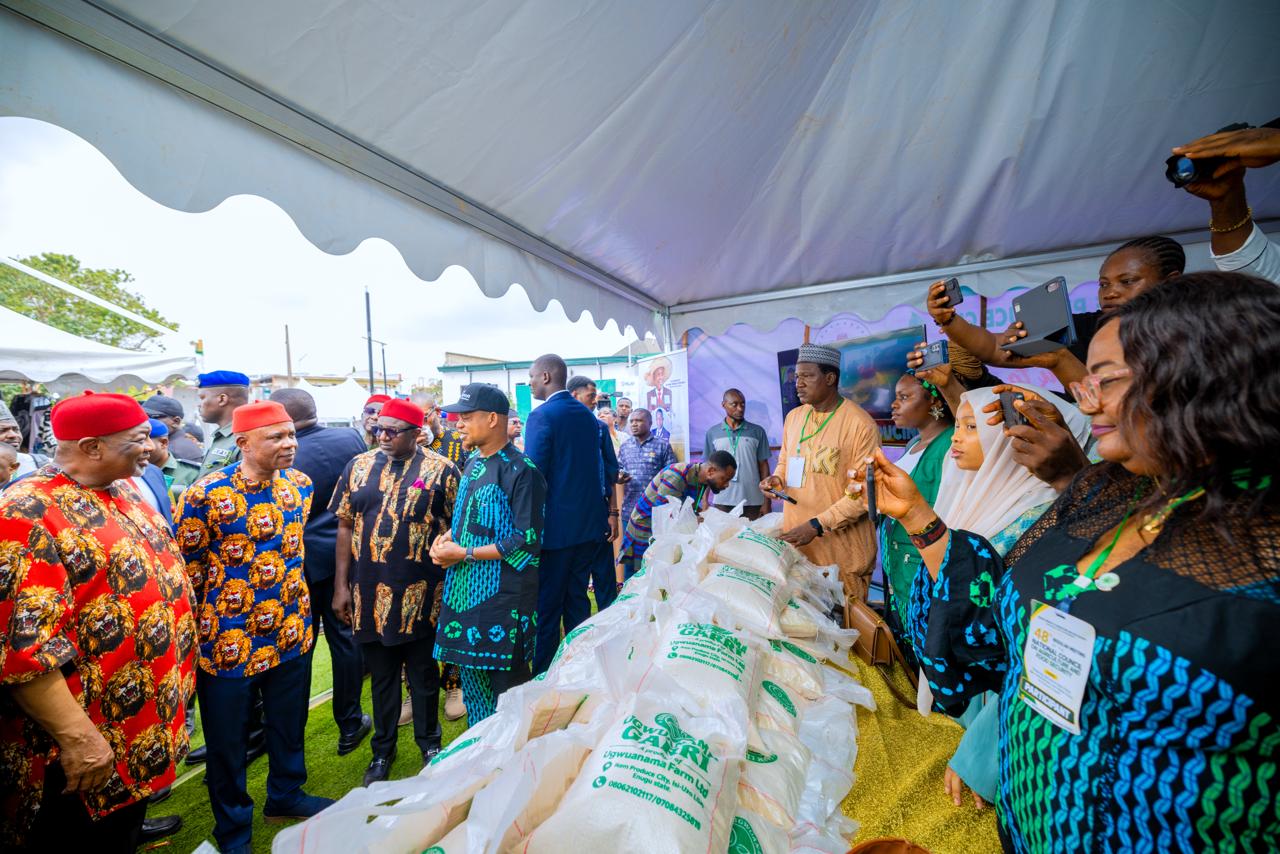
Side attractions included exhibitions of food products and agricultural equipment, which Governor Mbah and other participants toured during the event.
Visit GMTNewsng for more news stories.