Enugu Farm Estates are projected to create more than 104,000 direct jobs across 260 wards as the state expands mechanised farming and agro-processing.
Enugu State’s farm estate initiative is projected to create more than 104,000 direct jobs through the establishment of 200-hectare agricultural clusters across the state’s 260 political wards, former Special Adviser to the Governor on Agriculture, Engr. Mike Ogbuekwe, has said.
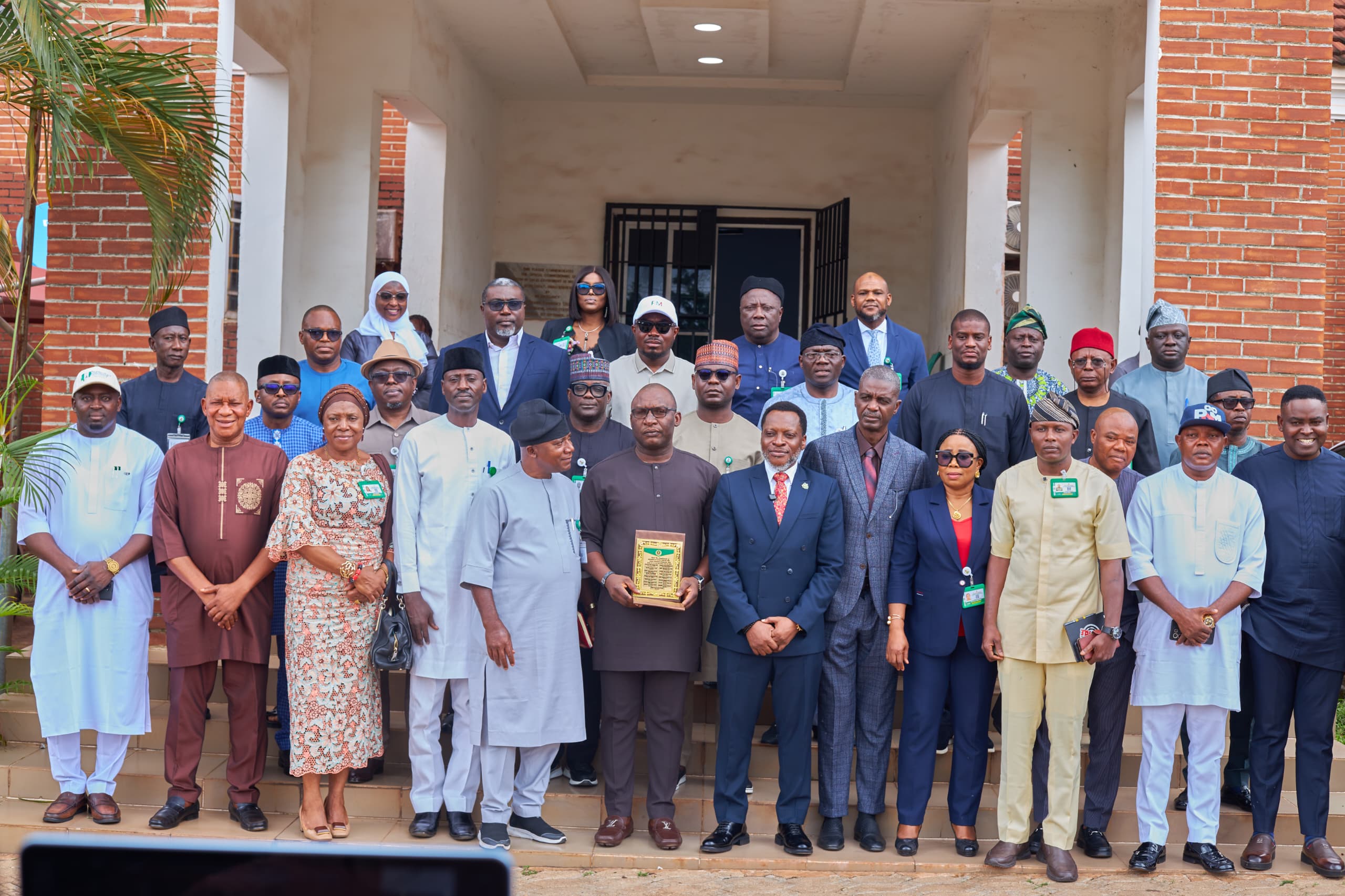
Ogbuekwe disclosed this on Wednesday during an interactive session on the Smart Farm Initiative organised by the Enugu State Government for participants of Senior Executive Course 48, 2026, of the National Institute for Policy and Strategic Studies (NIPSS), who were on a study tour of the state.
Under the farm estate model, each of Enugu’s 260 wards is expected to have a 200-hectare agricultural cluster, translating to about 52,000 hectares when fully implemented. Earlier reports on the programme have similarly projected more than 104,000 direct jobs and over 156,000 indirect jobs from the initiative.
Ogbuekwe said the model was designed to formalise agricultural production, address land-use challenges, improve farmers’ access to finance and technology, promote mechanisation and create stronger market linkages.
He explained that farmers would be organised into clusters where their produce could be aggregated and supplied directly to agro-processing industries requiring agricultural raw materials.
“So, to develop the farm estates model is to use food security to drive away insecurity,” Ogbuekwe said.
According to Ogbuekwe, the clustering model would enable farmers to benefit from government-supported infrastructure, training, mechanisation and access to markets.
He said the initiative was also designed to create opportunities for young people to participate in agriculture across the entire value chain, rather than limiting them to primary production.
“You see, that’s where the creativity component comes in; so that the industries that require our raw materials already know where they can go to get their raw materials,” he said.
The former agricultural adviser said Enugu’s 260-ward structure provided the basis for the programme, with each ward targeted for a 200-hectare agricultural cluster.
The scale of the initiative has previously been confirmed by the state government, which has described the farm estates as cluster farms intended to bring smallholder farmers into organised, mechanised production.
Ogbuekwe said the government’s investment in mechanisation, including tractors and the establishment of a tractor assembly plant in Enugu, would further support farmers operating within the organised clusters.
“The idea is, as we’re churning out tractors, the tractors should be going to organized spaces, clusters; where our farmers can use these tractors to their own benefit and for the benefit of our people,” he said.
The state government has previously said that farm estates would be equipped with infrastructure including warehouses, tractor sheds, irrigation, electricity and water supply. It has also reported the delivery of tractors and plans for additional local assembly capacity.
Ogbuekwe said the farm estate initiative could help address the challenge of developing agricultural land in the forested South-East while supporting Nigeria’s broader food-security objectives.
He said the programme was not limited to crop production but covered the wider agricultural value chain, including processing, packaging and marketing.
According to him, technology would also provide opportunities for urban youths to participate in agriculture without necessarily becoming primary producers.
Ogbuekwe said the state had developed the Enugu Market App as a platform for marketing agricultural produce, while its website was being used to receive orders and engage students as agents to market farm products.
He explained that the strategy was intended to create an economic link between rural producers and urban consumers, with rural communities supplying agricultural products while urban youths participate in marketing, packaging and other value-chain activities.
“We discovered that the youths, especially the urban youths would like to participate in agriculture, have jobs but they would not know how to do that; so we looked at the value chain of agriculture, from the production to the processing to the packaging to the marketing,” he said.
Ogbuekwe added that the state had trademarked agricultural products including Enugu Rice, Enugu Garri, Enugu Palm Oil, Enugu Cashew and Enugu Nsukka Pepper as part of efforts to build stronger agricultural brands.
He said the farm estate model would also help protect agricultural land by establishing more organised and secure farming communities.
“What the farm estate is doing for ndi Enugu is that it is creating an organized, formalized system that allows our people go to farm now,” he said.
He added that farmers were increasingly gaining access to tractors, mechanisation equipment, training and market linkages through the organised model.
Chairman of Nkanu East Local Government Area, Sydney Okechukwu Edeh, said implementation of the farm estates had reached between 60 and 70 per cent across the state.
“We’ve gone far, we’re at a 60% level because we’re doing it across the 17 local governments which is 260 political wards,” Edeh said.
He disclosed that Nkanu East alone was developing farm estates across nine wards, while other local government areas were implementing similar projects.
The Enugu State Government launched its “One Ward, One Smart Farm Estate” programme as part of its agricultural transformation agenda. The state had earmarked N2 billion for the initiative in its 2025 budget, with the programme targeting all 260 political wards.
More recently, the state government said the 260 Farm Estate Programme was underway, alongside farmer profiling, mechanisation, climate-smart agriculture and other agricultural interventions.
The farm estate initiative is therefore positioned as a central component of Enugu’s strategy to expand food production, create employment, promote agro-industrialisation and strengthen economic opportunities across rural and urban communities.
Visit GMTNewsng for more news stories.