2027 Election Reporting
ENUGU, November 5, 2026 — The International Press Centre (IPC) has urged Nigerian journalists to move beyond routine political coverage and hold candidates accountable for their promises, policies and performance ahead of the 2027 general elections.
The centre warned that sensationalism, misinformation and unverified political claims could undermine public confidence, deepen divisions and threaten democratic accountability.
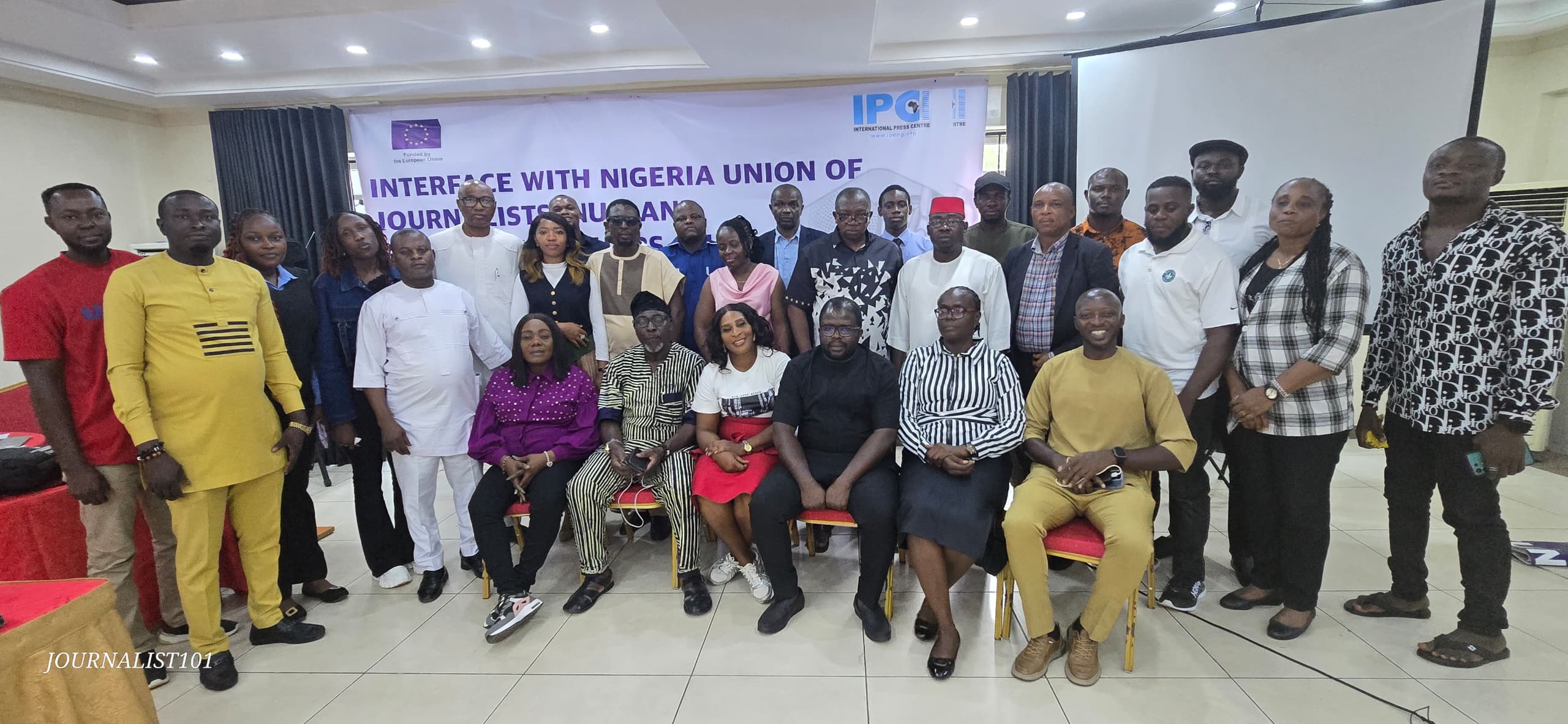
The Executive Director of IPC, Dr Lanre Arogundade, gave the charge today in Enugu during an engagement with the Nigeria Union of Journalists (NUJ), editors and online publishers on professional and democratic accountability journalism.
Arogundade said electoral reporting must prioritise citizens’ concerns rather than allow politicians to dictate the news agenda through rallies, campaign declarations and political controversies.
He stressed that journalists must interrogate campaign promises, scrutinise public expenditure and examine how political decisions affect ordinary Nigerians. Elections, he noted, extend beyond candidates and results to citizens’ aspirations, welfare and right to make informed choices.
The IPC director identified accuracy, fairness, verification, editorial independence and conflict-sensitive reporting as essential safeguards against electoral misinformation and inflammatory coverage.
He also called for greater attention to unemployment, insecurity, healthcare, education, electricity, infrastructure and the inclusion of women, young people and persons with disabilities in election reporting.
Presenting a facilitation paper titled “2027 General Elections in the Context of Democratic and Accountability Reporting: Scanning the Electoral Environment and Reporting Citizens’ Priority Concerns,” Professor Ifeoma Dunu of Nnamdi Azikiwe University, Awka, challenged journalists to make evidence—not political rhetoric—the foundation of electoral coverage.
Dunu, a Professor of Broadcasting and Media Studies and Director of UNIZIK 94.1 FM, identified electoral institutions, political activities, economic conditions, public services, security, social inclusion and the information environment as critical areas for sustained media scrutiny.
She urged newsrooms to monitor INEC’s preparedness, electoral logistics, political party primaries, campaign financing, vote-buying allegations, electoral violence and the conduct of security agencies.
According to her, accountability journalism must establish who made a promise or decision, the evidence supporting it, who benefits or bears the consequences, and what action follows.
Dunu also advocated citizens’ priority registers, developed through community consultations, surveys and direct engagement, to ensure that electoral reporting reflects pressing public concerns rather than the interests of political elites.
She cautioned against the growing threat of AI-generated misinformation and deepfakes, urging journalists to authenticate digital content, trace original sources and independently corroborate claims before publication.
The media scholar further recommended specialised reporting beats, regular editorial reviews, data journalism and systematic tracking of political promises against budgets, implementation records and measurable outcomes.
In his remarks, Chairman of the NUJ Online Chapel, Enugu State Council, Comrade Clinton Umeh, pledged that online publishers would implement the lessons from the engagement to strengthen professional standards and improve newsroom practices.
Umeh acknowledged the pressures of digital publishing, particularly the race for speed and audience attention, which can compromise accuracy and credibility.
He described the programme as a valuable opportunity for independent online publishers to consolidate their experience, improve their publications and strengthen collaboration within the media industry.
Attendees expressed delight at the opportunity, describing the engagement as a valuable platform for professional development, knowledge-sharing and networking. They welcomed the exposure to practical approaches that could enhance electoral reporting and accountability journalism in their respective newsrooms.
The programme was organised under Component Four, Support to Media, of the European Union Support to Democratic Governance in Nigeria (EU-SDGN III) Programme.
As the 2027 elections approach, the central message from the engagement was clear: journalists must make citizens, not politicians, the priority of electoral reporting.
Meta Description: IPC urges Nigerian journalists to prioritise citizens’ concerns, combat misinformation and hold politicians accountable ahead of the 2027 elections.
Excerpt: The International Press Centre (IPC) has challenged Nigerian journalists to prioritise citizens’ concerns, verify political claims and hold politicians accountable ahead of the 2027 general elections.
Visit GMTNewsng for more on 2027 Election Reporting and other news stories.
IPC, 2027 Election Reporting, Lanre Arogundade, Ifeoma Dunu, NUJ, Enugu, Electoral Accountability, Journalism