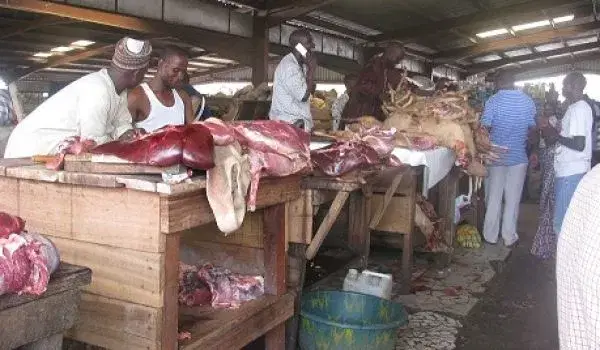
Meat prices in Lagos have surged to between ₦9,000 and ₦10,000 per kilogramme, up from ₦7,000–₦7,500 four months ago. The Lagos State Butchers Association blames foreign exchange fluctuations, rising diesel prices and cattle transportation losses, urging the Federal Government to introduce dedicated cargo rail services.
Meat prices in Lagos have risen sharply to between ₦9,000 and ₦10,000 per kilogramme, up from ₦7,000 to ₦7,500 about four months ago, as butchers grapple with increasing cattle procurement and transportation costs.
The Lagos State Butchers Association attributed the price surge to foreign exchange fluctuations, rising diesel prices, high transportation expenses and losses incurred when cattle die during transit.
The association’s Deputy State Chairman, Alhaji Wasiu Akande, disclosed this in an interview with journalists on Thursday in Lagos, warning that the rising cost of bringing cattle to the market was putting pressure on the meat trade.
“Meat is more expensive now. A kilogramme of meat is between N9,000 and N10,000, whereas about four months ago, it was sold for between N7,000 and N7,500,” Akande said.
Akande explained that currency fluctuations significantly affected cattle prices because some livestock dealers sourced animals from neighbouring African countries.
He challenged the assumption that most cattle consumed in Nigeria were bred locally in northern Nigeria, saying domestic production accounted for only a small proportion of the country’s consumption.
“People always assume that the cows come from the North. The ones we breed in the North are not even up to 10 per cent of what we consume in Nigeria,” he said.
According to him, Mali, Côte d’Ivoire and Niger are among the countries supplying cattle to the Nigerian market.
He noted that foreign exchange movements influenced the prices charged by livestock dealers when converting their earnings into naira.
“When the dealers want to sell the cows to us, they bring out their calculators to convert their money to naira,” he said.
The butchers’ association identified transportation as another major factor driving up the cost of meat in Lagos.
Akande said moving cattle over long distances exposed the animals to stress and increased the risk of death, with the financial losses eventually reflected in the prices of surviving cattle.
“Some cattle die during transportation from the North to Lagos, with the losses ultimately reflected in the prices of the other cows that survived,” he said.
He added that rising diesel prices had increased transportation expenses because most trailers used to convey cattle ran on diesel.
According to him, livestock dealers also incur interstate charges while transporting cattle through states along routes to Lagos, including Niger, Oyo and Ogun.
These additional costs, he said, contribute to the final price of cattle and the meat sold to consumers.
To address the rising cost of livestock transportation, Akande appealed to the Federal Government to accelerate railway rehabilitation and consider establishing dedicated cargo rail services for moving cattle across the country.
He disclosed that the association had met with the minister responsible for livestock matters about a month earlier to discuss challenges associated with cattle transportation.
“We want to appeal for our own cargo rail to be able to bring in cows. It will make the cows healthier, reduce their stress, and give them good market value,” he said.
Akande recalled that cargo trains were used to transport cattle in the 1960s and 1970s, describing the system as faster and less stressful for the animals.
He said the decline of the railway system from the 1980s increased reliance on road transport, exposing livestock dealers to higher operating costs and additional charges.
“Nobody can stop a cargo rail, so it is still the best option,” he said.
According to him, a dedicated livestock rail service would reduce transportation expenses, minimise cattle deaths and improve the animals’ condition when they arrive at destination markets.
Akande said cattle prices sometimes declined during the rainy season, particularly around June and July, but the reductions were temporary and did not provide lasting relief to butchers.
He explained that cattle breeds varied in size and market value, influencing purchasing decisions and the prices charged to consumers.
The breed commonly known as Kokoloji, which he described as polled cattle, is among the more expensive options, with the largest animals selling for as much as ₦3 million.
Other animals in the breed sell for between ₦1.4 million and ₦1.5 million, while the cheapest can cost approximately ₦1 million.
Akande added that the lowest prices for other cattle breeds ranged from ₦700,000 to ₦800,000.
He said many butchers preferred larger and more expensive cattle because the size and quality of the meat helped attract customers and maintain their competitiveness in the market.
The association’s deputy chairman reiterated the need for the Federal Government to expedite railway rehabilitation and introduce dedicated cargo services for livestock transportation.
He maintained that reducing the cost of moving cattle would help limit animal losses, improve livestock quality and ease some of the pressure on meat prices.
The development comes amid growing concerns over food affordability, with rising livestock procurement and distribution costs adding to the financial burden on consumers and traders in Lagos.
However, the extent to which improved rail transportation could reduce retail meat prices would depend on the scale of implementation and how much of the resulting savings are passed on to consumers.
Visit GMTNewsng for more news stories.