Livestock farmers from Enugu and Ebonyi are receiving specialised training from DBN and L-PRES to strengthen business management, financial literacy and access to affordable credit.
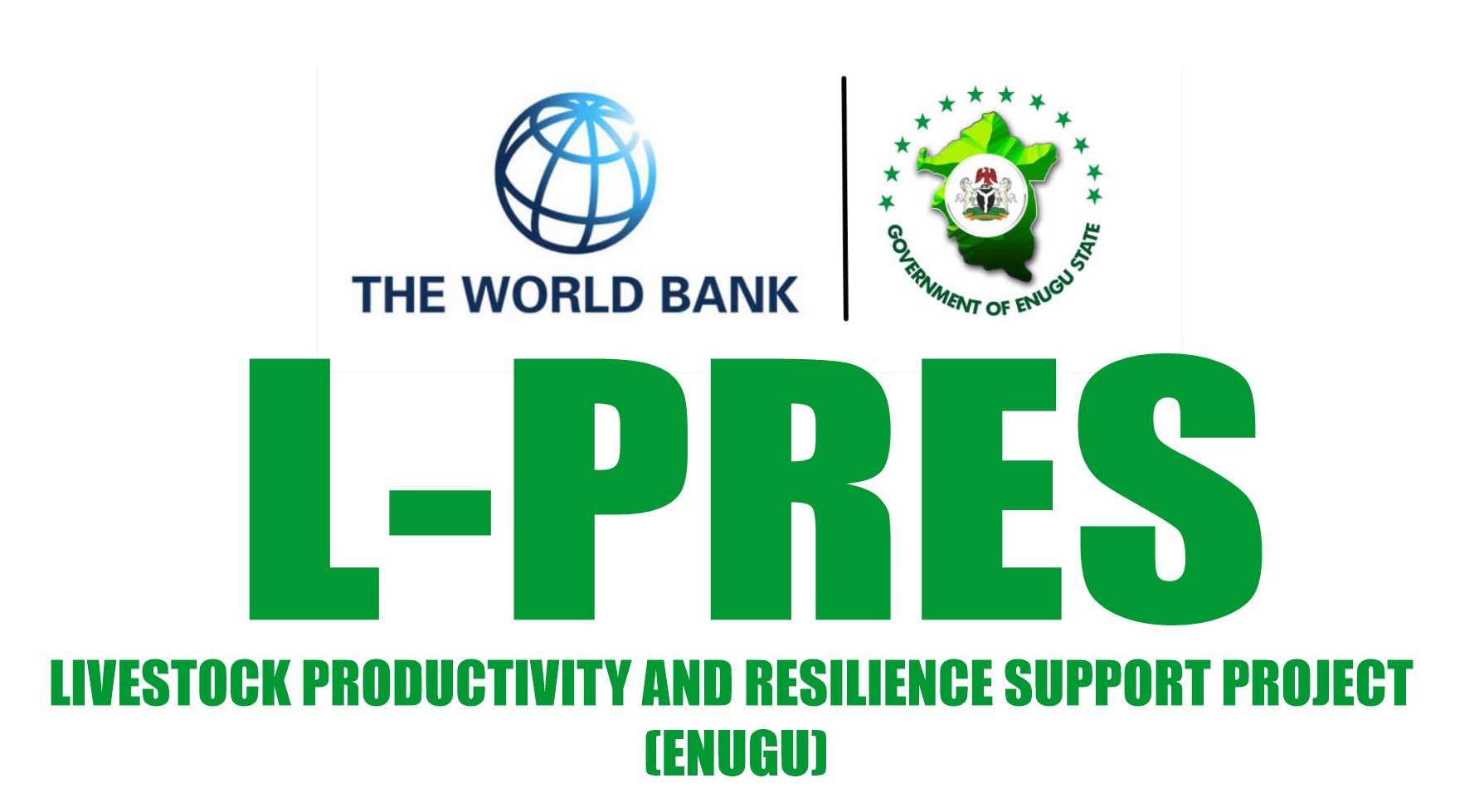
The Development Bank of Nigeria (DBN), in collaboration with the Livestock Productivity and Resilience Support Project (L-PRES), has commenced the second phase of capacity building for selected livestock farmers and entrepreneurs from Enugu and Ebonyi states.
The five-day Livestock Accelerator and Mentorship Programme (LAMP), which began in Enugu, is designed to strengthen participants’ capacity in business management, financial literacy, productivity, documentation and access to credit.
The programme is part of efforts to build sustainable and commercially viable livestock businesses across the South-East and deepen access to finance for operators in the sector.
Speaking at the opening of the programme, the Director and Project Coordinator at the Federal Ministry of Livestock Development, Dr Adeniyi Adedoyin, said the initiative evolved from the Nigerian Livestock Growth and Acceleration Strategy developed to build a sustainable, inclusive and globally competitive livestock sector.
Adedoyin said access to finance and credit remained one of the critical pillars of the strategy, noting that the development of a strong base of micro, small and medium-sized enterprises in the livestock industry depended heavily on affordable financing.
He said the first phase of the capacity-building programme, implemented across Nigeria’s six geopolitical zones, equipped livestock entrepreneurs with foundational knowledge and essential documentation required to engage financial institutions.
According to him, the Livestock Accelerator and Mentorship Programme was designed to build on those gains by providing deeper knowledge and practical support to enable participants to operate profitable and sustainable businesses.
Adedoyin said financing opportunities available through the intervention could offer significantly lower rates than prevailing commercial lending rates, with subsidised financing estimated at about 16 per cent compared with commercial rates that could rise to about 30 per cent.
The Capacity Building Manager of DBN, Mr Fortune Granville, said the programme was funded by the World Bank through the Federal Ministry of Livestock Development under the L-PRES initiative.
Granville said DBN was implementing the capacity-building and access-to-finance component of the project by providing technical training, while participating financial institutions would facilitate loans for qualified livestock MSMEs.
He noted that many small business operators faced difficulties accessing credit because they lacked essential documents, licences and statutory filings required by financial institutions.
Granville said more than 60 livestock entrepreneurs participated in the first South-East training held in January, with the top 20 participants selected for the current accelerator and mentorship programme.
He explained that beneficiaries would undergo five days of intensive training, followed by six months of mentorship and expert support aimed at helping them apply the knowledge gained to strengthen and expand their businesses.
The National Value Chain Consultant for L-PRES, Mrs Heather Akanni, said the programme would provide participants with continued mentorship and practical guidance across different livestock value chains.
Akanni identified access to finance as one of the major challenges confronting livestock businesses and said participating financial institutions were being encouraged to look beyond primary production when considering businesses for financing.
She said opportunities also existed across processing, packaging and marketing, stressing that the development of the livestock sector required stronger investment throughout the entire value chain.
Akanni also encouraged livestock entrepreneurs to embrace insurance as a means of protecting their investments and improving their capacity to access financing.
The Enugu State Project Coordinator of L-PRES, Dr Ifeyinwa Nnajieze, said the state hosted the first L-PRES SME-Participating Financial Institution regional training for the South-East from January 26 to January 30, 2026.
She said the earlier programme combined mandatory BizAid online training, practical sessions and classroom-based learning, with grants awarded to outstanding livestock entrepreneurs who emerged among the top performers in an assessment conducted by DBN.
Nnajieze said Enugu was selected as a pilot state for the programme because of its strategic importance and the encouraging results recorded during the first phase.
She added that the state was again selected to host the South-East edition of the Livestock Accelerator and Mentorship Programme, bringing together selected beneficiaries from Enugu and Ebonyi.
The Enugu coordinator attributed the state’s growing role in livestock development to ongoing investments and policy support by the administration of Governor Peter Mbah.
She highlighted the ongoing development of the Enugu State Integrated Livestock Development Centre at Ubahu in Nkanu East Local Government Area, a major project designed to support a modern and integrated livestock value chain.
Official Federal Ministry and L-PRES records describe the Ubahu project as a major integrated livestock facility, including a large-scale ranching component and supporting infrastructure aimed at improving productivity, commercialisation and value addition in the sector.
One of the beneficiaries, Mr Christopher Okeke, said the intervention had already made a significant difference to his livestock business.
Okeke, who received a ₦500,000 grant during the first phase of the programme, said the support enabled him to return to pig farming after financial difficulties forced him to temporarily suspend operations.
He said he used the grant to purchase piglets and restructure his business.
The training is expected to strengthen the capacity of participating livestock entrepreneurs to access finance, improve business operations and take advantage of opportunities across Nigeria’s expanding livestock value chain.
The programme also reflects the broader objectives of the World Bank-supported L-PRES project, which seeks to improve livestock productivity, resilience and commercialisation across selected value chains in Nigeria.
Visit GMTNewsng for more news stories.