GDP growth reached 4.43 per cent in Nigeria’s second quarter of 2026, as President Bola Tinubu says economic reforms are stabilising the economy and paving the way for better household outcomes.
President Bola Ahmed Tinubu has welcomed Nigeria’s 4.43 per cent Gross Domestic Product (GDP) growth in the second quarter of 2026, describing the performance as further evidence that his administration’s economic reforms are beginning to yield results.
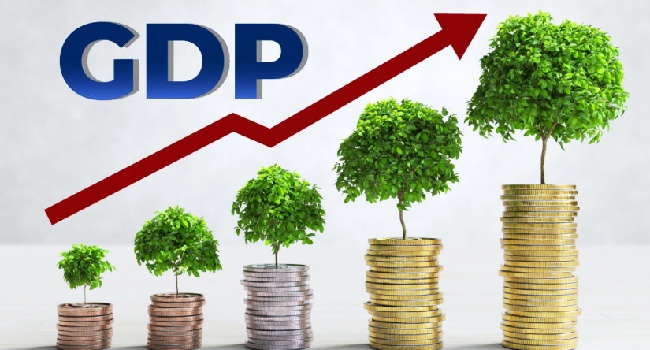
The latest GDP report released by the National Bureau of Statistics (NBS) showed that Nigeria’s economy expanded by 4.43 per cent in real terms in the second quarter of 2026, compared with 4.23 per cent recorded during the corresponding period in 2025.
The figure also represents an improvement from the 3.89 per cent growth recorded in the first quarter of 2026.
President Tinubu said the latest economic performance reflected progress in key sectors, including agriculture, oil and gas, manufacturing and services, with the services sector remaining the largest contributor to Nigeria’s aggregate economic output.
According to the NBS, the services sector accounted for more than half of real GDP during the quarter, while agriculture and the non-oil economy also recorded stronger performances. Oil production increased to an average of about 1.72 million barrels per day during the period.
In nominal terms, Nigeria’s aggregate GDP rose by 18.43 per cent compared with the corresponding period of 2025, reaching about ₦119.29 trillion in the second quarter of 2026, according to the latest NBS figures.
In a statement issued by his Special Adviser on Information and Strategy, Bayo Onanuga, the President said the latest GDP report came at a significant time, amid continued criticism of his administration’s economic policies.
Tinubu said his administration had spent the past three years implementing difficult reforms aimed at stabilising the Nigerian economy and laying the foundation for long-term prosperity.
According to the President, the reforms were not designed to create hardship but to establish the conditions necessary for sustainable economic growth and improved living standards.
He said the government was now focused on ensuring that the gains recorded at the macroeconomic level translated into tangible improvements in the lives of ordinary Nigerians.
Tinubu pointed to Nigeria’s trade surplus, stronger foreign reserves, improved credit ratings, increased investor confidence and rising oil and gas production as evidence of the progress recorded under his administration.
The President also highlighted ongoing investments in roads, railways and other infrastructure, as well as developments in the education and credit sectors.
He noted that universities had experienced a prolonged period without industrial action and said the Nigerian Education Loan Fund (NELFUND) was expanding access to higher education, while consumer credit initiatives were being extended to eligible Nigerians.
Tinubu said his administration would introduce further interventions in the coming weeks to address challenges facing vulnerable Nigerians.
The measures, he said, would include efforts to provide cheaper transportation, increase food production and implement relief programmes targeted at communities at the grassroots.
“Under our watch, the economy is on the irreversible path to experience even more growth that all homes will feel at the dining table and in their pockets,” the President said.
He added that the Federal Government remained committed to translating stronger GDP and macroeconomic performance into improved microeconomic outcomes for Nigerian households.
The President stressed that his administration would not relent in its efforts to sustain the country’s economic progress and ensure that the benefits of growth were broadly felt across the population.
However, the latest NBS data also shows that economic growth has not been uniform across all sectors. While agriculture and services recorded stronger performances, industrial growth slowed compared with the corresponding period of 2025, highlighting the need for continued reforms to address production costs, infrastructure and other constraints facing businesses.
The 4.43 per cent GDP growth nevertheless marks a stronger quarterly performance for the Nigerian economy and sets the stage for the Federal Government’s next challenge: converting macroeconomic stability and growth into more jobs, higher incomes and improved living conditions for citizens across the country.
Visit GMTNewsng for more news stories.