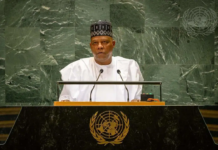
Professor Chima Onoka has warned that Nigeria’s healthcare challenges will persist unless research findings are backed by effective policies, political will and stronger institutional reforms.
A Professor of Public Health and Health Systems Economics at the University of Nigeria Enugu Campus (UNEC), Chima Onoka, has stated that research alone cannot transform Nigeria’s healthcare delivery system without effective policy implementation and active political engagement.
Onoka made the remarks on Thursday while delivering the 241st Inaugural Lecture of the University of Nigeria at the Enugu Campus.
The lecture, titled “Bridging the Divide: The Pracademic’s Mandate in the Quest for Universal Health Coverage,” focused on the widening gap between academic research and healthcare policy implementation in Nigeria.
According to the professor, meaningful healthcare reforms require professionals who not only understand academic research but also possess knowledge of politics, negotiation, advocacy and policy execution.
He described the concept of a “pracademic” as a professional who combines academic expertise with practical implementation skills to bridge the divide between research findings and government action.
Onoka urged universities to embrace what he termed “advanced pracademic agency” by producing scholars capable of translating research into practical policy outcomes while building strategic partnerships across academia, government agencies, non-governmental organisations and the private sector.
He also called for stronger collaboration among academics, policymakers and healthcare practitioners to advance Universal Health Coverage (UHC) in Nigeria.
The professor noted that Nigeria already possessed substantial research evidence needed for healthcare reform, but progress had remained slow because of political interests, bureaucratic bottlenecks and weak policy implementation.
According to him, universal health coverage should be viewed as more than a technical or medical issue.
“Universal health coverage is a power problem,” he said, explaining that many proposed reforms often threaten existing structures controlling public resources and healthcare financing.
Onoka lamented the country’s dependence on out-of-pocket healthcare spending, revealing that about 72 per cent of healthcare costs in Nigeria were borne directly by citizens.
“This is compared to between 30 per cent and 40 per cent in countries such as Rwanda, Kenya and Ghana,” he stated.
He further disclosed that government health expenditure per person in Nigeria was 21 times lower than the global average.
The public health expert estimated Nigeria’s healthcare financing gap for achieving universal health coverage at between ₦157 trillion and ₦236 trillion over the next decade.
Despite the challenges, he expressed optimism that improved efficiency and better allocation of resources could significantly reduce the burden.
Onoka commended reforms introduced by the National Health Insurance Authority (NHIA), including expanded insurance coverage, establishment of strategic purchasing and actuarial units, as well as stronger regulatory frameworks.
He also praised the Basic Healthcare Provision Fund, describing it as one of Nigeria’s most important social protection initiatives capable of improving access to healthcare services for millions of citizens.
The don warned that without adequate financial protection systems, Nigeria’s healthcare sector would continue pushing citizens deeper into poverty.
He stressed the need for long-term healthcare workforce planning, improved institutional funding and reforms aimed at reducing waste while enhancing efficiency in the sector.
In his remarks, the Vice-Chancellor of the University of Nigeria, Simon Ortuanya, represented by the Deputy Vice-Chancellor, Josaphat Onwumere, praised the lecture for its intellectual depth and practical relevance.
Onwumere described the presentation as rich in intellectual insight, humility, mentorship and practical wisdom.
He also commended Onoka for acknowledging mentors and colleagues, including Obinna Onwujekwe, whom he described as one of the world’s leading researchers in the field.
The event attracted academics, family members, friends and other stakeholders in the health sector.
Visit GMTNewsng for more news stories.