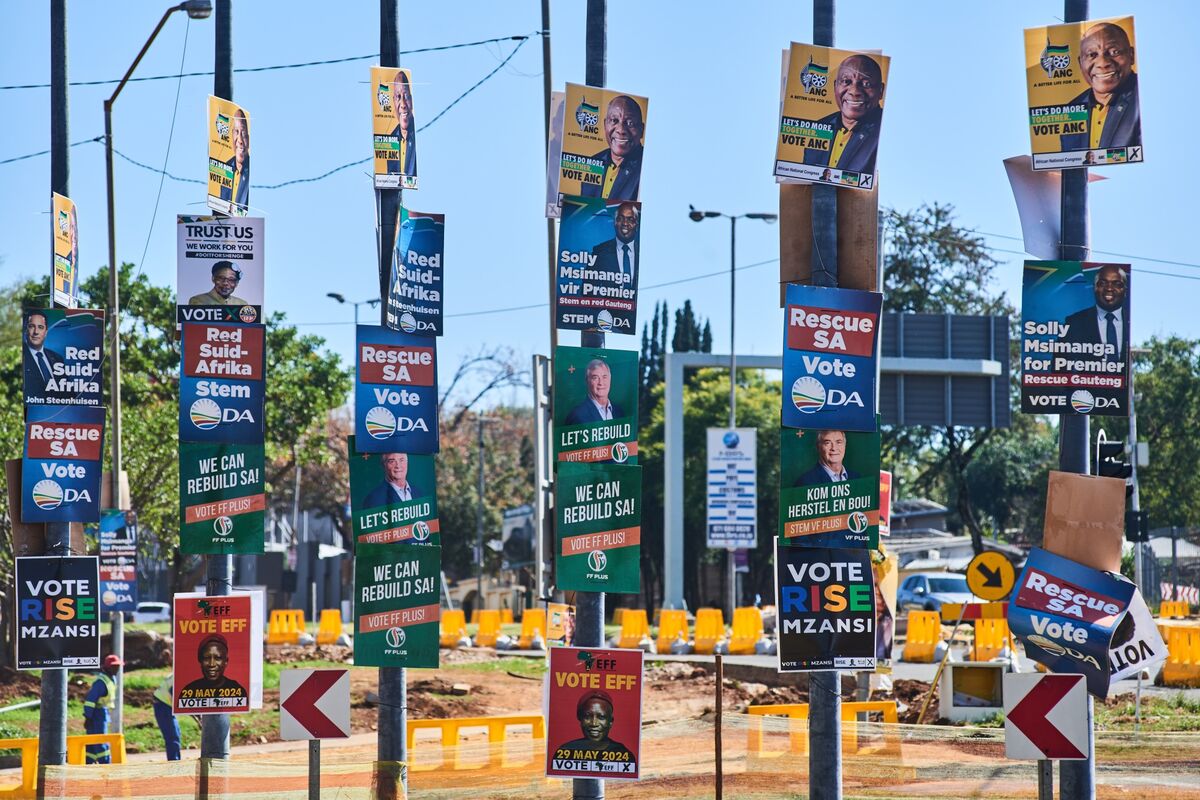
South Africa elections are taking place amid growing public anger over failing infrastructure, poor service delivery, unemployment and inequality as major parties battle for control of key cities.
South Africans are heading to the polls on Wednesday, November 4, 2026, in closely watched local government elections, as growing public dissatisfaction over failing infrastructure, poor service delivery, unemployment and inequality puts pressure on the country’s major political parties.
The elections are expected to provide an indication of the country’s political mood ahead of the next national polls, with parties competing for control of major cities, including Johannesburg and Durban.
The vote comes amid mounting frustration among citizens over crumbling infrastructure, water shortages, persistent inequality and an unemployment rate exceeding 30 per cent, further weakening public confidence in the political establishment.
Polling stations opened at 7:00 a.m. (0500 GMT) and are scheduled to close at 9:00 p.m. (1900 GMT).
More than 29 million voters are registered for the elections. However, participation remains a concern following the 2021 municipal elections, when turnout stood at just 46 per cent, with fewer than half of registered voters casting their ballots.
The Electoral Commission said on Tuesday that only 1.4 million of the 2.6 million people approved to cast special votes over two days had exercised their voting rights.
The African National Congress (ANC), which led South Africa’s liberation struggle against apartheid, is still projected to emerge as the largest party nationally, although opinion polls suggest that its support could decline further.
Once the dominant force in South African politics, the ANC, associated with former president and anti-apartheid icon Nelson Mandela, fell below 50 per cent of the vote for the first time in the 2021 municipal elections.
Its electoral fortunes weakened further during the 2024 national elections, when it secured slightly more than 40 per cent of the vote, forcing it to enter a government of national unity with nine other political parties.
The Democratic Alliance (DA), the country’s second-largest political party, is targeting Johannesburg, seeking to capitalise on widespread dissatisfaction with service delivery in the ANC stronghold.
Meanwhile, the opposition uMkhonto weSizwe (MK) party, led by former President Jacob Zuma, is mounting a strong challenge for Durban, the country’s east coast port city.
The MK party made a significant electoral breakthrough in 2024, attracting support from the ANC to emerge as the country’s third-largest political party, securing 14.5 per cent of the national vote.
Speaking at a rally in Durban on Sunday, Zuma expressed confidence in his party’s prospects, declaring that it would begin its political comeback by winning the city.
“We are going to start by taking back our country here,” Zuma said.
Durban has also become a focal point of growing anti-migrant sentiment, which has emerged as a prominent issue in the election campaign.
Visit GMTNewsng for more news stories.