President Bola Tinubu has reaffirmed support for indigenous engineering firms as Lee Engineering builds two compressor stations designed to help the Escravos–Lagos Pipeline System deliver up to 2.3 billion standard cubic feet of gas daily.
President Bola Ahmed Tinubu has reaffirmed his administration’s commitment to harnessing Nigeria’s gas resources to improve electricity supply, stimulate industrial growth, create jobs and increase export earnings.
The President’s position follows the reported achievement of indigenous engineering company Lee Engineering in building two midline compressor stations intended to enable the Escravos–Lagos Pipeline System (ELPS) to deliver its expanded capacity of 2.3 billion standard cubic feet of gas per day.
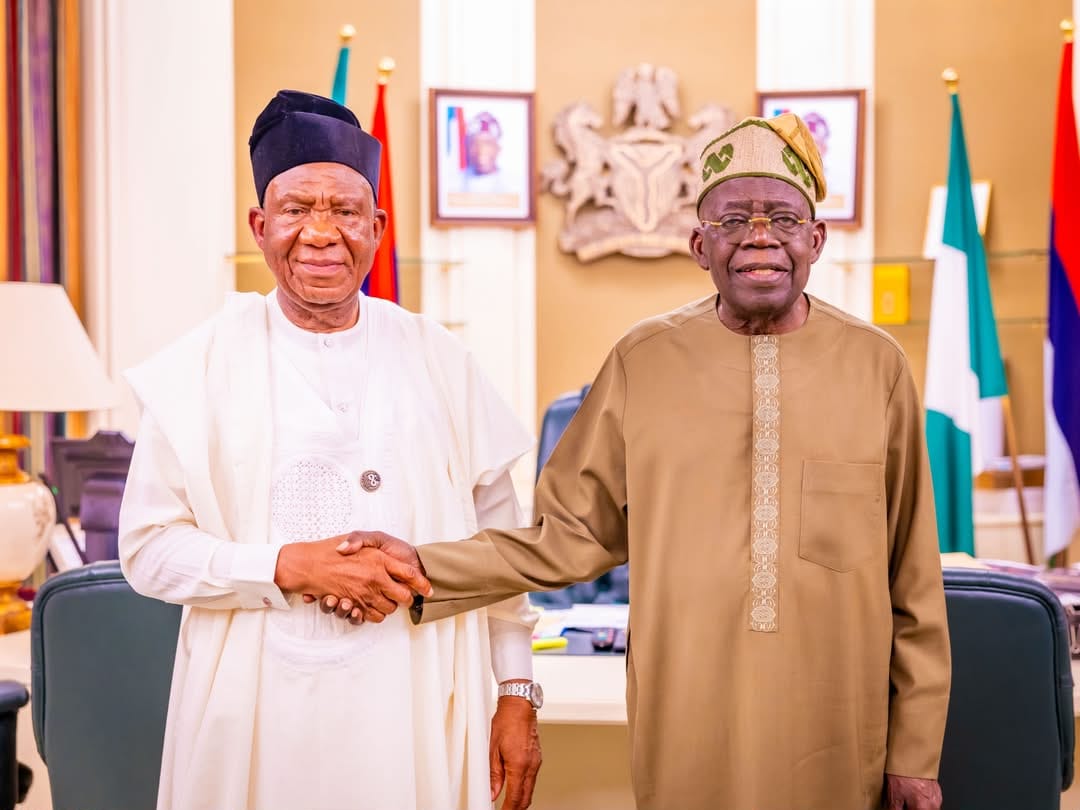
Tinubu spoke at the State House in Abuja while receiving the Founder and Chairman of Lee Engineering Group, Chief Dr Leemon Ikpea, CON.
The President reiterated his administration’s Nigeria First policy, urging international oil companies operating in Nigeria to give qualified indigenous engineering and manufacturing companies greater opportunities to execute major energy infrastructure projects.
He said the policy should translate into more contracts for capable Nigerian businesses, increased use of locally manufactured equipment and the creation of skilled employment opportunities for Nigerians.
Tinubu also encouraged international oil companies to establish stronger partnerships with indigenous engineering firms that have demonstrated the technical capacity to deliver complex projects.
Lee Engineering is handling the Engineering, Procurement and Construction (EPC) of two midline compressor stations in Edo State.
The stations are designed to increase operating pressure along the Escravos–Lagos Pipeline System, supporting the expanded gas transportation capacity following the ELPS II project.
According to the State House release, the pipeline’s designed capacity increased from 1.1 billion to 2.3 billion standard cubic feet of gas per day, making the compressor stations critical to achieving the higher throughput.
Once fully operational, the infrastructure is expected to improve gas deliveries to power plants and industries along the pipeline corridor.
The increased transportation capacity could also support additional gas supplies to neighbouring West African countries through the West African Gas Pipeline, creating opportunities to boost Nigeria’s export earnings.
Tinubu also highlighted his administration’s 2024 executive orders and presidential directives on local content compliance, contracting costs and approval timelines.
The measures, he said, are intended to attract investment, reduce project delays and expand opportunities for Nigerian businesses across strategic sectors, including energy and infrastructure.
His remarks underscore the administration’s stated objective of ensuring that domestic companies benefit more directly from investments in Nigeria’s oil and gas industry.
Speaking during the meeting, Ikpea commended the President’s Nigeria First policy and highlighted the capabilities of Lee Engineering’s fabrication yard in Warri, Delta State.
He disclosed that the facility is manufacturing some components for the compressor stations and houses advanced fabrication equipment used in engineering and industrial projects.
Ikpea said Nigerian companies had invested substantially in modern equipment, technology and skilled personnel, positioning them to undertake complex Engineering, Procurement and Construction projects previously handled by foreign contractors.
He added that expanding the participation of indigenous firms would help retain more jobs, technical expertise and economic value within Nigeria.
The development highlights the potential role of local engineering capacity in advancing the country’s gas infrastructure, supporting industrial activity and strengthening domestic participation in the energy value chain.
Visit GMTNewsng for more news stories.