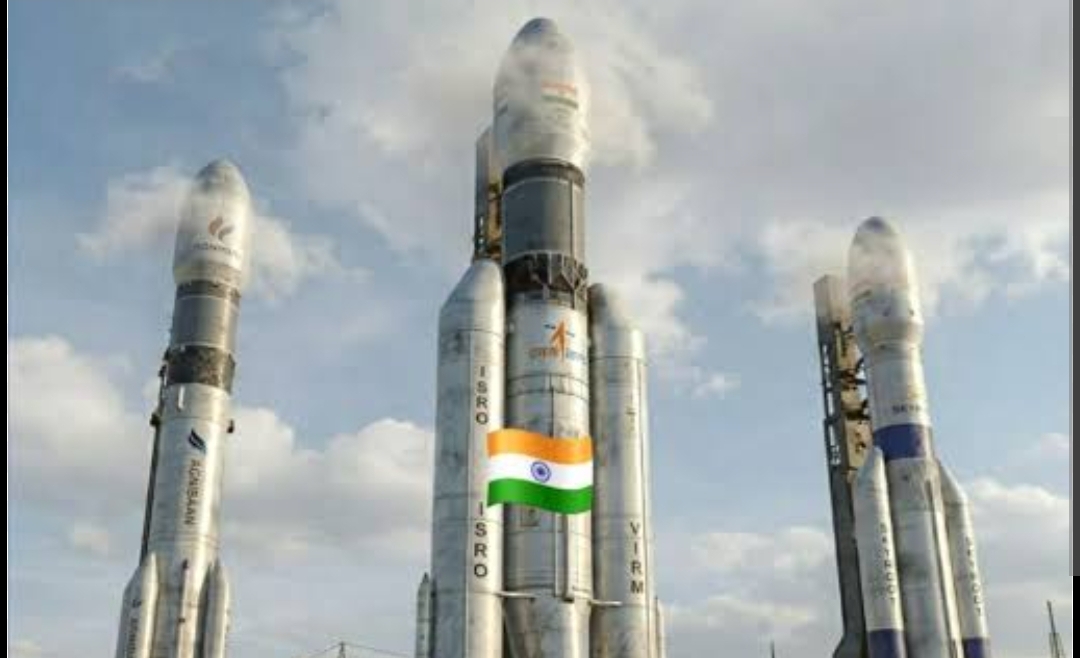
India is targeting a fivefold expansion of its space economy to nearly $44 billion by 2033, driven by private investment, satellite technology, launch services and space applications.
India is targeting a fivefold expansion of its space economy to nearly $44 billion by 2033, as the country seeks to transform advances in space science and technology into high-skilled employment, commercial opportunities and innovative applications.
Union Minister Gajendra Singh Shekhawat said India’s space economy is currently valued at about $8.4 billion but has significant potential to reach nearly $44 billion over the next decade.
Speaking at National Space Day celebrations in Ahmedabad, Shekhawat said the growth of the sector should not be measured solely by its economic value but also by the technological capabilities being developed within the country.
He said reforms introduced in 2020 had opened new opportunities for private-sector participation in satellite manufacturing, launch services and space-based applications, while maintaining the central role of India’s national space programme.
The reforms have helped broaden participation in India’s space industry, allowing private companies to contribute to areas previously dominated by government institutions.
Petroleum and Natural Gas Minister Hardeep Singh Puri highlighted India’s expanding launch capabilities, saying the country had completed 100 launches and placed 548 satellites into orbit.
According to Puri, about 460 of those satellites were launched during the past decade, reflecting the rapid development of India’s space capabilities and its growing role in the global space industry.
India has also strengthened its position in lunar exploration. The country became the fourth nation to achieve a controlled landing on the Moon when its Chandrayaan-3 mission successfully landed on the lunar surface in August 2023.
The mission also made India the first country to land near the Moon’s southern polar region, with its Vikram lander and Pragyan rover conducting scientific experiments on the lunar surface.
The mission collected data on several aspects of the Moon, including surface temperature, seismic activity, the plasma environment and elemental composition, providing additional scientific information for future lunar research.
As India pursues its ambitious space-economy target, officials have also warned that rapid expansion of space activities must be accompanied by stronger safeguards against emerging risks.
Key areas of concern include space debris, cybersecurity, data security and the responsible deployment of artificial intelligence in space-related operations.
The government expects greater private and public investment in satellite systems, launch technology, space applications and data services to accelerate technological development and create new economic opportunities.
With its space sector increasingly opening to private participation, India is positioning the industry as an important driver of innovation, skilled employment and long-term economic growth.
Visit GMTNewsng for more news stories.