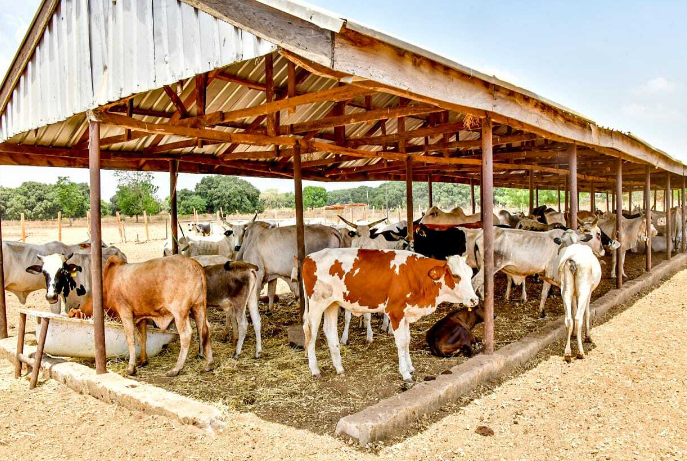
Ranching is set for a major expansion as the Federal Government selects six states and the FCT for the pilot implementation of its National Ranching Policy, beginning with Wase Grazing Reserve in Plateau State.
The Federal Government has identified six states and the Federal Capital Territory (FCT) for the pilot implementation of its National Ranching Policy as part of efforts to transform Nigeria’s livestock sector and reduce farmer-herder conflicts.
The Minister of Livestock Development, Idi Mukhtar Maiha, disclosed this on Tuesday, August 11, 2026, after briefing President Bola Ahmed Tinubu on the activities of the ministry at the Presidential Villa, Abuja.
Maiha said the pilot programme would begin at the Wase Grazing Reserve in Plateau State as a proof of concept for the government’s new ranching model.
The locations identified for the pilot programme are Benue, Plateau, Nasarawa, Kaduna and Adamawa states, alongside the Federal Capital Territory.
The minister said the areas were selected because they have recorded some of the highest incidences of farmer-herder conflicts in recent years.
Maiha said the movement of large numbers of cattle over long distances had become increasingly difficult because traditional grazing routes have been affected by farming, urbanisation and infrastructure development.
“Our understanding is that large numbers of cattle on the move are crisis-prone because grazing routes have disappeared due to farming, urbanisation and infrastructure development,” he said.
The minister argued that traditional nomadism was no longer sustainable and that Nigeria needed to transition toward more organised livestock production.
The Federal Government has previously announced plans to develop a modern ranch covering approximately 30,000 hectares within the Wase Grazing Reserve in Plateau State. The project is expected to improve livestock productivity, reduce conflicts associated with uncontrolled grazing and create sustainable economic opportunities.
Under the proposed ranching model, pastoralists will rear livestock in designated locations rather than move animals over long distances in search of pasture and water.
Maiha said the government would support ranching communities with housing, veterinary clinics, schools, primary healthcare centres, solar-powered lighting and water infrastructure.
He added that the grazing reserves would be developed into economic hubs capable of attracting milk processors, modular abattoirs, bio-digesters and other livestock-related businesses.
According to the minister, concentrated livestock production could generate significant opportunities for dairy processing and other components of the livestock value chain.
Maiha said the government had engaged more than 34 pastoral organisations as part of efforts to build support for the National Ranching Policy.
He said the ministry had recently held discussions with pastoralist leaders under the leadership of the Sultan of Sokoto, Alhaji Muhammadu Sa’ad Abubakar III, and planned another engagement within two weeks.
The consultations are intended to improve stakeholder participation and address concerns surrounding the transition from open grazing to more structured livestock production.
The Federal Government is also implementing a nationwide livestock identification programme using radio frequency technology.
Maiha said livestock would be tagged to facilitate identification, geolocation and proof of ownership.
The initiative is expected to strengthen livestock traceability, assist efforts against cattle rustling and help authorities recover lost animals while building a comprehensive national livestock database.
The ministry has previously identified digital livestock identification and tracking as an important tool for improving security, data collection and management of Nigeria’s livestock sector.
The minister said the government was simultaneously promoting dairy development, commercial fodder cultivation, modern abattoirs, veterinary services and poultry production.
He disclosed that seven model veterinary clinics had been established, with plans to establish at least one model veterinary hospital in every state.
The government is also strengthening vaccine storage facilities and encouraging investment in dairy and red-meat value chains.
Maiha said about 20 states had established livestock ministries or agencies, which he described as evidence of growing acceptance of the Federal Government’s livestock development agenda.
He commended President Tinubu for his support for the sector and urged Nigerians to take advantage of opportunities emerging across the livestock value chain.
The ranching programme represents a major component of the Federal Government’s broader attempt to modernise livestock production, improve productivity, reduce conflicts and develop livestock into a stronger contributor to food security, employment and economic growth.
Visit GMTNewsng for more news stories.