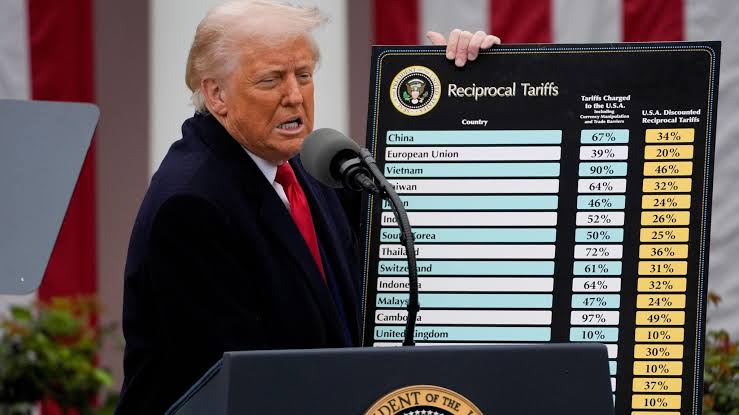
New U.S. tariffs of up to 12.5% have been imposed on imports from Nigeria and more than 80 other countries over alleged failures to prevent goods produced with forced labour from entering supply chains.
The United States has announced new tariffs ranging from 10 to 12.5 per cent on imports from more than 80 countries, including Nigeria, citing alleged failures to prevent goods produced with forced labour from entering global supply chains.
The new tariffs take effect at 12:01 a.m. on Friday, replacing the global 10 per cent duty introduced earlier by President Donald Trump, which expires at midnight on Friday.
According to the Office of the United States Trade Representative (USTR), the measures follow a five-month investigation into the efforts of U.S. trading partners to eliminate products made with forced labour from their supply chains.
The investigation concluded that Nigeria and 53 other economies had failed to establish and effectively enforce legal prohibitions on the importation of goods produced wholly or partly through forced labour.
In its findings, the USTR stated that Nigeria’s failure to implement and enforce a forced labour import prohibition is “unreasonable” and places a burden on U.S. commerce.
The report argued that the absence of effective enforcement creates unfair trading conditions and undermines efforts to eliminate forced labour in international markets.
Under the new policy, certain products, including oil, gas and fertiliser, are exempt from the additional tariffs.
The U.S. government said the latest action follows a ruling by the U.S. Supreme Court earlier this year that struck down a previous round of tariffs imposed by President Trump.
U.S. Trade Representative Jamieson Greer said the United States has maintained a ban on imports produced with forced labour for nearly a century and urged other countries to adopt similar standards.
He described the new trade measures as both a response to human rights concerns and an effort to eliminate unfair trade practices that disadvantage workers and legitimate businesses.
The U.S. further argued that while many countries have laws prohibiting forced labour, inadequate enforcement has allowed the practice to persist and benefit from international trade.
According to Washington, goods produced with forced labour generate substantial revenue and create incentives that distort global competition.
The U.S. described eliminating forced labour as both a moral obligation and an economic necessity, adding that trade policy is an important tool for achieving that objective.
Data cited from the International Labour Organization (ILO) estimate that 27.6 million people worldwide were living in conditions of forced labour as of 2021, with the majority of cases occurring in the private sector.
The ILO also reported that 86 per cent of forced labour occurs within the private economy, while 63 per cent involves sectors outside commercial sexual exploitation, increasing its potential impact on international trade in goods and services.
The United States maintained that growing international commitments against forced labour reflect a broad consensus that products made through forced labour should not influence global trade or distort fair market competition.
Visit GMTNewsng for more news stories.