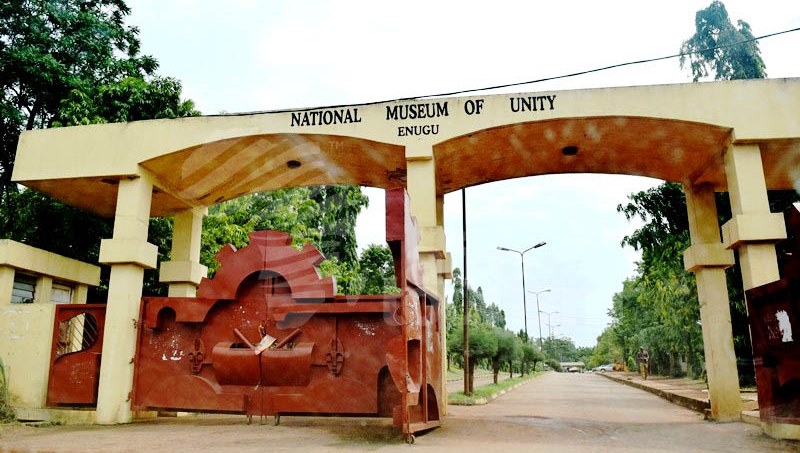
Museum authorities in Enugu have appealed to Igbos worldwide to support the renovation and revival of the National Museum of Unity as deteriorating infrastructure threatens the preservation of the region’s cultural heritage.
The Curator of the National Museum of Unity, Enugu, Mr. Aloysius Duru, has appealed to Igbos across the world to support the renovation and revival of the facility, describing it as a critical repository of the region’s cultural heritage.
Duru made the appeal during an interview with the News Agency of Nigeria (NAN) on Thursday in Enugu.
He lamented that the museum, established in 1972, has not undergone any major renovation since its inception, leaving the facility in a deteriorating condition.
“Since 1972, there has been no major renovation of this building. We have numerous roof leakages and the infrastructure has deteriorated significantly,” he said.
The curator urged people from the South-East to emulate the support received by the National Museum of Unity in Ibadan, stressing that the Enugu museum belongs to the people of the region and deserves similar attention.
“Igbos should come and assist this museum to become what it ought to be. This place represents Igbo culture and preserves our history.
“We want people to come and see what they can do to ensure this museum does not die,” he said.
According to Duru, the era when government solely funded public institutions has passed, making it necessary for individuals, corporate organisations and communities to play greater roles in preserving national heritage.
He called on Ndigbo worldwide to take ownership of the museum and contribute to safeguarding the region’s rich cultural heritage for future generations.
The curator disclosed that the museum had been without electricity for more than two years after its transformer was vandalised, forcing management to rely on generators to power its galleries.
He explained that replacing the transformer would cost about ₦15 million, while approximately ₦2.5 million is urgently needed to procure poles, conductors and other materials required to reconnect the museum to an alternative electricity source.
“The artefacts need proper environmental conditions, including electricity for fans and air conditioners, to preserve them,” he added.
Duru said the museum welcomes partnerships with non-governmental organisations, corporate bodies and individuals whose objectives align with its mandate of preserving and promoting cultural heritage.
He noted that although some traditional rulers and prominent individuals had begun supporting the institution, much more assistance was required.
The curator also identified other major challenges facing the museum, including dilapidated infrastructure, inadequate furniture and the absence of an official vehicle for field assignments.
Speaking on the benefits of supporting the museum, Duru said organisations and individuals that sponsor museum programmes would fulfil their corporate social responsibility, receive public recognition and benefit from tax incentives provided under the law.
He added that sponsors are acknowledged during museum events, while their contributions are communicated to the museum’s headquarters and relevant government authorities.
According to Duru, the museum organises annual events such as International Museum Day and World Culture Day, providing opportunities for organisations to partner in promoting cultural education.
On visitor turnout, he said the museum receives significant patronage from private schools but expressed concern over the low participation of public schools.
He noted that students are charged only ₦400 to encourage young people to learn about their history and cultural heritage.
Duru also expressed concern over the low number of adult visitors, noting that many Nigerians mistakenly perceive museums as places associated with traditional worship.
“We are not a shrine. We are an educational institution dedicated to teaching and promoting our culture.
“People will learn fascinating stories about their heritage when they visit,” he said.
He added that the museum also offers skill acquisition programmes, historical documentation services, festival documentation and advisory support for communities interested in establishing local museums.
Visit GMTNewsng for more news stories.