The Federal Government has commended the United Nations Development Programme for its support to Nigeria’s development efforts and called for deeper collaboration to advance ongoing reform programmes.
The Federal Government of Nigeria has commended the United Nations Development Programme (UNDP) for its long-standing support for development initiatives in the country, while seeking closer collaboration to accelerate ongoing reform programmes.
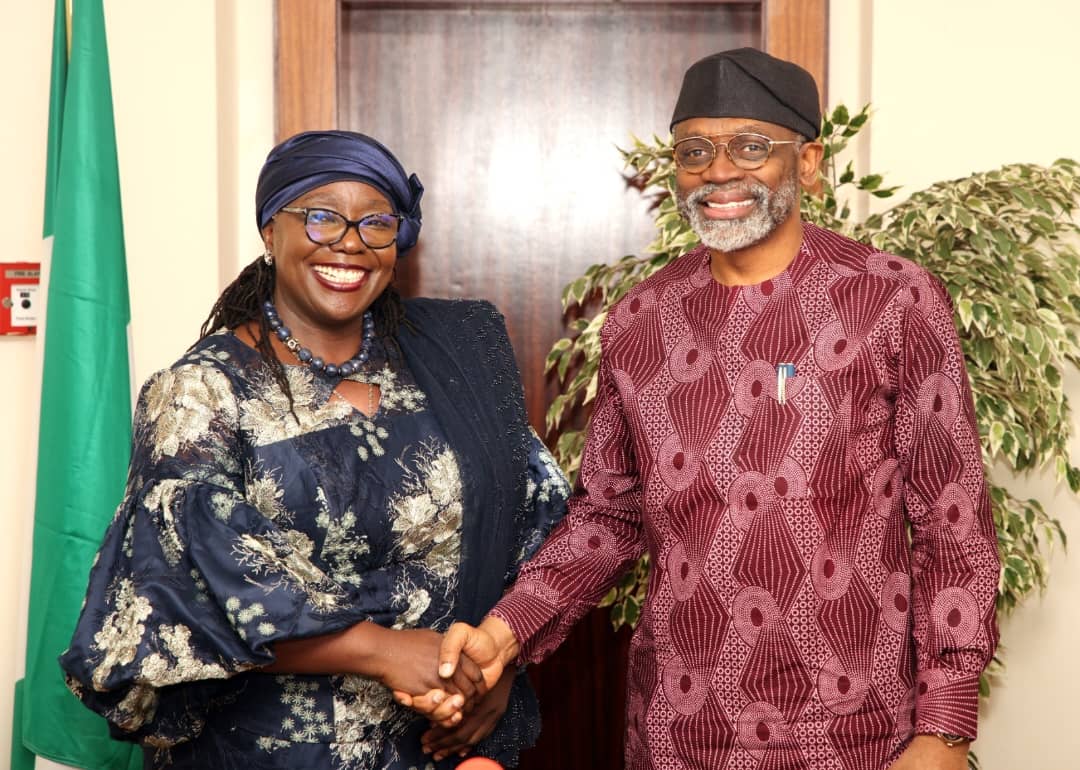
The commendation was made by Femi Gbajabiamila, Chief of Staff to Bola Ahmed Tinubu, when he received the UNDP Resident Representative, Elsie Attafuah, on a courtesy visit at the Presidential Villa in Abuja.
Gbajabiamila praised the UNDP for its contributions across several sectors and expressed appreciation for the agency’s support for President Tinubu’s reform initiatives.
He highlighted the administration’s “Made-in-Nigeria” policy, which he described as part of the government’s broader industrialisation drive.
According to him, the policy aims to strengthen local production, expand value chains, create jobs and stimulate economic growth.
“The president is passionate about it. We had local content in the oil industry, but this is a much wider concept. How can we practicalize it with all its value chain benefits, including employment and economic growth?” he said.
Gbajabiamila said the government was also interested in UNDP’s support in promoting greater female participation in politics and governance, drawing from the agency’s experience in other African countries.
He added that UNDP could further support Nigeria in key sectors such as poverty reduction, education, agriculture and mining.
In her remarks, Attafuah commended the cordial relationship between the UNDP and Nigeria during her two years in the country.
She also praised President Tinubu’s leadership, describing it as “inspirational and encouraging.”
“We are here to seek how we can continue to position Nigeria as the leader and giant of Africa and support its development initiatives and aspirations,” she said.
Attafuah noted that with the withdrawal of many traditional donors, the UNDP was shifting from a project-based approach to a government-financed, long-term thematic partnership model.
She emphasised the need for national governments to take greater responsibility for their development programmes through prudent management of resources.
The UNDP representative also highlighted the agency’s University Graduate Hub initiative, designed to help young graduates upload product prototypes and innovative ideas online to attract funding and investment.
She added that the UNDP was exploring further collaboration with Nigeria in the education and energy sectors.
Attafuah described the Made-in-Nigeria policy as a potential catalyst for job creation, innovation and stronger economic competitiveness.
Visit GMTNewsng for more news stories.