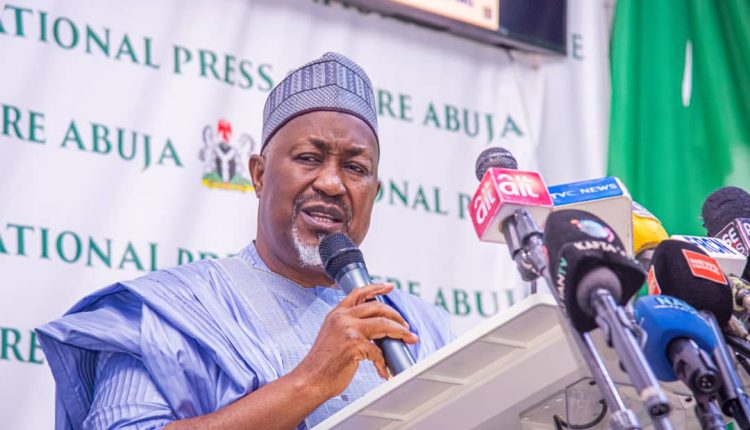
Nigeria’s Defence Minister, Badaru Abubakar, has resigned from office citing health reasons. President Tinubu accepts his resignation and promises continuity in the nation’s defence reforms.
Nigeria’s Minister of Defence, Alhaji Mohammed Badaru Abubakar, has resigned from office with immediate effect, citing health reasons. His resignation was conveyed in a letter dated December 1, 2025, and addressed to President Bola Ahmed Tinubu. The unexpected development comes at a time when the nation’s security framework is under critical review following the President’s recent declaration of a national security emergency.
Confirming the resignation in an official statement from the State House, Bayo Onanuga, Special Adviser to the President on Information and Strategy, said the President had accepted Badaru’s decision with understanding and gratitude. “President Tinubu has accepted the resignation of Defence Minister Mohammed Badaru Abubakar and thanked him for his meritorious service to the nation,” Onanuga said, adding that the President wished the outgoing minister good health and quick recovery.
Abubakar, 63, was appointed Minister of Defence on August 21, 2023, after completing two terms as Governor of Jigawa State between 2015 and 2023. His tenure at the Ministry of Defence saw the introduction of several strategic initiatives aimed at improving inter-agency collaboration and strengthening Nigeria’s counter-insurgency operations. He was widely regarded as a pragmatic leader with deep political and administrative experience.
The presidency is expected to communicate Badaru’s successor to the Senate later this week. According to the statement, consultations are ongoing to ensure a seamless transition and the continuity of Nigeria’s defence policies. The upcoming announcement is anticipated to reflect President Tinubu’s broader strategy under his administration’s renewed commitment to tackling insecurity across the nation.
Badaru’s resignation also coincides with President Tinubu’s heightened emphasis on national security reform. The President recently declared a national security emergency, signaling plans to overhaul the country’s defence architecture, intelligence operations, and military welfare system. The government has promised to unveil further details on the scope and implementation phases of the reform in the coming days.
Observers say Badaru’s exit will mark a significant reshuffle in the national security team and could influence the tempo of the administration’s reform agenda. As the government prepares to name his successor, attention now shifts to how swiftly the Presidency will act to maintain stability within the defence sector and ensure continued progress in the country’s fight against insurgency, terrorism, and banditry.
Visit GMTNewsng for more news stories.