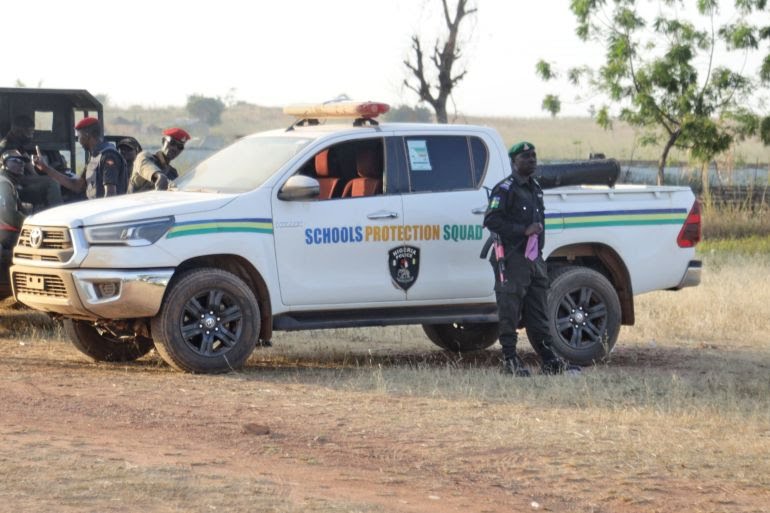
ABUJA, Nigeria: Friday, November 21, 2025
In a deeply troubling development, armed men stormed St. Mary’s Catholic Primary and Secondary School in Papiri, Agwara Local Government Area of Niger State at around 2 a.m. on Friday, abducting dozens of boarding students, staff, and a security guard. Local security forces, including tactical police units and the military, have since mobilized to comb nearby forests and rescue the captives.
The Catholic Diocese of Kontagora confirmed the abduction, reporting that the attackers struck between 1–3 a.m., seriously injuring a security personnel guarding the school. The diocese condemned the attack in strong terms and is coordinating with community leaders and state authorities to ensure the safe return of those taken.
According to the Niger State Police Command, tactical teams and military components are “combing the forests” in search-and-rescue operations. Commissioner of Police Adamu Abdullahi Elleman issued a public appeal, urging residents to help by supplying credible intelligence. Meanwhile, Abubakar Usman, Secretary to the Niger State Government, expressed frustration that the school resumed boarding operations despite earlier government intelligence warning of elevated security risk.
The abduction is not occurring in a vacuum. Niger State has a long and painful history of school-targeted kidnappings. In February 2021, armed bandits raided Government Science College, Kagara, abducting students and staff and killing at least one pupil. That incident triggered national outrage and forced the closure of the school – a closure that still lingers, according to local reports.
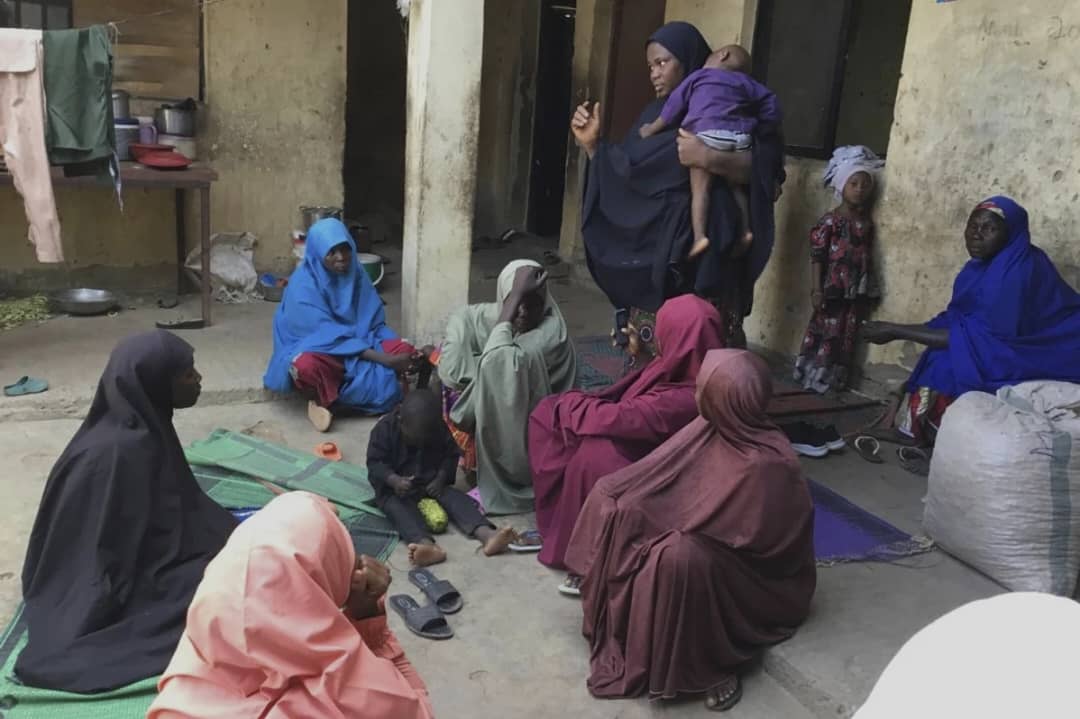
Amina Hassan, standing, wife of the vice principal of the Government Girls Comprehensive Secondary School, where gunmen on Monday attacked the school dormitory, abducted schoolgirls and killed her husband, with mourners, in Kebbi, Nigeria, Tuesday, Nov. 18, 2025. (AP Photo/Tunde Omolehin)
More broadly, insecurity has severely disrupted education across Niger State. A UNICEF‑commissioned report shows that boarding schools-especially in rural areas-are disproportionately vulnerable, with many built on the outskirts of towns and lacking robust security. The same report notes that public schools tend to suffer more attacks than smaller community or Islamic schools, a trend that reflects how kidnappers target mass student populations.
Security experts and analysts warn that the current abduction, which we’ll refer to as the Niger State School Abduction, exposes deep systemic gaps. They argue that criminal “bandit” groups – often former herders or opportunistic gangs – exploit weak local governance, poor intelligence-sharing, and under-resourced security units. According to some reports, these groups use motorcycles or unmarked vehicles, strike at vulnerable hours, and transport their captives to remote hideouts in forests.
The timing of the Niger state school abduction adds a geopolitical dimension. President Donald Trump recently designated Nigeria as a “Country of Particular Concern” (CPC), citing religious freedom violations. Critics say that the rise in attacks on religious institutions – like this Catholic school – underscores the legitimacy of the designation. Others see it as a potential catalyst for real reform, pushing national and international actors to address Nigeria’s security crisis.
To prevent future tragedies, experts recommend a multi-layered strategy. First, establish dedicated rapid-response units tasked specifically with protecting schools. These units must combine tactical capability with community knowledge – trained not to just respond, but to prevent abductions through proactive presence and surveillance, especially in high-risk areas.
Second, there must be serious expansion of intelligence-sharing infrastructure. Local communities, school managements, and state security agencies need formal platforms to exchange threat information. This includes early-warning systems: real-time communication channels between parents, teachers, and security forces.
Third, the government should enforce clear protocols for reopening schools in volatile zones. As seen in this Niger State School Abduction, reopening without state clearance catastrophically increases risk. Risk assessments – including threat mapping and security audits – must be mandatory for all boarding schools.
Longer-term reform must go beyond security. Investment in community policing, trauma recovery, and educational continuity are essential. Psychological support should be extended to abducted students and affected communities, helping them heal and reducing the long-term impact of trauma.
Civil society and religious institutions must play an active role. The Catholic Diocese of Kontagora – already coordinating rescue and community efforts – can also spearhead local security committees, using its reach and moral authority to rally parents, youth, and community leaders around prevention.
Internationally, Nigeria’s CPC designation could be leveraged to secure technical support. Global partners might provide funding, training, and legal assistance to help Nigeria build a more resilient framework for protecting religious and educational freedom.
Finally, political accountability is essential. The federal and state governments must adopt transparent, measurable goals for school safety – and report regularly on progress. Accountability mechanisms must include civil society oversight, with parents and community leaders participating in decision-making about security policies in their schools.
Visit GMTNewsng for more news.