The 4th Enugu Catholic Diocesan Synod underscored that AI in Catholic pastoral services cannot replace the priesthood, as stated by ICT expert Mr. Chinedu Chibuzor and senior clergy including Bishop Onaga, Bishop Obodo, and Cardinal Okparaeke. Speakers highlighted that artificial intelligence aids research, evangelism, and youth engagement but cannot assume sacramental roles unique to ordained priests. The Synod discusses major issues such as AI, social media, catechesis, neo-paganism, and youth empowerment as the Church seeks responsible, faith-aligned use of technology. This detailed feature examines the complex balance between faith and digital transformation.
Enugu, Nigeria – Monday, November 17, 2025:
AI in Catholic Pastoral Services at the Heart of Synod Reflections
The debate on AI in Catholic pastoral services took centre stage on Sunday at the 4th Enugu Catholic Diocesan Synod, where ICT scholar Mr. Chinedu Chibuzor asserted that artificial intelligence will never replace Catholic priests in their pastoral responsibilities.
Speaking at the well-attended gathering held in Enugu, Chibuzor, the Director of ICT at Godfrey Okoye University, emphasised that AI is not a threat to Christianity but a tool that enhances faith practice when deployed responsibly. His lecture, titled “Social Media, AI, Technology and New Evangelism,” urged priests to embrace technological advancements, noting that AI supports faster research, improves digital evangelism, and enables wider outreach, especially when teachings are accessible online.
He stressed that although AI supports evangelisation, it “can never replace priests”, because human pastoral presence remains irreplaceable.
The Sacramental Limits of AI in Catholic Pastoral Services
Supporting this standpoint, the Auxiliary Bishop of Enugu Diocese, Most Rev. Ernest Obodo, reaffirmed that AI in Catholic pastoral services cannot assume the sacramental identity of the clergy. He explained that the essence of the priesthood – particularly in the celebration of the Holy Mass – requires physical presence, spiritual representation, and the mediation between God and humanity.
He noted that digital participation during COVID-19 was an emergency exception, not a theological norm.
Bishop Callistus Onaga, who declared the Synod open with a Holy Mass on Nov. 16, said the meeting would deeply explore the implications of AI in Catholic pastoral services, social media, neo-paganism, youth empowerment, and catechesis on the contemporary faith experience.
Onaga described the Synod as an opportunity for collective discernment, given that twelve years have passed since the last diocesan Synod in 2013. He highlighted both progress and emerging challenges confronting parishes across rural and urban settings, noting that some issues are universal while others remain locally influenced.
He warned that “social media today is a big problem and artificial intelligence that some of us are using without knowing it is a big challenge to the issue of evangelism.”
Addressing the Crisis of Catechesis Through AI in Catholic Pastoral Services
Delivering a pivotal reflection on catechetical decay, the Catholic Bishop of Ekwulobia Diocese, His Eminence, Peter Cardinal Okparaeke, lamented that many Christians lost confidence due to exploitation by prosperity preachers who manipulate faith for personal gain.
He criticised preachers who flaunt material wealth as “proof of divine favour,” while resorting to fake miracles to deceive believers. According to him, priests must reclaim doctrinal depth, and homilies should be carefully crafted to nourish the spiritual and moral foundations of the faithful.
Cardinal Okparaeke urged the Church to restore structured catechism, especially for children overwhelmed by academic schedules.
Charting New Directions for AI in Catholic Pastoral Services
The Chairman of the Synod Planning Committee, Rev. Fr. Christian Anieke, said the objective of the Synod is to find new ways to reinforce Christian faith while defending it against emerging threats. He called for full participation, noting that recommendations from experts and feedback from the faithful will shape a renewed pastoral strategy in tackling AI in Catholic pastoral services.
Fr. Anieke invited Catholics to embrace the journey of renewal with openness, expressing confidence that discussions on AI, media, catechesis, and evangelism will help the Church chart a spiritually grounded roadmap.
Background: Structure of the 4th Synod
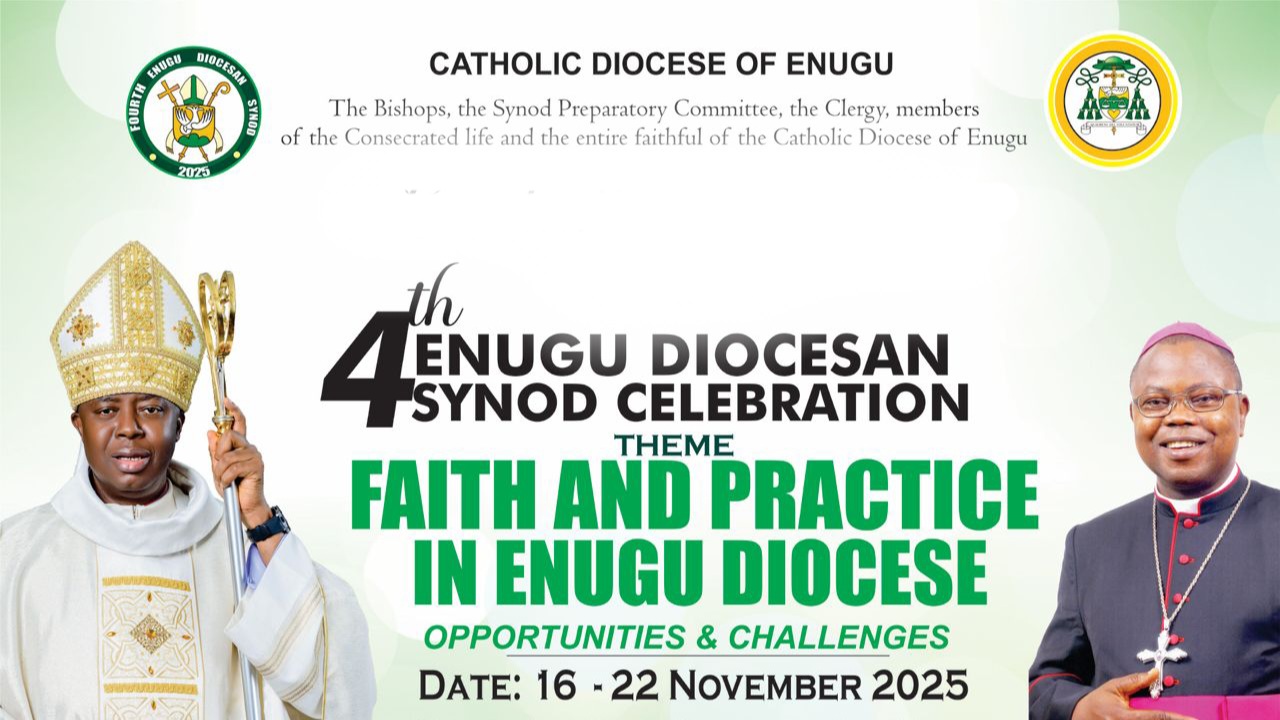
The Diocese, currently blessed with three bishops and 531 priests, has grown significantly in human and infrastructural development since the last Synod. This 4th edition, scheduled to conclude on Nov. 22, seeks to address contemporary realities while preserving the spiritual identity of the Church.
Parishioners, religious leaders, scholars, and lay delegates continue to deliberate on how technological evolution can coexist with the sacramental essence of Catholic life.
Visit GMTNewsng for more news stories.