The persistent crisis in Nigeria’s power sector has left many questioning its potential for reliable electricity generation and distribution. From frequent grid collapses to inadequate energy access, the sector’s challenges have stifled economic growth, deterred investments, and hindered the nation’s aspirations for industrialization. Despite years of reforms, the nation is grappling with its twelfth national grid collapse in 2024, amplifying the urgency to address systemic inefficiencies.
A Historical Perspective
The foundation of Nigeria’s power crisis is deeply rooted in decades of neglect and mismanagement. By the late 1990s, the sector had deteriorated, characterized by obsolete infrastructure, erratic supply, and a lack of investment. However, the return of democracy in 1999 brought renewed focus on addressing these challenges.
Under President Olusegun Obasanjo (1999–2007), efforts to revamp the sector gained momentum. Obasanjo initiated the construction of new power plants after a 20-year hiatus, with the goal of expanding electricity generation capacity. Notable projects such as the Geregu, Omotosho, and Papalanto power plants were launched during his tenure. These plants, though completed years later, formed a critical part of Nigeria’s generating infrastructure. His administration also championed the unbundling of the National Electric Power Authority (NEPA) into the Power Holding Company of Nigeria (PHCN) as a step toward privatization, aiming to improve efficiency and attract private sector participation.
Building on Foundations
Subsequent administrations built on Obasanjo’s reforms. One notable period of improvement occurred under President Goodluck Jonathan when Professor Bart Nnaji served as Minister of Power from 2011 to 2012. His tenure focused on instituting transparency, eliminating ghost workers in the sector, and expediting privatization processes. The privatization of the power sector in 2013, initiated by Nnaji, remains a landmark, transferring generation and distribution responsibilities to private entities. Nnaji also prioritized gas supply agreements to address generation deficits. These efforts briefly increased generation capacity from an average of 2,800 megawatts to over 4,000 megawatts, thanks to targeted investments and operational optimizations in the generation sector which reduced power outages.
His tenure was marked by improved system reliability and the completion of several power plants, including the Geregu Power Plant, and the establishment of the Nigerian Bulk Electricity Trading (NBET) Company to improve financial liquidity in the sector.
The tenure of president Muhamadu Buhari also made notable contributions. Under Babatunde Fashola (2015–2019) as power minister, efforts were focused on expanding the transmission network, completing 90 transmission projects. The Buhari administration initiated the Siemens Presidential Power Initiative, targeting a 25,000 MW generation capacity by 2025, while commissioning the Zungeru Hydroelectric Power Plant and implementing the National Mass Metering Program to reduce energy theft.
Recent Developments
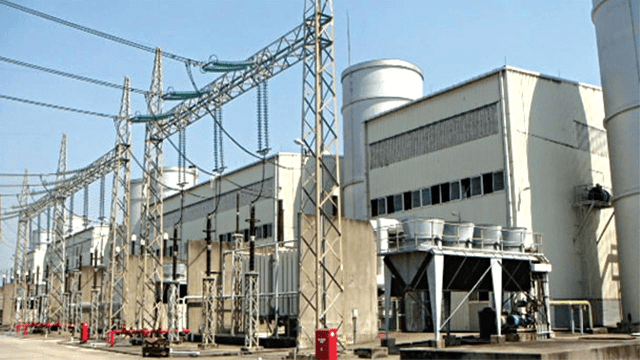
Despite these efforts, systemic challenges persist. The Nigerian Electricity Regulatory Commission (NERC) reported that installed capacity exceeded 13,000 MW by 2023, yet actual generation hovered between 3,500 and 4,000 megawatts due to infrastructure bottlenecks. The situation has been exacerbated by vandalism, gas supply shortages, and transmission constraints. These issues culminated in a series of grid collapses, with twelve recorded in 2024 alone.
To address these challenges, the federal government recently enacted amendments to electricity laws, enabling state governments and private sector participants to play active roles in power generation and distribution. States like Lagos, Ondo, and Kaduna have already initiated independent power projects, and Enugu taking over full regulatory and distribution responsibilities, signaling a potential shift toward localized solutions. However, effective implementation remains key to realizing these reforms’ full potential.
The Human and Economic Toll
The impact of Nigeria’s power crisis is profound. Businesses, especially small and medium enterprises (SMEs), bear the brunt of erratic supply, relying heavily on costly diesel generators to sustain operations. According to the World Bank, inadequate power supply costs the Nigerian economy over $28 billion annually. This not only deters foreign investment but also exacerbates unemployment and poverty rates. Households, too, face mounting costs, with many spending significant portions of their income on alternative energy sources.
The Way Forward
To resolve the gridlock, Nigeria must adopt a multi-pronged approach. Key recommendations include:
- Strengthening Infrastructure: Modernizing transmission and distribution networks to minimize energy losses and improve efficiency.
- Diversifying Energy Sources: Expanding renewable energy projects, including solar, wind, and hydroelectric power, to reduce dependence on gas-fired plants.
- Enforcing Accountability: Ensuring transparent operations within the sector, with clear metrics for monitoring performance.
- Enhancing Policy Implementation: Bridging the gap between policy formulation and execution, particularly at the state level, where independent initiatives hold promise.
- Encouraging Private Investments: Offering incentives to private investors while ensuring a competitive and transparent environment.
A Glimmer of Hope?
The reforms and renewed focus on state-led initiatives offer a glimpse of hope. If effectively implemented, these measures could create a more competitive and efficient power sector. For Nigeria, solving its power crisis is not just a matter of economic necessity but a critical step toward achieving its development aspirations.
As the nation reflects on the successes and setbacks of past administrations, it becomes evident that sustained political will, transparency, and robust infrastructure investments hold the key to unlocking a brighter future.
(Sources – unilag, thenationonlineng, nairametrics, dailypost, thevaluechainng). GMTNewsng