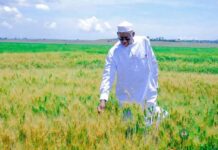
As Nigeria continues to face challenges of food security and unemployment, agriculture presents itself as the most promising solution to stabilize the economy and provide a livelihood for millions of its citizens. In recent years, the federal government has taken bold steps to diversify the economy, and agriculture has become a central pillar in this quest. However, to make a real impact, there is a need for the government to rally youth across all regions to embrace agriculture, supported by strategic programs tailored to Nigeria’s diverse geopolitical zones.
This editorial focuses on federal government initiatives while highlighting efforts in Lagos and Enugu, along with agricultural activities in other regions. A coordinated national approach, with youth at the forefront, can position Nigeria as a self-sufficient food producer.
Federal Government’s Push for Agricultural Revival
The federal government has launched several high-impact initiatives aimed at reviving agriculture and ensuring food security. One of the most notable is the National Agricultural Technology and Innovation Policy (NATIP). This policy framework encourages modern agricultural techniques, focusing on boosting productivity through innovation, capacity building, and youth involvement. The Anchor Borrowers’ Program, which has disbursed over ₦791 billion to more than 3.8 million farmers since its inception, is another central government initiative aimed at improving access to credit for small-scale farmers.
 Farmers harvesting cassava at Ebenebe Anambra State. Photo credit: Chukwudi Ani
Muhammad Sabo Nanono, a former Minister of Agriculture, once stated, “For too long, our dependence on oil has eclipsed the vast opportunities in agriculture. The youth must embrace the agricultural revolution. The sector is not just a safety net but a future filled with promise.”
By supporting mechanized farming, improving access to markets, and facilitating credit facilities, the federal government is creating an enabling environment for agriculture to thrive. However, for these initiatives to succeed, a tailored approach must be taken in each geopolitical zone, recognizing the unique agricultural strengths and needs of each region.
South-West: Lagos Leads by Example
In the South-West, Lagos State’s agricultural push, spearheaded by Governor Babajide Sanwo-Olu, stands out. Programs like the Lagos Agri-preneurship Program and the Agricultural Value Chain Development Program are driving youth involvement in agriculture and making food production more sustainable in this rapidly urbanizing state. Additionally, the Lagos-Cares initiative, in collaboration with the World Bank, seeks to establish 69 food markets to ensure food affordability.
The state’s proactive approach is a model for other states in the region, where youth must be encouraged to explore agriculture as a business. “Agriculture offers limitless opportunities, especially in urban areas like Lagos where demand for food is high,” says Sola Adedayo, an agribusiness consultant based in Lagos. “We must harness the talents of our youth and show them that agriculture is a path to wealth creation.”
 Crop farm. Photo credit: Innocent Ikemsinachi Ozouri
South-East: Enugu’s Agricultural Renaissance
In the South-East, Enugu State is making significant strides in agriculture under the leadership of Governor Peter Mbah. Enugu’s focus is on expanding the production of staple crops like cassava, yams, and maize, while promoting agribusiness ventures. The Enugu State Agricultural Policy aligns with federal goals by providing access to funding and training for local farmers.
One of the notable young farmers, Chukwudi Ani, from Enugu State, shares his experience: “We are seeing the government’s efforts pay off. Youth need to realize that agriculture is not just a job for the old; it’s a field filled with technology, innovation, and opportunities.”
Enugu’s focus on mechanized farming, along with its integration into regional and national food markets, offers a roadmap for other South-Eastern states.
North-Central: The Heart of Farming
 Fertilisers. Photo credit: Innocent Ikemsinachi Ozouri
The North-Central geopolitical zone is traditionally known for its rich agricultural heritage, with states like Benue and Kogi producing staples such as yams, rice, and maize. The federal government has placed a strong emphasis on the Green Alternative Policy, which supports farmers in these regions by improving access to fertilizer, introducing irrigation systems, and expanding farm-to-market roads.
Audu Ogbeh, former Minister of Agriculture, once said, “In the North-Central, we don’t have to reinvent the wheel. What we need is to modernize existing agricultural practices and encourage the youth to take pride in what our forefathers built.”
The federal government’s National Livestock Transformation Plan (NLTP), which aims to curb conflicts between herders and farmers, is also particularly relevant in this region. By addressing these challenges, the government hopes to create a more secure environment for farmers and pastoralists alike.
North-East: Rising from Adversity
The North-East has faced immense challenges due to insurgency, but agriculture remains an essential part of the economy, with the federal government investing in rebuilding the agricultural sector through programs such as the Presidential Fertilizer Initiative. The initiative has made fertilizer more accessible to farmers, reducing costs and increasing productivity.

Chukwudi Ani on his cassava tubers at Ebenebe
Malam Abdukadir, a rice farmer from Yobe State, acknowledges the federal government’s role in helping farmers in the region recover from conflict: “We have seen progress in getting seeds and fertilizer, but more needs to be done to bring in irrigation and technology so we can farm all year round.”
This region holds untapped potential, particularly in rice and maize production. Encouraging youth to explore agriculture here will require ongoing support and investment, but the long-term gains are undeniable.
North-West: The Agricultural Hub
The North-West remains Nigeria’s agricultural powerhouse, producing significant quantities of cereals, grains, and livestock. States like Kano, Katsina, and Kebbi are leading the way in rice production, with the Kebbi Rice Revolution standing out as a prime example of successful agricultural policy. Under the Anchor Borrowers’ Program, Kebbi State has transformed into a major rice producer, significantly reducing Nigeria’s rice import dependency.
Musa Abubakar, a young rice farmer in Kano, asserts, “The federal government’s support has been life-changing for us. But we need more young people to get involved so that we can scale up and make Nigeria truly self-sufficient in food production.”
The North-West’s agricultural model should inspire other regions to embrace large-scale farming and agribusiness ventures.
South-South: Harnessing Untapped Potential
The South-South, known for its oil wealth, has significant but underutilized agricultural potential. States like Cross River and Delta have fertile land suitable for growing cash crops such as oil palm, rubber, and cocoa. Former Governor Ben Ayade of Cross River made efforts to diversify the state’s economy by investing in agriculture through the establishment of rice mills and the development of the Ayade Rice City.
Dr. Ijeoma Uche, an agricultural economist, believes that the South-South’s future lies in agricultural diversification. “The federal and state governments need to do more to create awareness among the youth that agriculture can provide just as much, if not more, opportunity than the oil industry.”
A Call to Action: Engaging Nigerian Youth in Agriculture
 Asteraceae crop farm
The federal government’s efforts to enhance agricultural productivity are commendable, but for these programs to succeed, youth involvement is crucial. From the Lagos Agri-preneurship Program to the Kebbi Rice Revolution, young people must recognize the transformative power of agriculture and step up to take charge of the sector.
“Technology, innovation, and entrepreneurship are reshaping agriculture globally, and Nigerian youth should not be left behind,” says Tony Elumelu, the chairman of Heirs Holdings. “Agriculture is the future, and the future is now.”
To ensure that agriculture becomes a cornerstone of Nigeria’s economy, the federal government must continue to create policies that empower young farmers, provide access to resources, and promote innovation. The youth must embrace this opportunity, for in their hands lies the power to cultivate a new Nigeria. GMTNewsng