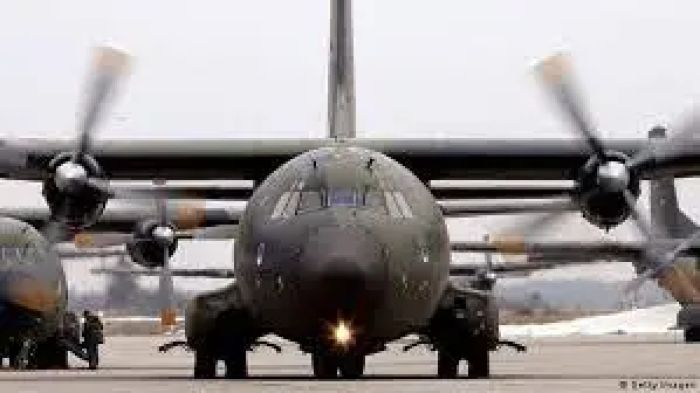
In response to a recent threat from the Economic Community of West Africa (ECOWAS) troops, Burkina Faso and Mali have taken action by deploying warplanes in Niger Republic. The imminent threat has underscored the tension and instability in the region, as ECOWAS gave Niger junta a week ultimatum to reinstate President Mohamed Bazoum. Failure to comply with this ultimatum could result in severe sanctions, including the possibility of military intervention.
Understanding the gravity of the situation, the governments of Burkina Faso and Mali have swiftly acted to bolster security by sending warplanes to Niger. By doing so, they aim to assert their presence and willingness to support Niger Republic if the need arises. The deployment of warplanes serves as a visible display of solidarity and a symbolic statement against any potential outside interference.
The ECOWAS threat has intensified concerns about the stability and democratic process in Niger. The ultimatum given to the junta has placed the country’s leadership in a difficult position, as they must navigate this delicate situation and respond appropriately to ECOWAS’ demands. The consequences of non-compliance, including potential sanctions and military action, could have far-reaching effects on the country’s political and economic landscape.
As tensions escalate in the region, the presence of warplanes in Niger Republic acts as a deterrent, reminding all parties involved of the potential consequences of further destabilization. The situation remains fluid and continues to develop, warranting close attention from regional and international observers who hope for a peaceful resolution to the crisis.
Following the coup in Niger, the coupists have defiantly challenged the Economic Community of West Africa (ECOWAS) and expressed their determination to resist any foreign intervention. This provocative stance has further complicated the situation, raising concerns about the prospects for a peaceful resolution.
In response to the coupists’ defiance, ECOWAS has taken concrete steps by ordering its Defence Chiefs to activate the regional force. This force is being mobilized with the objective of restoring civil rule in Niger, emphasizing ECOWAS’ commitment to upholding democratic principles and ensuring stability in the region.
The activation of the regional force signifies ECOWAS’ readiness to take decisive action to address the coup and its aftermath. By mobilizing their Defence Chiefs, ECOWAS is displaying a united front and sending a clear message to the coupists that their actions will not go unchallenged.
While the situation remains uncertain, the activation of the regional force highlights ECOWAS’ determination to see the restoration of civilian governance in Niger. The regional organization remains resolute in its stance against the overthrow of democratically elected leaders, reinforcing the importance of upholding the rule of law and promoting stability in the region.
In response to the potential military intervention in Niger, both Burkina Faso and Mali have issued a stern warning, stating that any such action will be regarded as a declaration of war against them. The governments of Burkina Faso and Mali have expressed grave concerns regarding the potential consequences of military intervention, emphasizing the potential for destabilization that could extend throughout the entire region.
In a joint statement, the two governments highlighted the disastrous outcomes that could result from a military intervention in Niger. They emphasized that such action has the potential to exacerbate existing tensions and further unsettle the fragile regional balance. Burkina Faso and Mali underscored the importance of maintaining stability and security in the region, and argued against any actions that could jeopardize these crucial factors.
The joint statement by Burkina Faso and Mali serves as a firm declaration of their commitment to regional peace and security. By warning against military intervention in Niger, they are calling for a careful and measured approach to resolving the crisis, while emphasizing the potential ripple effects of any hasty or ill-considered actions.
As the situation in Niger unfolds, it becomes increasingly apparent that a military intervention could have far-reaching and unintended consequences for the entire region. Both Burkina Faso and Mali are urging for a diplomatic and peaceful resolution that avoids further escalation and ensures the stability of the region as a whole.
After a two-day meeting of ECOWAS Defence Chiefs in Accra, the capital of Ghana, Abdel-Fatau Musah, the ECOWAS Commissioner for Political Affairs, Peace, and Security, issued a statement indicating the readiness of the regional force for action. Musah confirmed that the necessary preparations and fine-tuning for the intervention in Niger have been completed, specifying that the “D-day” for the operation has also been decided.
While emphasizing the preparedness and determination of the regional force, Musah also underscored that the option for diplomacy remains on the table. ECOWAS recognizes the importance of exploring peaceful avenues to resolve the crisis, and should there be an opportunity to pursue diplomatic solutions effectively, that approach would be utilized.
By highlighting the availability of a diplomatic alternative, Musah and ECOWAS demonstrate their commitment to exhaust all possibilities for a peaceful resolution before resorting to military intervention. This approach further emphasizes the regional organization’s commitment to stability, peace, and adherence to democratic principles in the Niger situation.
The statements made by Abdel-Fatau Musah serve as a reflection of ECOWAS’ comprehensive approach, which combines preparedness for military intervention with a sincere intention to explore diplomatic avenues. As the situation continues to evolve, the regional body remains vigilant in its commitment to resolving the crisis in Niger in a manner that promotes peace, stability, and the well-being of the region as a whole.
Abdel-Fatau Musah clarified that ECOWAS has not closed the door on diplomatic efforts and is actively preparing for a mediation mission in Niger. The regional organization recognizes the importance of exploring peaceful avenues to restore constitutional order and is committed to pursuing a peaceful resolution to the crisis.
Musah further stated that there is a possibility of an ECOWAS mission being deployed to Niger the following day, highlighting their commitment to the peaceful path. By continuing the pursuit of dialogue and mediation, ECOWAS aims to engage with all parties involved in order to find a peaceful and mutually agreeable solution.
While emphasizing the organization’s readiness for peaceful resolution, Musah acknowledged that resolving the crisis requires the cooperation and willingness to engage from all sides. This statement underscores the importance of mutual dialogue and cooperation in finding a way forward.
ECOWAS is actively engaged in preparations for a mediation mission and remains committed to exploring all peaceful avenues to restore constitutional order in Niger. The regional organization hopes that all stakeholders will demonstrate a willingness to participate in dialogue, as a peaceful and negotiated settlement is the desired outcome.
Niger’s national television recently revealed the latest actions taken by Mali and Burkina Faso. According to a report by the television station, military leaders from Burkina Faso, Mali, and Niger held a meeting in Niamey, the capital of Niger, on Friday. The purpose of the meeting was to discuss and determine “concrete measures” in the event that ECOWAS decides to escalate military action.
The report highlights that the majority of ECOWAS member states are ready and willing to contribute to the joint regional force, with the exception of Cape Verde and countries currently under military rule, namely Mali, Burkina Faso, and Guinea.
This disclosure indicates the active engagement of the militaries in the region, with Mali, Burkina Faso, and Niger coordinating efforts to address any potential escalation of the conflict. The meeting signifies a unified approach by these countries in their response to ECOWAS’ actions, as they prepare to navigate potential military scenarios.
As the situation continues to evolve, it highlights the complexities within the region, with some member states under military rule and others expressing readiness to actively contribute to the joint force. The developments will be closely monitored to assess the impact and implications on regional stability and the pursuit of a peaceful resolution.