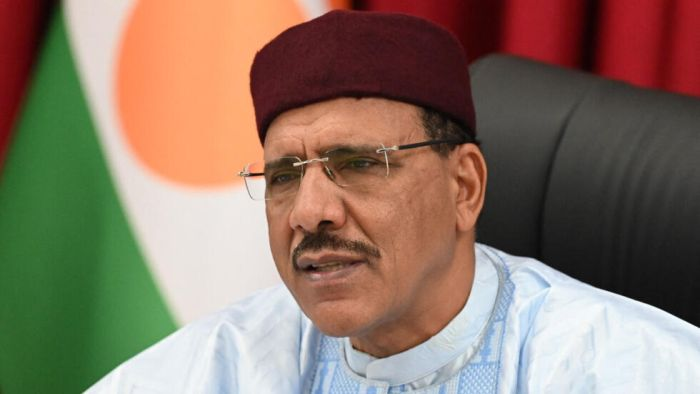
Volker Turk, the United Nations human rights chief, expressed his belief that the military junta in Niger lacked a legal foundation to prosecute the deposed president, Mohamed Bazoum, for high treason. Turk’s statement emphasizes the importance of upholding freedom in Niger, as the very concept of this fundamental right is being threatened.
Following the ousting of Bazoum, the Niger junta announced on August 13, 2023, their intention to prosecute him for high treason. This decision was reportedly based on Bazoum’s communications with foreign heads of state and international organizations. However, Turk’s assessment maintains that there is no valid legal basis for these charges and emphasizes the need to protect the rule of law.
The remarks made by the United Nations human rights chief highlight the significance of preserving democratic values and fundamental principles in Niger. By questioning the legitimacy of the treason case against Bazoum, Turk underscores the concern for the safeguarding of human rights and the preservation of the rule of law. These principles remain crucial in ensuring a just and fair society where citizens’ freedoms are respected and protected.
The UN’s intervention in this matter serves as a reminder of the importance of adhering to legal processes and ensuring that individuals are provided with fair treatment under the law. As the situation in Niger unfolds, it is imperative that the legal system upholds transparency, accountability, and the fundamental rights of individuals involved in the case.
Colonel Amadou Abdramane, spokesperson for the junta, asserted that the military authorities had gathered ample evidence to prosecute the ousted president, Mohamed Bazoum, for high treason and for undermining Niger’s internal and external security. However, the United Nations human rights chief, Volker Turk, responded to this statement, criticizing the decision as politically motivated and lacking legal foundation. According to Turk, the junta’s actions have disregarded the normal functioning of democratic institutions and pose a threat to the very concept of freedom in Niger.
The junta’s claim of possessing substantial evidence to support the treason and security undermining charges against Bazoum has triggered international concern. The United Nations, through its human rights chief, questions the legitimacy of the junta’s decision and highlights the political motivations behind it. By sidelining democratic processes, Turk argues that the junta is jeopardizing the fundamental principles of freedom and compromising the rights of the Nigerien people.
Turk’s remarks underscore the crucial role that democratic institutions and the rule of law play in safeguarding human rights and preserving a just and equitable society. The UN human rights chief emphasizes the necessity of upholding these principles, as the actions taken by the junta cast doubts on the very notion of freedom in Niger. It is essential that democratic norms and the protection of individual rights are prioritized in order to establish stability and foster an environment in which all citizens can exercise their basic freedoms without fear or repression.
Volker Turk, the United Nations human rights chief, strongly criticized the actions of the coup leaders in Niger, stating that generals cannot arbitrarily undermine the will of the people. In his statement, Turk emphasized that rule-by-gun has no place in the modern world, implying that the use of force to seize power is illegitimate.
Furthermore, the coup leaders have detained Mohamed Bazoum, the ousted president, and dissolved the democratically elected government of Niger. This abrupt shift in power has significant implications, as Niger is a key uranium producer and a Western ally in the fight against Islamist insurgency. The coup has disrupted the stability of the country and raised concerns both domestically and internationally.
The UN human rights chief’s remarks reflect the prevailing view that governance should be determined through democratic processes, rather than through force or coercion. The detention of Bazoum and the dissolution of the elected government undermine the principles of democracy and pose challenges to stability in Niger. This situation highlights the need to respect the will of the people and uphold established democratic institutions in order to preserve peace and protect human rights. GMTNews