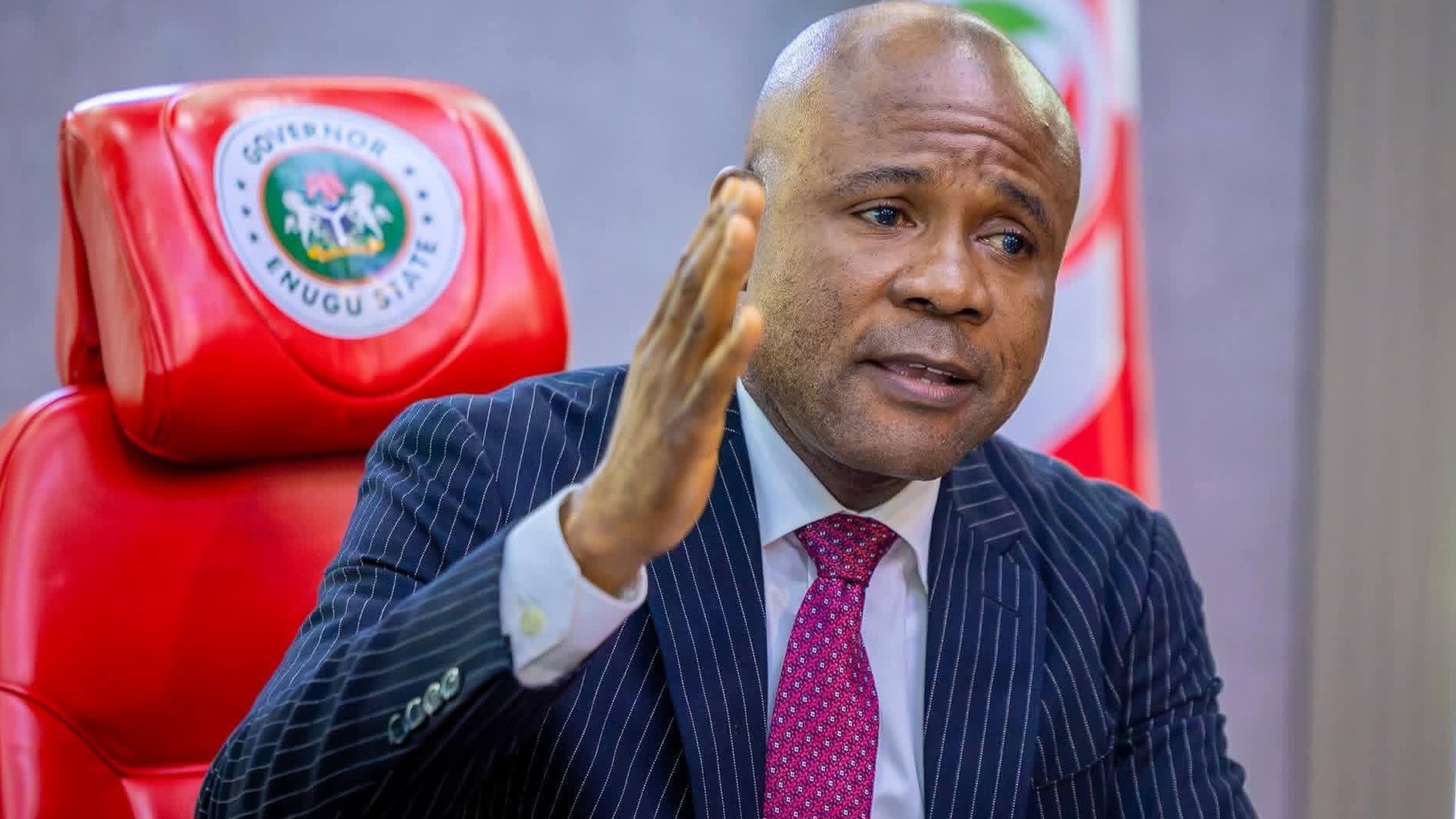
 His Honour Sunday Anthony Egbo, Esq. Executive Secretary / Secretary to the Governing Board of the Enugu State Persons With Disabilities Commission.
Disability Inclusion in Enugu State is redefining inclusive governance in Nigeria through institutional reforms, rights-based policy execution, and sustainable development planning.
By Sunday Anthony Egbo
Saturday, December 27, 2025 | Enugu
Disability Inclusion in Enugu State is steadily redefining the standards of inclusive governance in Nigeria, as deliberate institutional reforms under Governor Peter Ndubisi Mbah translate disability rights from legislative intent into enforceable public policy. In a governance climate where inclusion often ends at rhetoric, Enugu State has chosen a more demanding but sustainable path.
In contemporary public administration, leadership is measured not only by infrastructure delivery or economic expansion, but by how intentionally governments integrate vulnerable populations into development planning. Under the Mbah administration, Disability Inclusion in Enugu State has become a central governance objective through the establishment of the Enugu State Persons With Disabilities Commission.
The constitution of the Commission’s Governing Board and the appointment of an Executive Secretary as Chief Administrative and Accounting Officer mark a decisive shift from symbolic inclusion to structural accountability. These actions place Enugu State among the most progressive sub-national governments in Nigeria on disability governance.
Ofobuike James Edeh, Esq., representing Enugu East Senatorial District, described the development as “a defining moment in rights-based governance,” noting that Disability Inclusion in Enugu State reflects “the political will to move from promises to institutions capable of enforcing those promises.”
From Laws to Living Institutions
Across Nigeria, disability inclusion has frequently stalled at the level of good intentions. Many states enact laws without establishing agencies for implementation, coordination, and monitoring. Enugu State has consciously broken from this pattern.
By operationalising a dedicated Commission, Disability Inclusion in Enugu State has become measurable and permanent. The Commission provides a framework for enforcing accessibility standards, influencing inclusive infrastructure planning, and coordinating disability-responsive policies across ministries, departments, and agencies.
Onyebuchi Mba, Representative of the Joint National Association of Persons with Disabilities (JONAPWD), Enugu State, from Enugu North Senatorial District, observed that the Commission “moves disability discourse from advocacy margins into the heart of governance.” According to him, “persons with disabilities are now recognised as contributors to development, not passive recipients of assistance.”
Inclusion as Governance Philosophy
The Mbah administration’s approach treats inclusion not as charity, but as a governance imperative. Disability Inclusion in Enugu State aligns seamlessly with the Governor’s “Tomorrow Is Here” vision, which prioritises results-driven governance, institutional discipline, and long-term sustainability.
Through this framework, infrastructure development becomes accessibility-conscious, education and health services are inclusive by design, and economic participation is broadened. Disability inclusion is thus positioned as a development multiplier and a stabilising social mechanism.
Nkiruka Owonta, Representative of the Enugu State Ministry of Gender Affairs and Social Development from Enugu West Senatorial District, noted that “inclusive governance strengthens social cohesion and productivity.” She added that Disability Inclusion in Enugu State “demonstrates that when vulnerable groups are mainstreamed into policy, the entire society benefits.”
A Benchmark Beyond Enugu
Regionally, Enugu State stands out as the most institutionally advanced state on disability governance in the South-East. Nationally, it joins a small but growing group of states that have moved beyond legislation to establish functional disability institutions.
This positioning strengthens Enugu’s credibility as a benchmark for peer states, a strategic partner for national disability initiatives, and an attractive destination for development partners seeking accountability-driven inclusion frameworks.
By constituting the Governing Board and appointing executive leadership, the administration has reinforced transparency, continuity, and stakeholder confidence. It has also sent a clear message that no citizen is invisible and no segment of society is expendable.
As Nigeria continues to pursue inclusive development, Disability Inclusion in Enugu State offers a practical lesson: political will, when matched with institutional action, can transform rights into reality. For persons with disabilities in Enugu State, inclusion is no longer aspirational. Tomorrow is here – and it is inclusive.
Sunday Egbo, Esq. is the Executive Secretary / Secretary to the Governing Board of the Enugu State Persons With Disabilities Commission. He writes from Enugu
Visit GMTNewsng for more news stories.