● Correspondent-at-large
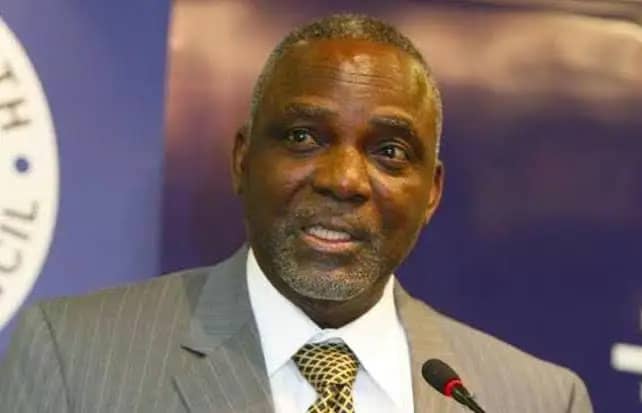
Former Minister of Power, Professor Bart Nnaji, has urged the Federal Government to resume signing power purchase agreements (PPAs) with private sector investors to boost Nigeria’s electricity generation capacity.
Despite a nameplate capacity of about 13,000 megawatts, Nigeria only generates around 5,000MW due to several issues, including the insufficient availability of natural gas, which powers 80% of the country’s grid electricity.
Speaking at a forum organized by the Udo Udoma and Belo-Osagie law firm in Lagos, attended by professionals in the electricity value chain, including bankers and lawyers, Nnaji, the founder and chairman of Geometric Power, Nigeria’s leading integrated electricity group, emphasized that without resuming the PPAs, “it will be very difficult for any investor to provide money for grid power generation.”
He explained that PPAs “provide comfort to investors,” citing the 450MW Azura power plant in Edo State, which cost approximately $900 million to build. “Creditors,” he noted, “were able to provide the long-term funds because of the partial risk guarantee (PRG) provided in 2012,” during his tenure as power minister under President Goodluck Jonathan.
Nnaji also highlighted that no new power plants have been built by the private sector since the suspension of the PPAs in 2015. He pointed to projects like the 1,000MW thermal plant in Aba, being developed by ExxonMobil and General Electric in partnership with Geometric Power, which have been paused despite hundreds of millions of dollars already spent.
“It costs between $1.3 million and $1.5 million to build just one megawatt of a gas plant,” said Cliff Eneh, a former engineer with Texas Power and Light, now an energy consultant in Lagos. Eneh added, “The Federal Government and various state governments don’t have enough resources to close the well over 50,000MW gap in the country.”
Eneh noted that despite South Africa and Egypt, Africa’s largest economies, generating 58,000MW each, South Africa has been experiencing load shedding since 2007 due to inadequate power availability. “This shows that 58,000MW can’t be enough for us,” Eneh argued, backing Nnaji’s call for reinstating PPAs.
Nnaji further stressed the “great urgency to address the paralysing gas supply crisis” affecting the country’s power sector. “A situation where Nigeria, the world’s 9th largest gas country, can’t provide gas for domestic consumption,” he remarked, “isn’t justifiable.”
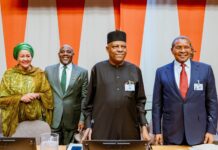
He revealed that his 188MW Geometric Power Plant, which was commissioned on February 26 by Vice President Kashim Shettima on behalf of President Bola Tinubu, has “been grappling with gas scarcity, sometimes staying weeks without supplies,” despite constructing a 27-kilometre gas pipeline from Aba’s Osisioma Industrial Layout to Owaza in Ukwa West Local Government Area, Abia State.
The former distinguished engineering professor in the United States observed that the power sector’s challenges are “to a large extent, a reflection of the broader economic crisis in Nigeria.” He urged the political class to embrace patriotism in tackling the problems. “When I was the Minister of Science and Technology in 1993,” he recalled, “all government officials and government establishments were using locally assembled Peugeot vehicles, which provided thousands of citizens and businesses with direct and indirect jobs.”
Nnaji added that government officials in countries like the United States, France, the UK, Italy, and Germany exclusively use vehicles manufactured in their own countries. “At Geometric Power, we made it a policy to patronize only locally produced vehicles like Innoson and Peugeot, just as we use Cutix and Coleman wires and cables made in Nnewi, Anambra State, and Arepo, Ogun State, respectively.”
Participants at the forum included Dafe Akpeneye, a commissioner with the Nigeria Electricity Regulatory Commission (NERC); Kola Adesina, CEO of Sahara Energy; and Nicholas Okafor, head of the energy team at the Udo Udoma and Belo-Osagie law firm. GMTNewsng