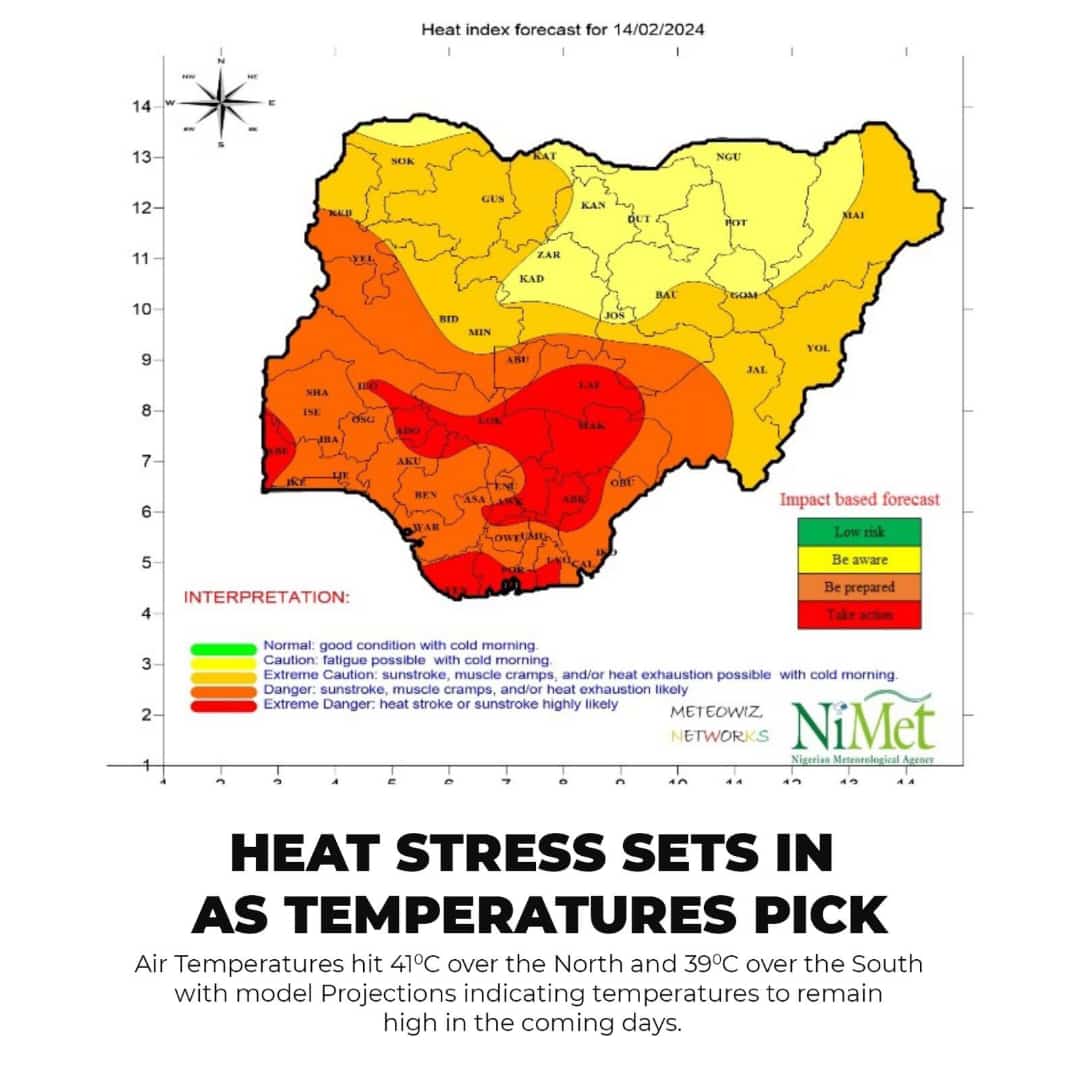
As temperatures soar across Nigeria, reaching a scorching 41°C in the North and 39°C in the South, the Nigerian Meteorological Agency (NiMet) issues a stark warning regarding the health risks posed by the ongoing heatwave. “The current high temperatures are unprecedented and warrant serious attention from the public,” stated Dr. James Onsongo, a meteorologist at NiMet.
NiMet’s projections indicate that the intense heat is likely to persist in the coming days, exacerbating concerns over dehydration and heat-related illnesses. “We urge the public to take precautions to mitigate the adverse effects of the heatwave,” emphasized Dr. Onsongo. “It is imperative that individuals stay hydrated and avoid prolonged exposure to the sun to prevent heat-related ailments.”
Health authorities echo NiMet’s warnings, highlighting the potential implications of the soaring temperatures. “Dehydration, fainting, and heat-related illnesses are significant concerns during such extreme weather conditions,” remarked Dr. Fatima Ahmed, a public health expert. “It is crucial for individuals to recognize the symptoms and take appropriate measures to safeguard their health.”
In response to the escalating heatwave, NiMet issues advisories to the public, emphasizing the importance of preventive measures. “We advise residents to stay indoors during peak heat hours and avoid strenuous physical activity,” recommended Dr. Onsongo. “Additionally, maintaining adequate fluid intake and seeking shade are essential precautions to reduce the risk of heat-related illnesses.”
The current heatwave underscores the broader challenges posed by climate change and its impact on public health. “Climate resilience strategies are essential in addressing the growing threats of extreme weather events,” noted Dr. Ahmed. “Efforts to raise awareness and promote adaptive measures are crucial in building community resilience and mitigating the health risks associated with rising temperatures.”
With NiMet providing forecasts and warnings, collaboration between government agencies, healthcare providers, and the public is key to addressing the challenges posed by the heatwave. “By working together, we can protect vulnerable populations and minimize the adverse effects of extreme heat,” emphasized Dr. Onsongo. “It is imperative that we prioritize public health and well-being in the face of climate-related threats.” GMTNewsng