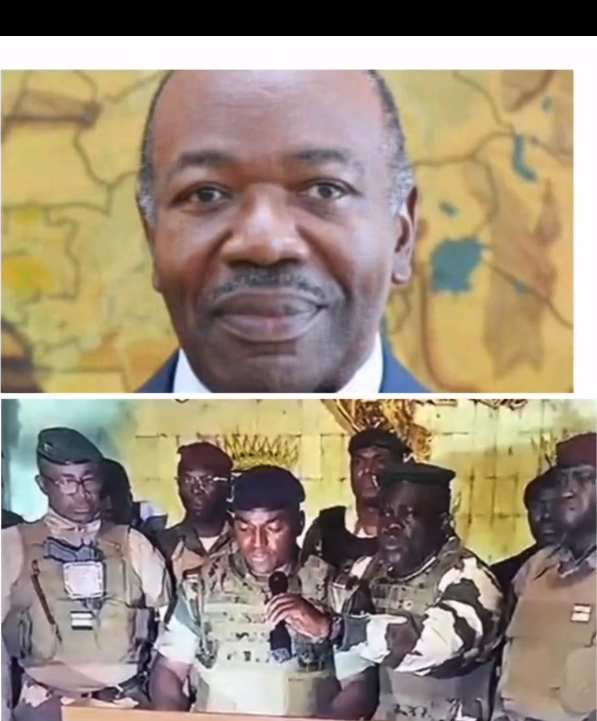
In a stunning turn of events, a group of high-ranking Gabonese military officers made a televised announcement in the early hours of Wednesday, August 30, declaring that they had taken control of the country following President Ali Bongo’s controversial re-election.
Taking to the state television channel Gabon 24, the officers claimed to represent all security and defense forces in Gabon, justifying their actions by stating that the election results were void, all borders were to be closed indefinitely, and state institutions were dissolved.
Making their intentions clear, the officers proclaimed, “In the name of the Gabonese people… we have decided to defend peace by bringing an end to the current regime.”
Tensions had been escalating since Saturday’s presidential, parliamentary, and legislative vote, during which Bongo claimed victory, extending his family’s 53-year reign in power. The opposition voiced concerns over electoral malpractices and demanded change in the resource-rich yet impoverished nation.
The lack of international observers, suspension of foreign broadcasts, and the government’s decision to cut off internet access and impose a nationwide nighttime curfew further raised doubts about the electoral process’s transparency. These concerns ultimately fueled the military’s decision to take control.
By seizing power in Gabon, the military joins the likes of Burkina Faso, Mali, and Niger Republic, becoming the latest African nation where the military has taken over. However, this move has prompted threats of invasion by the Nigeria-led ECOWAS (Economic Community of West African States) bloc.
The international community closely watches the unfolding situation in Gabon as political instability and uncertain governance lay a precarious foundation for the country’s future.
The succession of the Bongo family’s multi-decade rule in Gabon has sparked public dissatisfaction and demands for a more inclusive democracy, raising questions about the country’s path forward.
Neighboring countries, such as Cameroon and the Republic of Congo, are closely monitoring the situation in Gabon, concerned about the potential for regional instability as power dynamics shift abruptly.
International bodies and organizations, including the United Nations and African Union, are expected to release official statements on the coup and express their stance on the matter.
Gabon now faces an uncertain and volatile future, as the military’s actions have thrust the country into a state of political crisis. The coming days and weeks will reveal the extent of the fallout and the path Gabon will take to restore stability and democracy. GMTNews