Enugu Governor Peter Mbah has assured Church leaders that the Smart Green Schools initiative will not undermine mission schools, pledging professional training opportunities and stronger collaboration with Church educators.
The Governor of Enugu State, Dr. Peter Mbah has assured Church leaders that his administration’s Smart Green Schools initiative will not diminish the role of Church-owned institutions in basic education, describing religious organisations as indispensable partners in the state’s educational development.
Mbah acknowledged the historic contributions of the Church to education in Enugu State, the former Eastern Region and Nigeria, stressing that the government remained committed to preserving and strengthening that legacy.
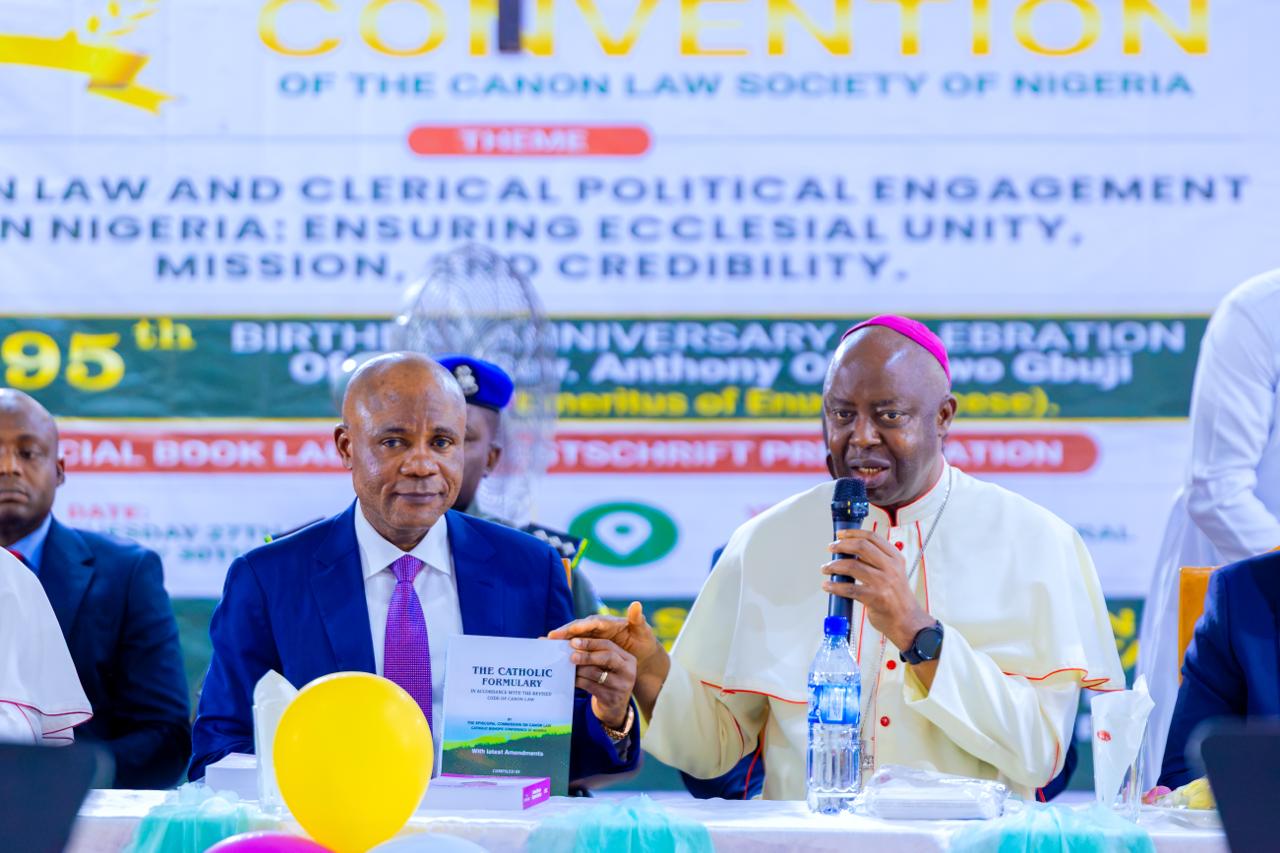
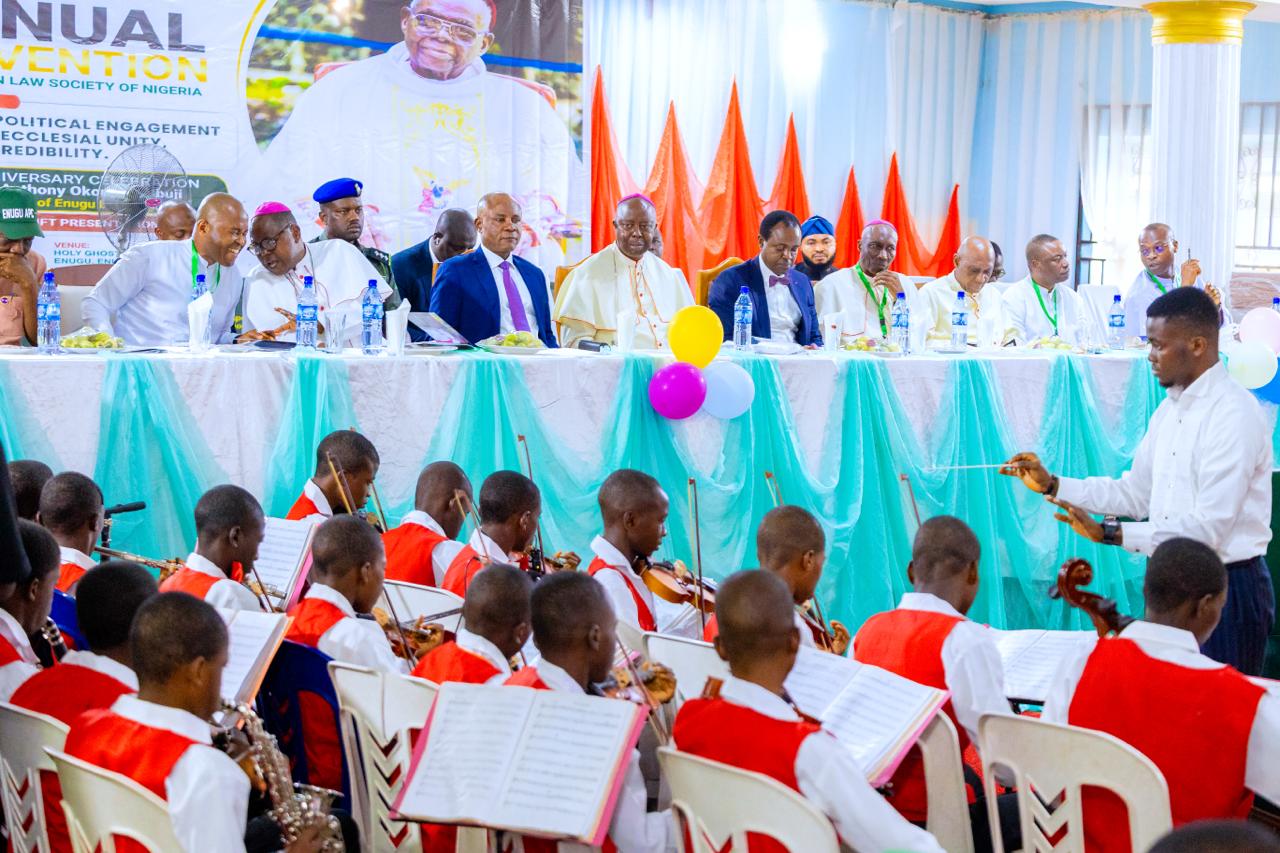
The governor gave the assurance in his keynote address at the 38th Convention of the Canon Law Society of Nigeria (CLSN), held alongside the celebration of the 95th birthday of the society’s founder and former Bishop of the Catholic Diocese of Enugu, Most Rev. Anthony Gbuji, at the Holy Ghost Cathedral, Enugu, on Wednesday.
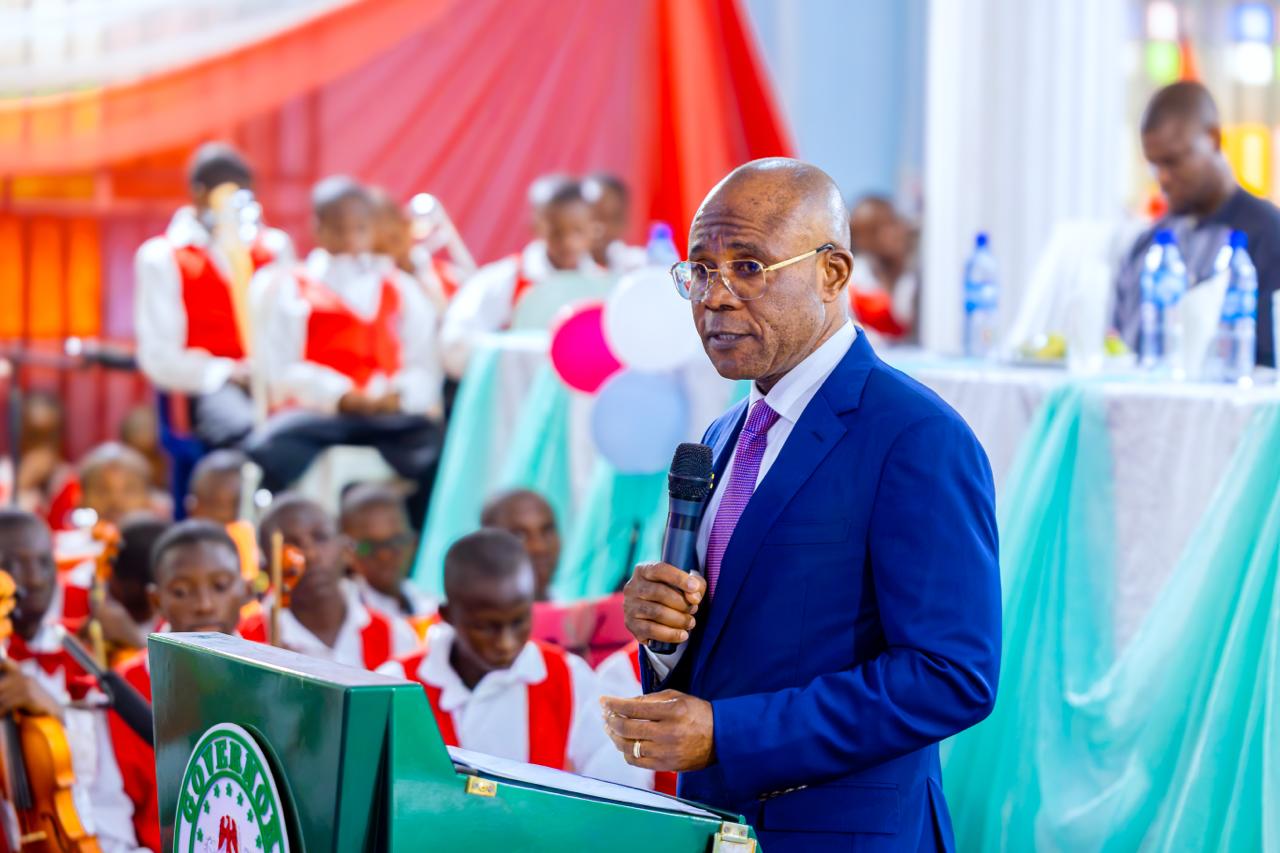
Speaking on the theme, “Role of the Church in Shaping Education and Development in Enugu State,” Mbah addressed concerns about whether the government’s substantial investment in public schools could leave Church-owned institutions behind.
“I understand that concern. These are institutions that have educated generations of our people. Their leaders have every reason to care about their place in Enugu’s educational future. So, I want to answer them directly.
“The Church is essential to the educational transformation we are undertaking,” he said.
The governor added that it would be counterproductive for the government to invest in a new learning system while excluding Church educators and institutions.
“We need you in our basic education system. We need your teachers, your experience and your continuing commitment to the development of our children,” he stated.
Mbah, however, urged Church educators to embrace emerging teaching and learning methods while preserving the values and traditions that had distinguished their contribution to education.
He emphasised the need for continued collaboration between government and the Church, noting that the transition to new educational methods would require adjustments to some established practices.
The governor said his administration was committed to translating the partnership into practical measures, including extending professional development opportunities to teachers in Church-owned schools.
He disclosed that Catholic priests were already being incorporated into the training process and maintained that teachers across both public and Church-owned schools should benefit from capacity-building opportunities under the new education initiative.
“Our intention is that Church educators should have access to the professional development opportunities being created for teachers in government schools.
“As we introduce experiential learning, we want educators across both systems to acquire the knowledge and skills needed to participate. That is an obligation I believe the government should take seriously,” he said.
Reflecting on the historical role of the Church, Mbah said Catholic missionaries had contributed significantly to expanding access to education, training teachers and creating opportunities for families before the emergence of the present educational system.
He noted that mission schools across the former Eastern Region became centres of learning and intellectual development, shaping generations of educated Nigerians.
According to the governor, the Church’s contribution went beyond establishing schools and producing graduates to include promoting moral values, social responsibility and concern for the common good.
“A nation can produce highly accomplished individuals and still fail to build a society in which people flourish together,” he said, stressing the importance of connecting personal development with responsibility to society.
Mbah thanked the Canon Law Society of Nigeria for conferring on him an Award of Excellence, saying the recognition had strengthened his administration’s resolve to position Enugu State as a preferred destination for investment, business, tourism and living.
In his remarks, the Chairman of the Canon Law Committee of the Catholic Bishops Conference of Nigeria and Auxiliary Bishop of Enugu, Most Rev. Ernest Obodo, urged Catholic priests to uphold the provisions of Canon Law, particularly Canon 287, concerning partisan political activities.
Obodo, who is also the Apostolic Administrator of the Catholic Diocese of Abakaliki, said priests should remain fathers to all and avoid actions capable of undermining the Church’s moral authority and credibility.
He warned that political statements from the pulpit could divide communities, while silence in the face of injustice could amount to a betrayal of the Gospel.
“Nothing destroys the credibility of the Church faster than a priest who becomes a political sycophant and whose candidate later fails or is found corrupt. The people would then say, ‘The Church is just like them,” he said.
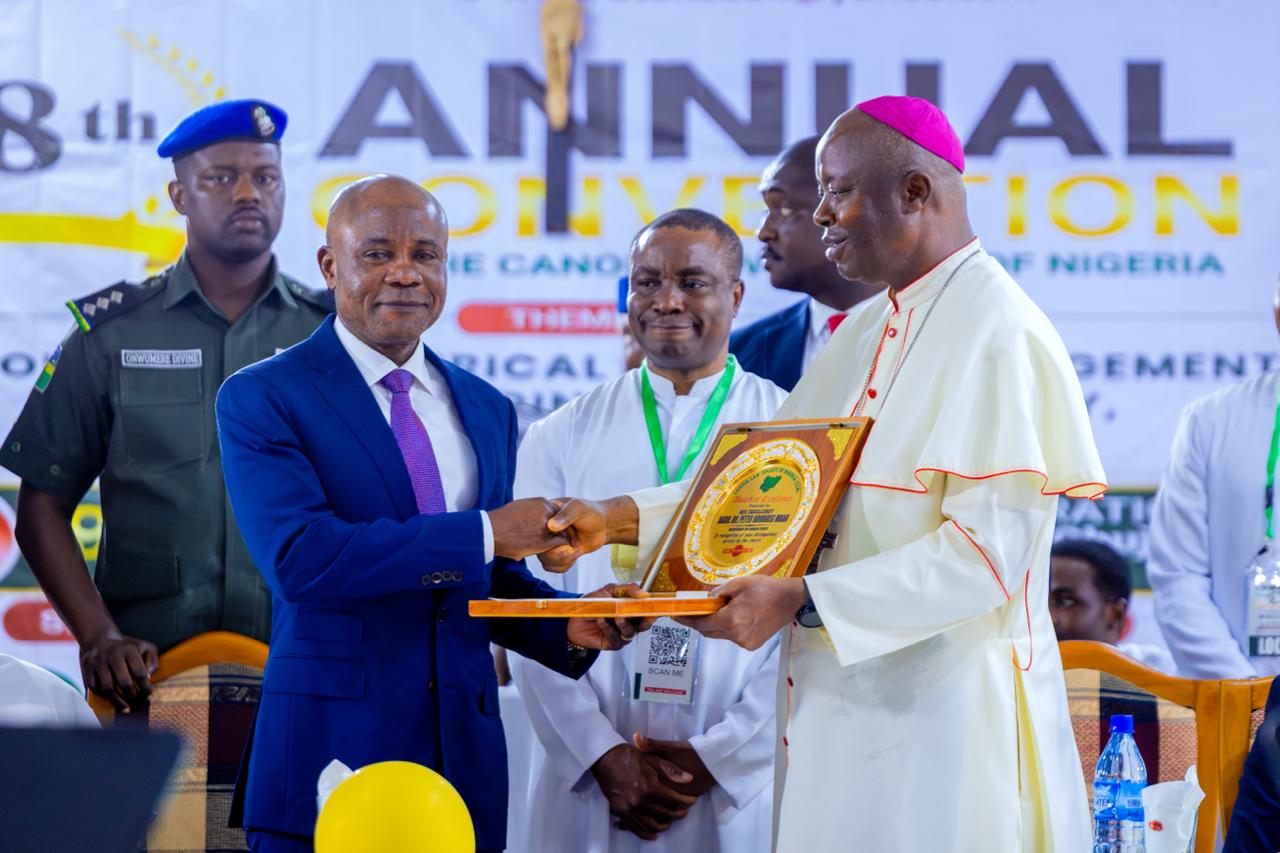
The event’s high point was the presentation of the Award of Excellence to Mbah in recognition of his accomplishments in the governance of Enugu State. The award was presented by the Catholic Bishop of Enugu Diocese, Most Rev. Callistus Onaga.
Visit GMTNewsng for more news stories.