President Bola Tinubu has welcomed the World Bank’s October 2026 report, citing improved economic growth, stronger public revenues and stabilising poverty levels as signs that Nigeria’s economic reforms are yielding results, while pledging further action to improve living conditions.
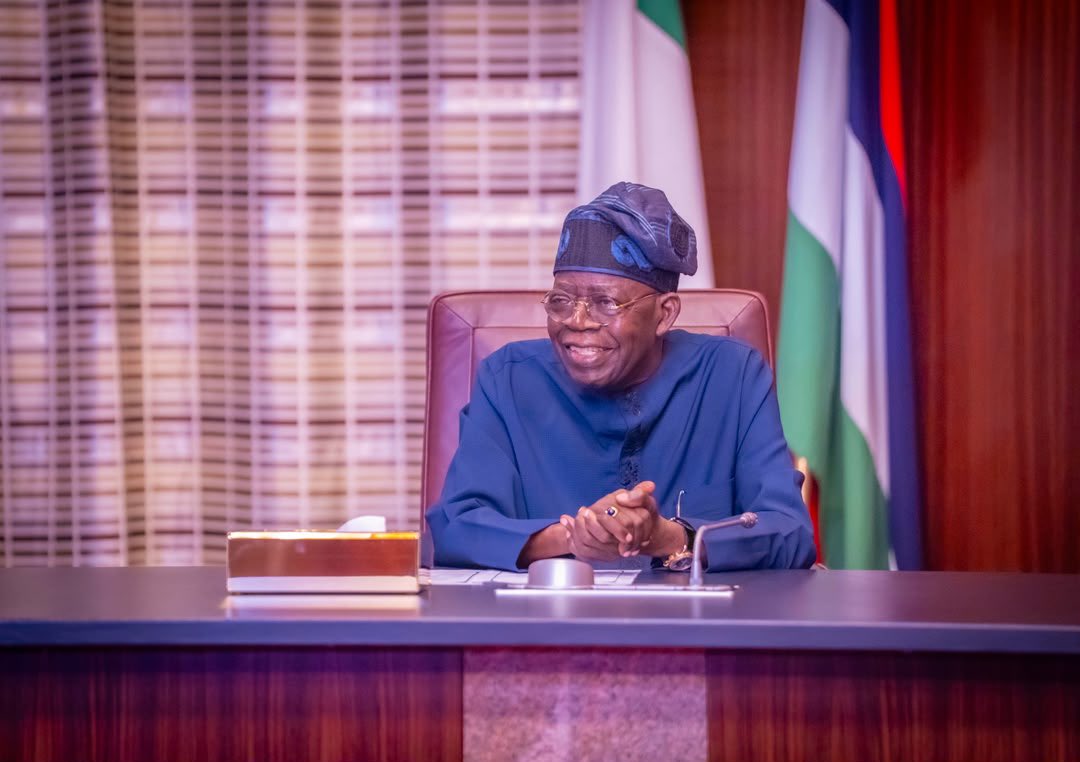
President Bola Ahmed Tinubu has welcomed the World Bank’s October 2026 Nigeria Development Update, saying its findings indicate that the Federal Government’s economic reforms are strengthening the economy and creating opportunities for sustained growth.
The report, titled Beyond the Federal Purse: How Higher Revenues Reshaped State Priorities, examines Nigeria’s economic performance, revenue generation and how state governments have allocated additional public funds.
In a statement issued on October 11 by his Special Adviser on Information and Strategy, Bayo Onanuga, Tinubu said the report’s findings supported his administration’s position that its economic policies were producing results.
The President highlighted the World Bank’s finding that Nigeria’s poverty rate had stabilised for the first time since 2019. The bank expects poverty to decline gradually if economic growth continues to outpace population growth.
According to the report, Nigeria’s economy grew by 4.2 per cent in the first half of 2026, compared with 3.9 per cent in the corresponding period of 2025. The World Bank projects average economic growth of at least 4.4 per cent between 2026 and 2028.
On inflation, the report noted that the rate declined from 27.6 per cent in January 2025 to 15.2 per cent in December 2025.
However, higher global fuel prices associated with the conflict in the Middle East have slowed the disinflation process. The World Bank projects that inflation could ease to approximately 12 per cent by 2028.
Nigeria’s external position also improved during the period under review. The current account surplus increased to $12 billion in the first half of 2026, compared with $8.6 billion in the corresponding period of the previous year.
Gross external reserves also rose from $45.5 billion at the end of 2025 to $53.8 billion at the end of August 2026, according to the figures cited in the presidential statement.
The World Bank attributed the stronger external position partly to higher oil prices, which boosted export earnings, while noting that the global oil price shock also complicated the outlook for inflation.
The report identified increased revenue allocations to state governments as one of the significant outcomes of Nigeria’s economic reforms since 2023.
According to the presidential statement, federation revenues increased by 69 per cent in real terms between 2023 and 2025, with state governments emerging as the largest beneficiaries.
The World Bank’s separate analysis found that aggregate state revenues rose by approximately 93 per cent in real terms over the same period, while aggregate state expenditure increased by about 92 per cent.
The bank reported that states expanded capital spending, with transport infrastructure accounting for the largest increase alongside investments in housing, agriculture and other economic infrastructure.
The presidential statement further noted that state capital spending increased by 151 per cent in real terms between 2023 and 2025. It added that 29 of 33 states shifted their spending towards economic infrastructure, while real social spending per person increased in all but one state.
Other findings highlighted by the Presidency included growth in internally generated revenue in real terms in 31 of 35 states and a reduction in debt-to-GDP ratios in 21 states between 2021 and 2025.
Nigeria’s overall public debt is also projected to decline from 40 per cent of gross domestic product in 2025 to 38.1 per cent in 2026.
Reacting to the findings, Tinubu said the removal of petrol subsidies, the unification of the foreign exchange market and efforts to strengthen fiscal discipline had increased government revenues and created additional room for public investment.
He acknowledged, however, that more work was required to ensure that the reported economic gains translated into improved living conditions for Nigerians, particularly through lower food prices and better employment opportunities for young people.
The President reaffirmed his administration’s commitment to the Renewed Hope Agenda, promising to sustain economic reforms while placing greater emphasis on inclusive growth.
He said the government would continue expanding targeted cash transfers, which he stated had reached more than 10 million households. He also pledged to accelerate compressed natural gas (CNG) deployment, improve agricultural productivity and expand access to affordable healthcare and quality education.
Tinubu urged state governments to manage their increased revenues prudently and prioritise projects that directly improve living standards, particularly in healthcare and education.
He also commended the Economic Management Team, led by the Minister of Finance and Coordinating Minister of the Economy, alongside state governors and other stakeholders, for their roles in implementing the reforms.
The President said his administration would continue pursuing policies under the Renewed Hope Agenda 2.0 aimed at expanding economic opportunities and ensuring that prosperity was more widely shared.
While acknowledging Nigeria’s improved economic performance and stronger state revenues, the World Bank emphasised that higher public income alone would not guarantee better development outcomes.
The bank stressed the importance of more efficient and accountable spending, particularly on infrastructure, education, healthcare, water services and other investments that support job creation and productivity.
It also noted that education’s share of total state expenditure declined from 14.9 per cent in 2021 to 12.1 per cent in 2025, while health spending remained broadly stable at around seven per cent.
The report therefore underscored the need for state governments to translate increased fiscal resources into improved public services and better opportunities for citizens.
Although the latest projections point to continued economic growth and a gradual easing of inflation, the extent to which these developments improve household welfare will depend on sustained growth, effective public spending and progress in reducing poverty.
Visit GMTNewsng for more news stories.