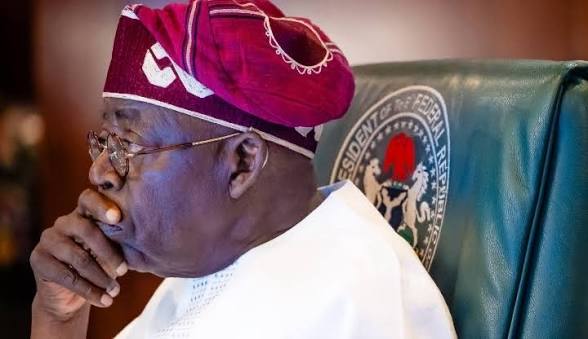
The Presidency has clarified that the ongoing FOIA case involving President Bola Tinubu before a US federal court is a civil records-disclosure dispute, not a criminal trial or conviction.
The Presidency has clarified that the ongoing Freedom Of Information Act (FOIA) litigation involving President Bola Ahmed Tinubu before the United States District Court for the District of Columbia is a civil dispute over access to government records and does not constitute a criminal trial against the Nigerian President.
In a statement issued on Thursday, the Presidency said recent reports and commentary had inaccurately portrayed the proceedings, stressing that the court had not convicted Tinubu of any criminal offence.
The case, Greenspan v. Executive Office for U.S. Attorneys et al., Civil Action No. 23-1816, was filed in June 2023 by American transparency activist Aaron Greenspan after he submitted Freedom of Information Act requests to several US government agencies for records relating to Tinubu and other individuals. The case is being handled by Judge Beryl A. Howell.
According to the Presidency, Tinubu was subsequently permitted to participate in the proceedings as an intervenor, allowing him to assert his legal and privacy interests concerning the records being sought.
The litigation has its origins in FOIA requests submitted by Greenspan in 2022 and 2023 to agencies including the Federal Bureau of Investigation (FBI), Drug Enforcement Administration (DEA), Central Intelligence Agency (CIA), Internal Revenue Service (IRS), Department of State and Executive Office for US Attorneys.
The requests sought records connected to investigations into an alleged international drug-trafficking and money-laundering operation in the early 1990s, including records relating to Tinubu. The court record confirms that the litigation concerns the disclosure of criminal-investigative records sought under the US FOIA.
A significant development occurred in April 2025 when Judge Howell ruled that the FBI and DEA could no longer rely on their previous “Glomar” responses to refuse to confirm or deny whether responsive records existed. The court ordered the two agencies to search for and process non-exempt records responsive to Greenspan’s requests.
The court, however, upheld the CIA’s Glomar response, finding that the agency had properly invoked the doctrine in relation to the records sought from it.
A Glomar response is a mechanism under US information-access law through which an agency can refuse to confirm or deny whether particular records exist when doing so would itself reveal information protected by law.
Following the court’s order, the FBI and DEA produced records, with some information withheld or redacted under exemptions contained in the US FOIA. Recent court filings have focused on whether the agencies’ continued withholding and redaction of portions of the records complies with the law.
The Presidency said the exemptions relied upon by the agencies cover categories including information protected by other statutes, attorney-client and attorney-work-product privileges, law-enforcement records, personal privacy, confidential sources and investigative techniques.
Tinubu’s legal team has also invoked privacy protections, particularly FOIA Exemption 7(C), which concerns the disclosure of law-enforcement records that could constitute an unwarranted invasion of personal privacy. Recent reporting confirms that the President’s lawyers have challenged further disclosure of some of the records.
The Presidency further referenced a 2003 letter from the American Consulate in Lagos to the then Inspector-General of Police, Tafa Balogun, stating that an FBI records check had found no criminal arrest records, wants or warrants for Tinubu at the time. However, that historical communication is separate from the present FOIA litigation and does not determine what records US agencies may or may not currently possess.
The Presidency also rejected suggestions that former Vice-President Atiku Abubakar or Washington-based lobbyist Karl von Batten are parties to the federal FOIA litigation, arguing that the case remains under the authority of the US District Court and will be determined according to the applicable law and evidence.
Recent reporting has confirmed that the litigation remains active, with the dispute now centred substantially on the extent to which records already identified or produced by the FBI and DEA can lawfully remain withheld or redacted.
The Presidency urged Nigerian media organisations and members of the public to distinguish between the existence of a FOIA records-disclosure lawsuit and any assertion of criminal liability.
The central legal question before the US court is the disclosure of government records and the applicability of statutory exemptions. The existence of the FOIA litigation, by itself, does not amount to a criminal charge, conviction or judicial finding that Tinubu committed a crime.
Visit GMTNewsng for more news stories.