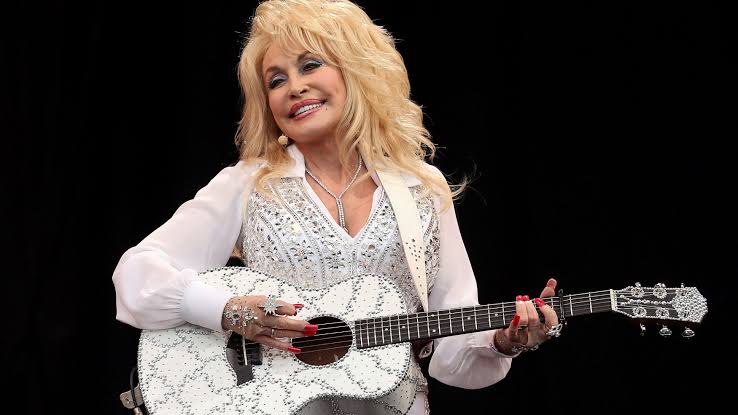
Dolly Parton has died at 80 in Nashville, leaving behind an extraordinary legacy spanning country music, film, business and philanthropy.
Dolly Parton, the legendary American singer, songwriter, actress, entrepreneur and philanthropist whose influence stretched far beyond country music, has died at the age of 80.
Parton died peacefully in Nashville, Tennessee, on Tuesday, August 25, 2026, according to her publicist and a statement from her family. No cause of death has been disclosed. Her nephew, Bryan Seaver, announced her death in a video shared through Parton’s official social media accounts.
Her death brings to a close one of the most remarkable careers in American popular culture. For more than six decades, Parton built an extraordinary career as a recording artist, songwriter, actress, businesswoman and philanthropist, becoming one of the few entertainers whose appeal transcended generations, geography and musical genres.
Born into a large family in rural Tennessee, Parton grew up in poverty in the Great Smoky Mountains. Those early experiences became a defining source of her songwriting, allowing her to transform themes of family, hardship, ambition, love and heartbreak into stories that connected with audiences around the world.
Her professional career took shape in Nashville in the 1960s. After signing with Monument Records in 1965, she released her debut album, Hello, I’m Dolly, in 1967 and quickly established herself as one of country music’s most distinctive voices and prolific songwriters.
Songs including “Jolene,” “Coat of Many Colors” and “I Will Always Love You” became defining works in her catalogue. Whitney Houston’s version of “I Will Always Love You,” recorded for The Bodyguard, transformed Parton’s composition into an international pop phenomenon and introduced her songwriting to an even wider audience.
Across a career spanning more than half a century, Parton sold more than 100 million records worldwide and received 11 Grammy Awards, including a Lifetime Achievement Award. She also wrote thousands of songs, with songwriting remaining central to how she understood her artistic legacy.
Parton’s influence extended well beyond the recording studio.
She became a successful film actress, earning widespread recognition for the 1980 comedy 9 to 5, in which she starred alongside Jane Fonda and Lily Tomlin. The film’s title song became another major hit and further established Parton as a crossover entertainer.
She later expanded her business empire through Dollywood, the Tennessee theme park she became involved with as a co-owner in 1986. The attraction grew into a major destination closely associated with Parton’s Appalachian roots and the culture of the Great Smoky Mountains.
But perhaps the most enduring dimension of Parton’s legacy developed outside entertainment.
Through the Dollywood Foundation’s Imagination Library, Parton helped provide free books to children, creating a literacy programme that expanded far beyond Tennessee.
Her philanthropy also extended to medical research and disaster relief. She contributed $1 million to Vanderbilt University Medical Center for COVID-19 vaccine research, funding that was later acknowledged as supporting research behind the Moderna vaccine.
Parton’s approach to philanthropy reflected the experiences of her childhood. Rather than distancing herself from the poverty in which she was raised, she repeatedly used her wealth and public influence to support children, families and communities.
Parton’s towering blonde wigs, rhinestone outfits and carefully crafted public image became as recognisable as her voice. Yet the persona was accompanied by a sharp sense of humour and a willingness to make fun of herself.
That combination helped make her an unusually accessible celebrity. She could command enormous stages and international audiences while continuing to speak openly about the poverty, family values and Appalachian culture that shaped her early life.
Her ability to move between traditionally conservative country music audiences, Hollywood, business and humanitarian causes also made her a rare cultural bridge.
Following news of her death, tributes poured in from across the entertainment industry. Reba McEntire, Dionne Warwick, Kacey Musgraves, Miley Cyrus and numerous other performers and public figures remembered Parton for her musical influence, generosity, warmth and distinctive personality.
Parton’s significance was never limited to the number of records she sold or awards she received.
She became a symbol of the possibility of moving from poverty to extraordinary success without abandoning one’s roots. Her songs gave voice to working-class experiences, her films broadened her audience and her philanthropy turned personal success into opportunities for others.
Her death also comes after a period in which Parton had acknowledged health challenges while continuing to remain involved in creative projects. In recent months, she had spoken publicly about needing time to recover from health issues, although no official cause of death has been released.
For millions of people, Parton was present in different parts of everyday life: through country radio, Hollywood films, theme parks, children’s books and songs that became part of the shared soundtrack of generations.
Her death leaves behind an extraordinary body of work and a cultural legacy that reaches well beyond country music.
Dolly Parton did not simply build a career. She built a lasting connection with audiences across generations — one rooted in music, humour, storytelling, generosity and an unmistakable sense of identity.
At 80, the woman who rose from the Tennessee mountains to become a global cultural icon has left the stage, but her songs, stories and humanitarian work are likely to remain part of American and global culture for generations to come.
Visit GMTNewsng for more news stories.